A License Number Says More Than "Years of Experience" on an Electrician Resume
This article walks through a full electrician resume example, built around a real license and real job duties, along with the specific details that get a callback. For general resume formatting, this guide covers layout basics — here, we'll focus on what's specific to the trade.
What Belongs on an Electrician Resume, From License to Last Job Site
From there, list your most recent job, with wiring and repair duties spelled out rather than summarized. Skills and certifications come next, then your apprenticeship or training program. If you're still an apprentice, your hours and training program can carry more weight than a short work history.
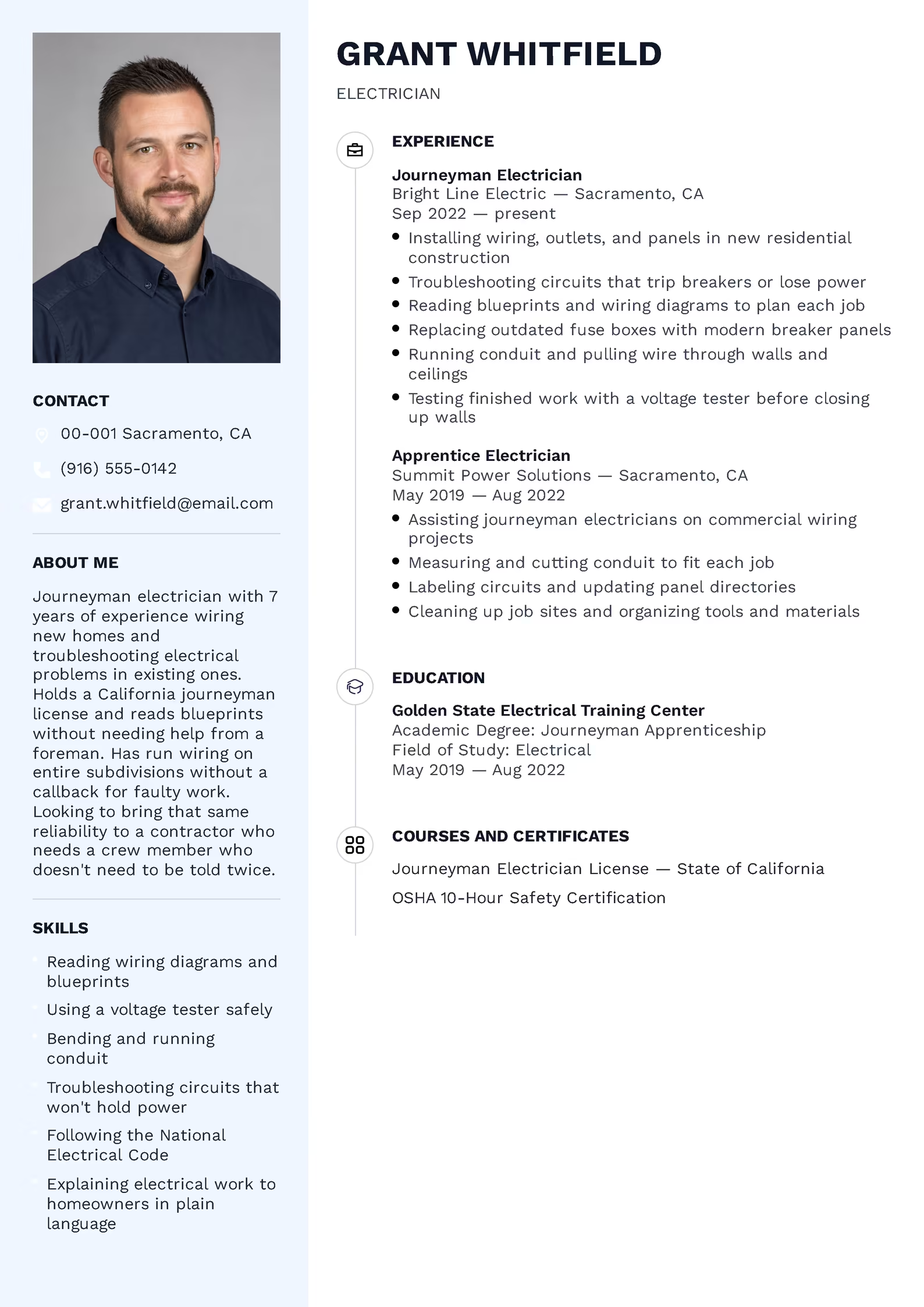
Below is a full example built around Grant, a journeyman electrician with 7 years of experience. Use it as a starting point, or build your own with our resume builder.
Resume Example — Electrician
Grant Whitfield
Sacramento, CA
Journeyman electrician with 7 years of experience wiring new homes and troubleshooting electrical problems in existing ones. Holds a California journeyman license and reads blueprints without needing help from a foreman.
Has run wiring on entire subdivisions without a callback for faulty work. Looking to bring that same reliability to a contractor who needs a crew member who doesn't need to be told twice.
Journeyman Electrician
Bright Line Electric, Sacramento, CA
09.2022 – Present
Apprentice Electrician
Summit Power Solutions, Sacramento, CA
05.2019 – 08.2022
Journeyman Apprenticeship, Electrical
Golden State Electrical Training Center
2019 – 2022
From "Did Electrical Work" to Panels, Circuits, and Conduit Runs
Aim for 4 to 6 duties per position, each one starting with a verb — installing, troubleshooting, replacing, testing. If you've had more than two or three jobs, focus the detail on your last two and summarize anything older in a single line.
Work Experience — Electrician
Journeyman Electrician
Bright Line Electric, Sacramento, CA
09.2022 – Present
Put Your Journeyman License in the First Two Sentences
Avoid generic lines like "hard-working and reliable electrician." Name your license, your main strengths, and roughly how much work you've handled. Below are three versions depending on where you are in your career.
Wiring, Panels, and Troubleshooting: What Goes in the Duties Table
Typical Electrician Duties
| Area | Example Electrician Duties |
|---|---|
| New construction wiring | Installing wiring, outlets, and light fixtures in new homes before drywall goes up |
| Troubleshooting | Finding and fixing the cause of a breaker that keeps tripping or an outlet that stopped working |
| Panel work | Replacing an old fuse box with a modern circuit breaker panel |
| Conduit and wire runs | Bending conduit and pulling wire through walls, ceilings, and crawl spaces |
| Code compliance | Making sure finished wiring meets the National Electrical Code, the safety rules electrical work must follow |
| Testing | Using a voltage tester to confirm a circuit is dead before working on it |
| Commercial work | Wiring lighting and outlets in offices, restaurants, or retail spaces |
| Blueprints | Reading electrical blueprints to plan where wiring and panels should go |
| Customer communication | Explaining an electrical problem and the repair cost to a homeowner |
| Documentation | Labeling circuits and updating the panel directory after a job |
Ready to put your wiring experience into a resume? Try our resume builder.
Build Your Resume
Voltage Testers, Blueprints, and the Skills a Foreman Actually Checks
Split your skills into two groups: the hands-on trade skills, and the habits that make you someone a crew can rely on. Both matter on a job site where one missed step can mean a shock hazard, not just a redo.
Skills for an Electrician Resume
| Job-Specific Skills | Personal Strengths |
|---|---|
| Reading wiring diagrams and blueprints | Staying calm when a job takes longer than planned |
| Using a voltage tester safely | Following safety steps every time, not just when someone's watching |
| Bending and running conduit | Explaining electrical problems in plain language to homeowners |
| Troubleshooting circuits that won't hold power | Staying focused on repetitive tasks like pulling wire |
| Following the National Electrical Code | Working well as part of a crew |
| Installing and replacing breaker panels | Taking direction from a foreman without needing to be micromanaged |
| Labeling circuits clearly | Double-checking a circuit is dead before touching it |
| Working from a set of blueprints | Showing up on time and ready to work |
| Wiring both residential and commercial spaces | Staying organized with tools and materials on a job site |
| Testing finished work before closing up walls | Owning up to a mistake and fixing it fast |
Why a Missed Step on an Electrician Resume Isn't Just a Formatting Issue
If you hold a safety credential like an OSHA 10-Hour Safety Certification (a short course covering job-site hazards like electrical shock and fall risks), list it clearly in your certifications section. It's a fast way to show a contractor you've had formal safety training, not just picked things up on the job.
What Happens Before a Contractor Hands You a Set of Keys
Don't be surprised if an interview includes a few code or troubleshooting questions, like how you'd confirm a circuit is safe to work on. If you're still an apprentice, be ready to talk about how many hours you've logged toward your journeyman license — some contractors ask for that directly.
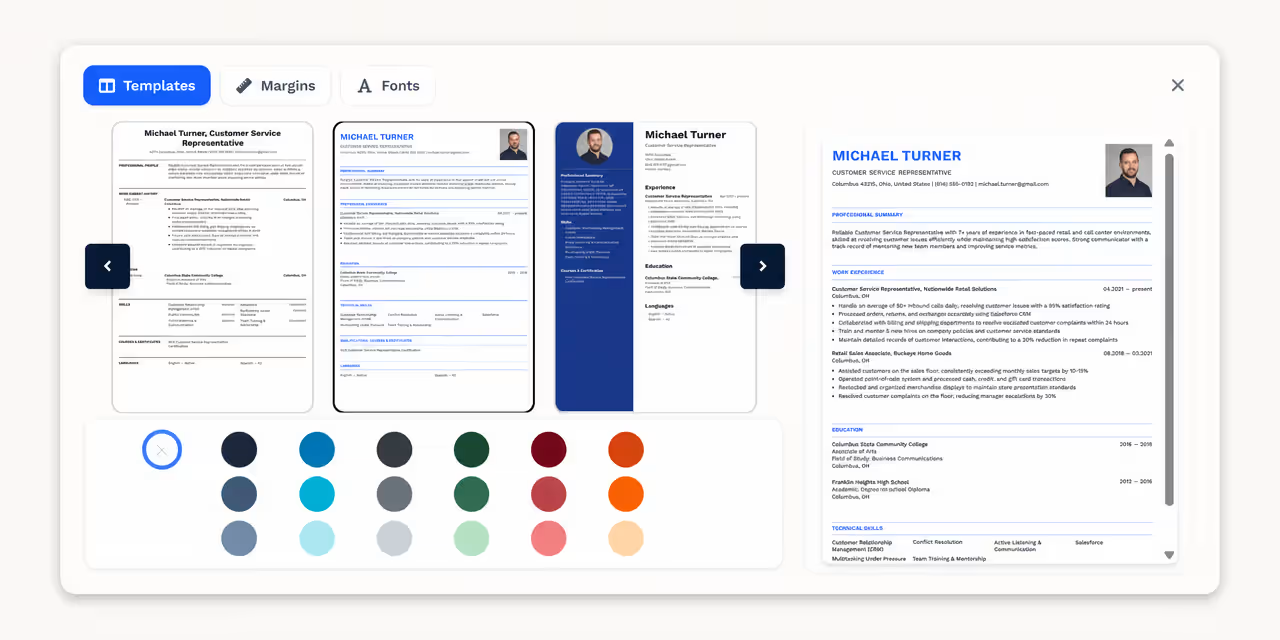
A Clean Layout Reads Faster Than a Fancy One — Especially for a Foreman on a Deadline
Skip heavy colors or graphics. A clean resume with your license front and center does more for you than a design that makes someone hunt for the details.
Not sure which layout fits a trade background? Try our template library.
Build Your Resume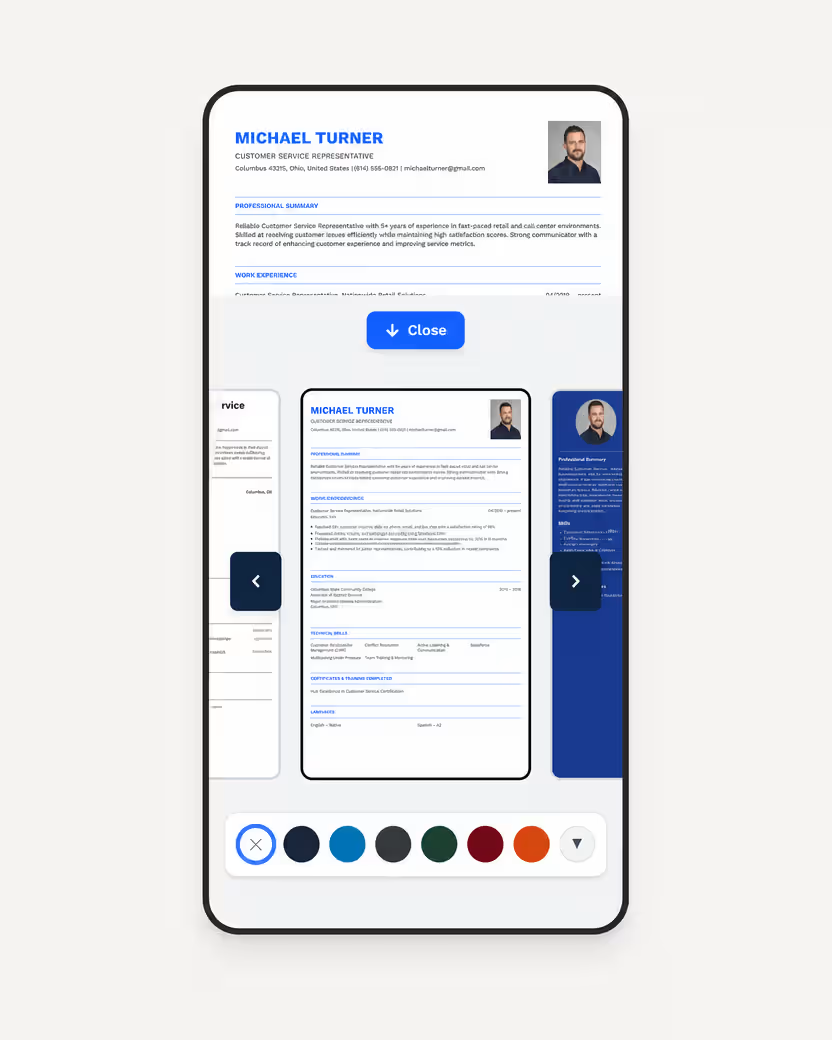
The Missing License Number and Other Slip-Ups on an Electrician's Resume
Leaving off the license number or type. Writing "licensed electrician" without saying journeyman, apprentice, or master leaves a contractor guessing what you're actually qualified to do on your own.
Writing "did electrical work" instead of naming the task. "Repaired electrical issues" could mean anything. "Replaced a breaker panel" tells a contractor exactly what you've done.
Not mentioning OSHA or other safety training. If you've completed a safety course, leaving it out means a contractor has no way to know you've had that training.
Skipping residential vs. commercial experience. The two involve different code requirements and equipment — say which one (or both) you've worked in.
Listing duties with no scale. "Worked on several projects" is vague. "Wired an entire subdivision without a callback" gives a contractor something concrete.
Not mentioning blueprint reading. Many electrician jobs assume you can read a blueprint — if you can, say so directly rather than leaving it implied.
Forgetting apprenticeship hours. If you're still an apprentice, leaving off your logged hours makes it harder for a contractor to judge how close you are to a journeyman license. A cover letter is a good place to mention this too if you're pairing one with your resume.
Key Takeaways for Your Electrician Resume
If you're still an apprentice, lean on your training hours and what you've assisted with — you don't need a journeyman license to write a solid resume, just clear detail about what you've already learned. Whether you're a first-year apprentice or a licensed journeyman, the goal is the same: give a contractor enough to picture you already on the job site.
Frequently Asked Questions
In most states, yes — at least an apprentice registration to start, working toward a journeyman license over several years. Requirements vary by state, so check your state's licensing board for the exact steps. If you already hold a license, list the type and state clearly on your resume.
That's normal — most electricians spend several years as an apprentice before testing for a journeyman license. List your apprentice status, your training program, and any hours you've logged. Contractors hiring apprentices expect less experience and more focus on your training and willingness to learn.
Yes. An OSHA 10-Hour Safety Certification (a short course on job-site hazards) is a quick way to show a contractor you've had formal safety training. List it in your certifications section along with your license.
No, but say clearly which one you have experience in, since the code requirements and equipment can differ. If you've worked in both, mention that too — it usually makes you a more flexible hire.
One page is enough for almost everyone. Focus on your last two jobs with real detail, and summarize anything older in a single line. A contractor reading resumes between job sites won't get through a second page.
Mention what you do have — even reading diagrams during an apprenticeship program counts. If it's genuinely a gap, focus your resume on the wiring and troubleshooting tasks you're comfortable with instead, and be upfront in an interview if it comes up.
It's optional but can help, especially if you're applying to a contractor with a specific specialty, like commercial or industrial wiring. A short cover letter is a good place to explain why you're interested in that type of work.
No. A photo isn't expected on a resume in the US or UK and isn't relevant for a trade job. Use that space for another certification or skill instead — it does more to get you an interview.
Read Also

Ready for your own resume?
Go to the builder and start with the first step in seconds.
Create Resume