How to Write a Cover Letter That Actually Gets Read
Unlike a resume, which lists facts, a cover letter tells a short story. It connects the dots between your experience and the job description in a way a bulleted list never can. Done well, it takes a recruiter less than 90 seconds to read — and it can be the difference between your application landing in the "yes" pile or the "maybe later" one.
This guide walks through every part of a cover letter, from the opening line to the closing paragraph, with real examples you can adapt. By the end, you will know exactly how to structure one, what to avoid, and how to tailor it for any job posting.
Cover Letter Format and Structure
A standard cover letter has four parts: a header with your contact information, an opening paragraph that hooks the reader, one to two body paragraphs that make your case, and a closing paragraph with a clear call to action. Each part has a specific job to do, and skipping one weakens the whole letter.
Cover Letter Structure at a Glance
| Section | Length | Purpose |
|---|---|---|
| Header | 3–4 lines | Name, contact info, date, employer's details |
| Opening paragraph | 2–3 sentences | Grab attention, state the role you're applying for |
| Body paragraph(s) | 2–3 short paragraphs | Connect your experience to the job requirements |
| Closing paragraph | 2–3 sentences | Reinforce interest, call to action, thank the reader |
* Total length should rarely exceed one page, regardless of how much experience you have.
How to Start a Cover Letter: The Opening Paragraph
A strong opening does three things at once: names the role, shows genuine interest in the company, and hints at your strongest qualification. If you were referred by someone at the company, this is also the place to mention it — referrals are one of the most reliable ways to get an application actually read.
Avoid opening with your name and current job title as if it were a formality. The recruiter already has your resume for that. Use the opening line to earn their attention instead.
How to Write the Body Paragraphs: Connecting Your Experience to the Role
A reliable approach is to structure each body paragraph around one specific achievement, explained with enough detail to show impact. Use numbers wherever possible: a percentage, a dollar amount, a team size, a timeframe. Concrete numbers are what separate a memorable cover letter from a forgettable one.
If you're changing careers or industries, the body paragraph is also where you address that directly rather than hoping the recruiter won't notice. Frame your previous experience in terms of transferable skills — problem-solving, managing people, meeting deadlines — and connect those skills explicitly to the new role's requirements.
How to End a Cover Letter: The Closing Paragraph
A good closing paragraph does three things: reaffirms your interest in the specific role, briefly restates the value you'd bring, and includes a simple, professional call to action. Avoid over-apologizing for taking up the reader's time — it undermines the confident tone you've worked to establish.
End with a professional sign-off. „Sincerely" or „Best regards" followed by your full name is always appropriate. Avoid anything overly casual, even for informal-seeming companies — you can show personality in the body of the letter without risking a sloppy final impression.
Cover Letter Length, Font, and Formatting Rules
Length: One page, no exceptions. Three to four paragraphs is the sweet spot — roughly 250 to 400 words total. A longer letter doesn't demonstrate more enthusiasm; it just demonstrates a reluctance to edit.
Font and size: Match your resume's font for visual consistency. Use 10 to 12 point size for body text, and keep the entire letter in a single, professional font — Calibri, Arial, and Georgia are all safe choices.
Margins and spacing: Standard one-inch margins, single line spacing within paragraphs, and a blank line between paragraphs. Dense, unbroken text is harder to skim and easier to skip.
File format: Save and send as a PDF unless the employer specifically requests otherwise — it preserves formatting across every device and operating system.
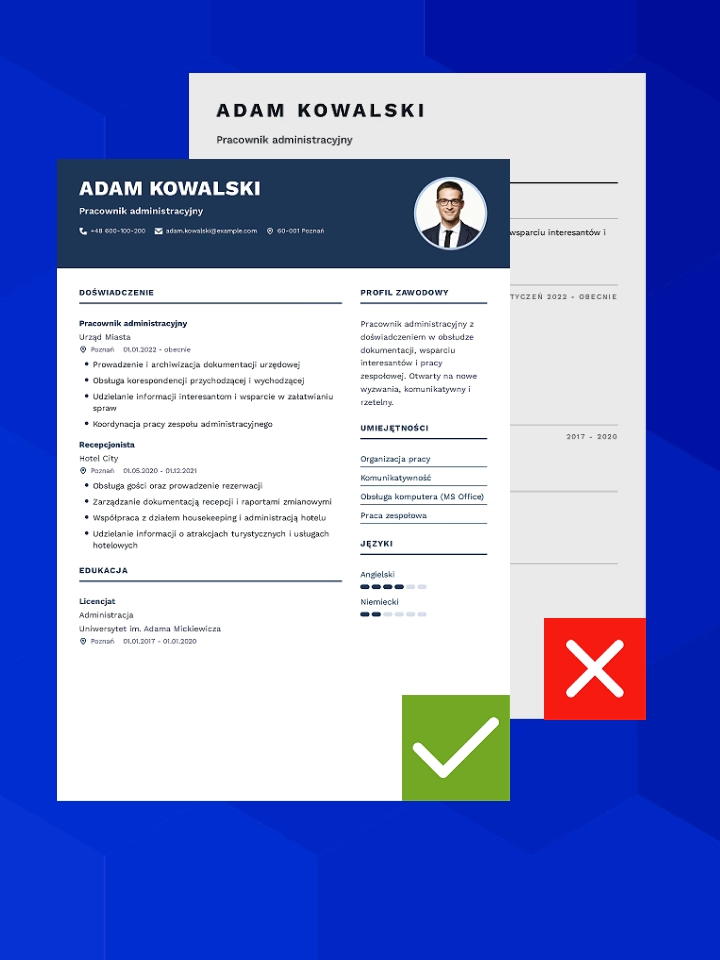
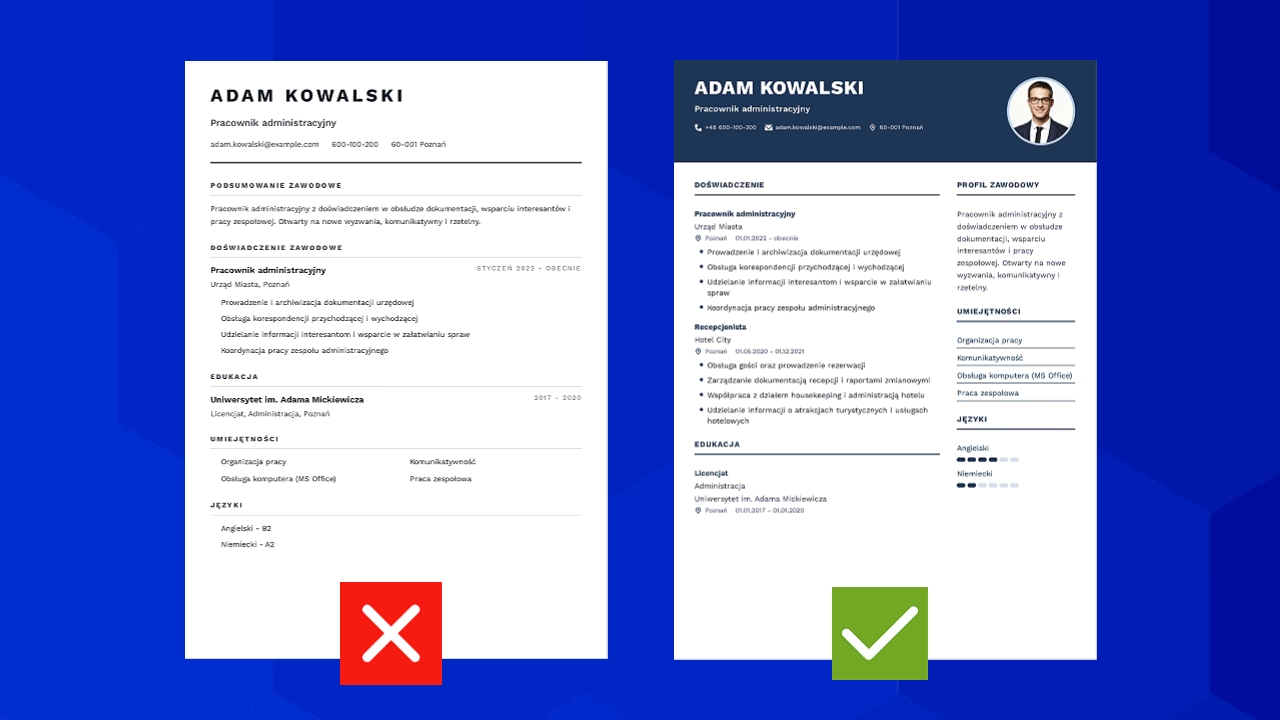
Keep your cover letter and resume visually consistent with a matching design from our template library.
Browse Templates

Full Cover Letter Template You Can Copy
Common Cover Letter Mistakes to Avoid
Restating the resume. If your cover letter just repeats your work history in paragraph form, it isn't doing its job. The letter should add context and narrative — not duplicate a document the recruiter already has.
Generic, one-size-fits-all letters. A cover letter that never mentions the company name or the specific role reads as mass-produced, because it usually is. Recruiters notice immediately.
Starting with „To Whom It May Concern." This greeting is outdated and impersonal. Spend two minutes finding the hiring manager's name on LinkedIn or the job posting — if you truly can't find it, „Dear Hiring Manager" is an acceptable alternative.
Overusing „I." Starting every sentence with „I" makes the letter read as self-centered rather than value-focused. Vary your sentence structure so the letter reads more like a pitch than a list.
Typos and inconsistent formatting. A single typo in a cover letter carries more weight than one in a resume, because the letter is meant to showcase your writing and attention to detail. Proofread it twice, then read it out loud once.
How to Tailor a Cover Letter to a Specific Job Posting
Start with the job posting itself. Identify the top three requirements the employer lists first or repeats most often — these are usually the qualifications that matter most for the role. Then make sure your opening and body paragraphs speak directly to those points, using similar language to the posting where it genuinely fits.
This process takes about ten minutes per application, and it's ten minutes that consistently pays off in callback rates.
Do You Always Need a Cover Letter?
When a cover letter is optional, write one anyway if you're applying for a role that's a meaningful step up, changing industries, or applying somewhere you have a genuine, specific reason for wanting to work. In those cases, a cover letter is where you explain context a resume can't carry on its own.
If you're applying to dozens of similar roles in a short time frame — for example, entry-level retail or warehouse positions — a strong, well-formatted resume alone is often sufficient, and your time is better spent making sure that document is as strong as possible. If you haven't put one together yet, our guide on how to write a resume covers the same principles of tailoring and formatting that apply here.
Cover Letter Checklist Before You Hit Send
Cover Letter Checklist
| Item | Done? |
|---|---|
| Addressed to a specific person, not "To Whom It May Concern" | ☐ |
| Company name and role title are correct throughout | ☐ |
| Opening paragraph is specific, not generic | ☐ |
| Body paragraphs include at least one measurable achievement | ☐ |
| Closing paragraph includes a clear call to action | ☐ |
| Length is one page or under (250–400 words) | ☐ |
| Font and formatting match your resume | ☐ |
| No typos — proofread at least twice | ☐ |
| Saved and sent as a PDF | ☐ |
Start Writing Your Cover Letter Today
If you're not sure where to begin, start with the job posting: highlight the three requirements that matter most, and build your opening and body paragraphs around them. The rest of the letter tends to fall into place once that foundation is set.
Once your cover letter is ready, make sure your resume is working just as hard. You can put one together in minutes with our online resume builder, which walks you through each section and formats everything automatically.
Pair your cover letter with a professional resume using our resume builder — no design skills required.
Build My Resume

Rate This Article
No ratings yet
Frequently Asked Questions
A cover letter should be one page or shorter — roughly 250 to 400 words across three to four paragraphs. Recruiters spend under two minutes reading a cover letter, so anything longer risks losing their attention before you make your case.
No. A generic cover letter that doesn't mention the company or role by name is easy to spot and rarely performs well. At minimum, tailor the opening paragraph and make sure your examples align with the specific job posting's requirements.
A resume lists your experience, skills, and qualifications in a structured, scannable format. A cover letter tells a short narrative that connects your background to the specific role, explaining the "why" behind your application in a way a bulleted resume can't.
It depends on the role. For high-volume applications like entry-level retail or warehouse positions, a strong resume alone is often enough. For career changes, senior roles, or companies you have a specific interest in, a tailored cover letter can still give you an edge.
Spend a few minutes checking the company's LinkedIn page or the job posting for a name — a specific greeting always performs better than a generic one. If you genuinely can't find a name, "Dear Hiring Manager" is a safe, professional fallback.
Yes, but don't copy them word for word. Pick your one or two strongest, most relevant achievements and expand on them with context — the specific challenge, your approach, and the measurable result — rather than repeating the same short bullet point.
Save and send your cover letter as a PDF unless the employer specifically requests a different format. PDF preserves your formatting exactly as designed, regardless of the device or software the recruiter uses to open it.
Yes, visual consistency between your cover letter and resume looks more polished and professional. Matching fonts, margins, and header styling signals attention to detail before the recruiter reads a single word of content.
About the Author

Hubert Frątczak – Ekspert ds. Rozwoju Kompetencji i Planowania Kariery
Hubert Frątczak jest ekspertem kariery oraz autorem artykułów poświęconych tworzeniu przejrzystych i skutecznych dokumentów aplikacyjnych. Skupia się na praktycznych rozwiązaniach, prostocie i jasnych wskazówkach, które pomagają kandydatom przygotować profesjonalne CV bez zbędnych komplikacji. W swoich materiałach łączy podejście użytkownika z dbałością o czytelność i funkcjonalność dokumentów.