Why Your Resume Needs a Different Strategy After 40
Employers skim a resume for about 7–8 seconds before deciding whether to keep reading. If the first thing they see is a 20-year-old job title from 1998, they've already formed an impression — usually the wrong one. The goal of this guide isn't to hide your experience. It's to present it in a way that reads as current, relevant, and forward-looking, not as a museum exhibit.
We'll cover what to cut, what to modernize, and how to reframe decades of work into a document that competes with — and beats — candidates half your age.
Understanding Age Bias — and How to Work Around It
You can't control a stranger's unconscious bias. What you *can* control is giving them fewer excuses to make assumptions. That means your resume shouldn't visually or contextually broadcast your age before your qualifications get a fair read.
Signals that unintentionally date a resume
| Signal | Why it's a problem | What to do instead |
|---|---|---|
| Graduation year from 1985 | Instantly reveals age, invites bias | Drop graduation years older than ~15 years |
| Objective statement | Went out of style in the early 2000s | Replace with a professional summary |
| Personal email like aol.com/hotmail.com | Reads as outdated | Switch to a modern Gmail/Outlook address |
| Full 25-year work history | Overwhelms recruiters, buries recent relevance | Show the last 10–15 years in detail |
| Times New Roman, 1-inch margins, no design | Looks unchanged since 2005 | Use a clean, modern resume template |
Trim the Timeline: How Far Back Should Your Resume Go?
This isn't about hiding your background. It's about controlling the narrative: you decide what gets emphasized, instead of forcing the reader to dig through three decades of roles to find what's relevant to *this* job.
Modernize Your Resume Format
Choosing the right structure matters just as much as the words on the page. Our resume templates are built around current hiring standards, so the format itself never works against you.
Turn Decades of Experience Into a Powerful Summary
For more copy-paste examples across different industries, see our guide to professional resume summary examples.
Resume example — Senior Operations Manager
Diane Carter
+1 555 214 8890
diane.carter@email.com
Denver, CO
Operations manager with 18 years of experience leading warehouse and logistics teams of up to 60 staff. Reduced fulfillment errors by 32% through process redesign. Known for mentoring new supervisors and modernizing legacy workflows.
2016–Present Bright Horizon Logistics
Position: Senior Operations Manager
B.S. in Business Administration, University of Colorado
Highlight Skills That Matter Now — Not Just Skills You Have
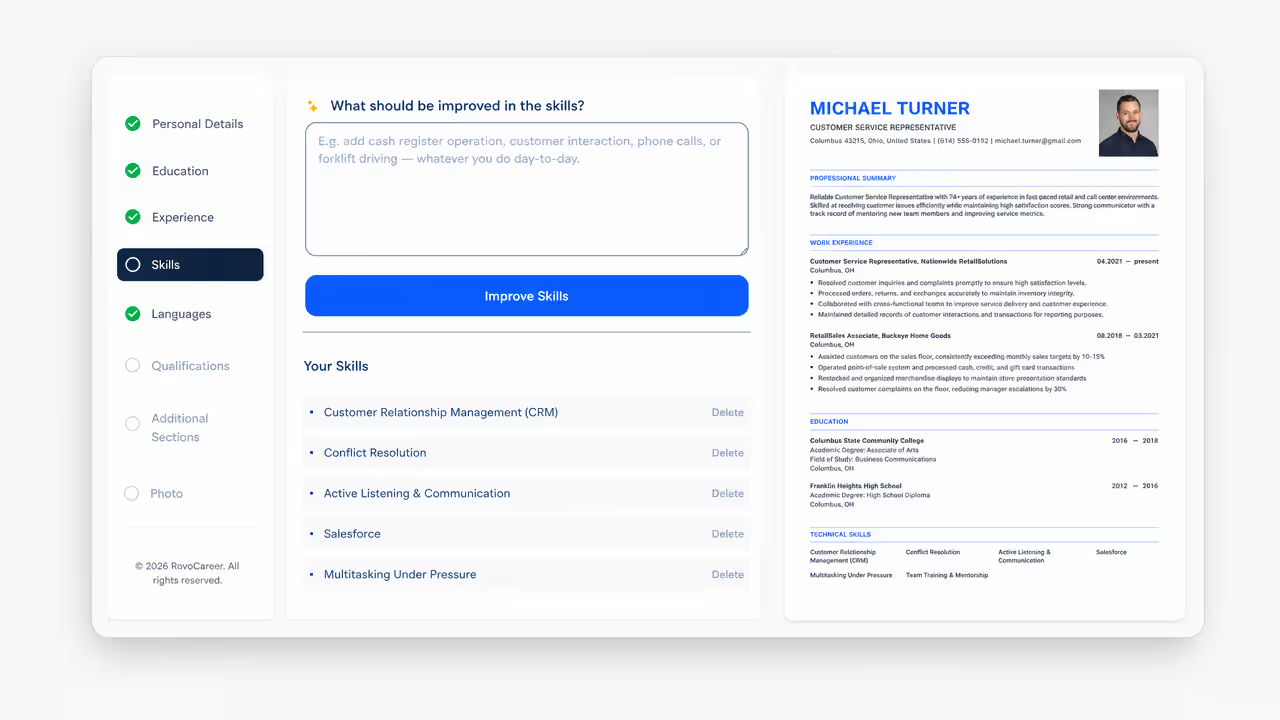
If you're not sure how to separate and present both categories clearly, our breakdown of hard and soft skills for a resume walks through examples by industry. And if your skills section still lists software you haven't touched since 2010, it's worth rebuilding from scratch with our online resume builder, which prompts you for current, role-specific skills instead of copying old bullet points forward.
Not sure which skills to highlight? Start from a proven layout with our resume templates and fill in what fits your background.
Browse resume templates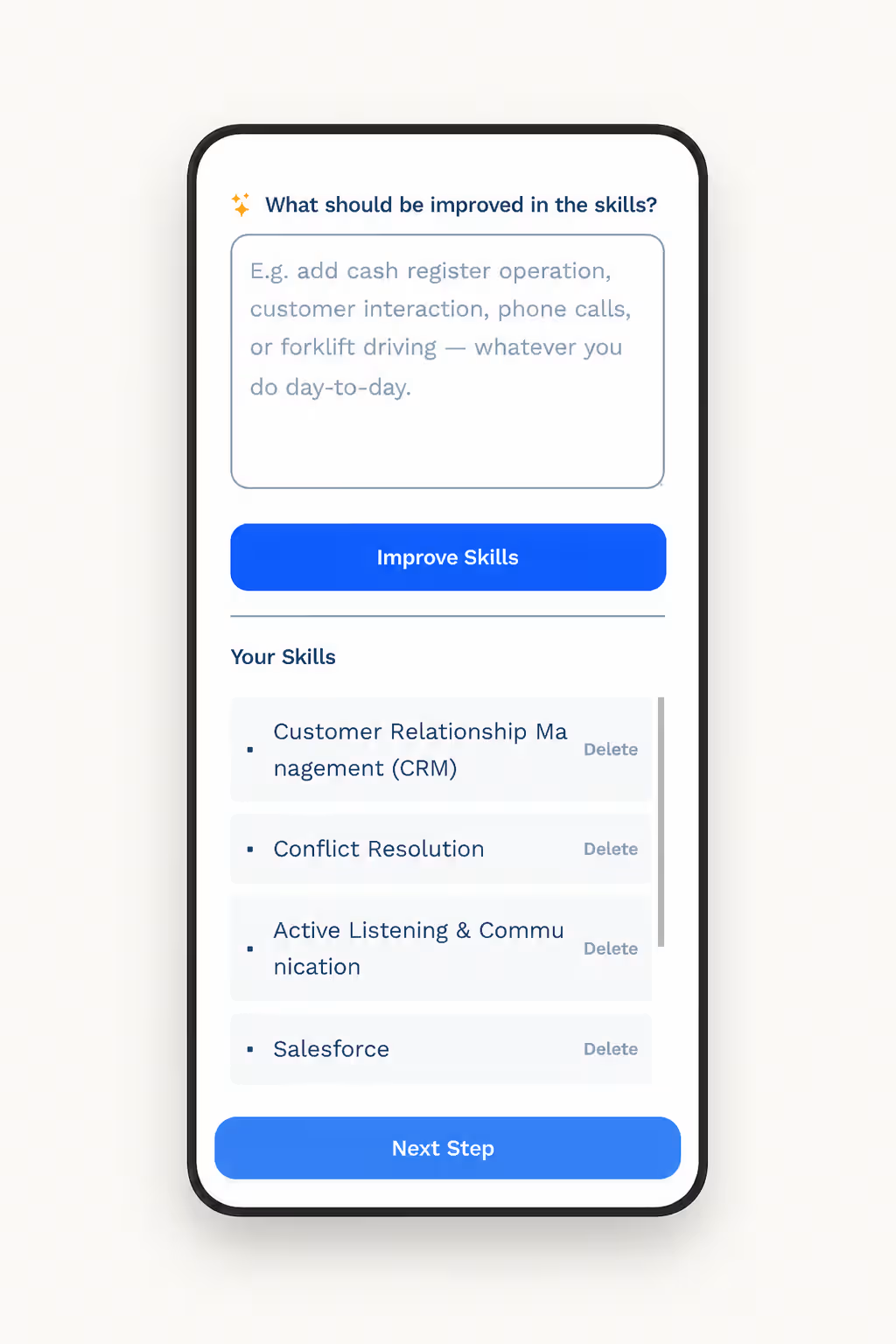
Address Career Gaps and Career Changes With Confidence
The fix is a brief, factual framing, not an apology.
What to Leave Off Your Resume After 40
A photo is one of the most debated inclusions. In most of the US and UK job markets, adding a photo is uncommon and can unintentionally introduce bias around age, race, or appearance before your qualifications are even considered — our guide on whether to include a photo on your resume breaks down when it's appropriate and when it isn't. Beyond that, avoid listing every certification you've ever earned (keep only the current and relevant ones), and skip hobbies unless they're directly related to the role.
If you want a fuller checklist of resume habits that quietly hurt candidates of any age, our article on common resume mistakes is a useful second pass before you submit anything.
Tailor Every Application Instead of Sending One Resume Everywhere
Key Takeaways
Ready to put this into practice? Build a modern, ATS-friendly resume in minutes.
Skip the formatting guesswork — create your resume online with a layout built for how recruiters actually read in 2026.
Create your resume online
Sources
Frequently Asked Questions
In the US, the Age Discrimination in Employment Act (ADEA) protects workers 40 and older from age-based discrimination in hiring. In practice, bias can still be subtle, so presenting a modern, focused resume reduces the chance of an unconscious assumption working against you.
Yes, if it's more than 10–15 years old. A graduation date that far back adds no value to your application and only invites an age estimate before your qualifications are considered.
Most career experts recommend covering the last 10 to 15 years in detail. Earlier roles can be summarized in a single line or left off entirely, especially if they're unrelated to your current target role.
Not if your summary explains why you want the role. A short line about your motivation — for example, prioritizing work-life balance or wanting to focus on hands-on work again — reframes seniority as a choice, not a downgrade.
Only if they're still relevant to the role you're applying for. Outdated or expired certifications add clutter without adding credibility — a shorter, current list reads as more relevant than a long historical one.
No. Listing outdated tools can make your skill set look dated even if the rest of your resume is strong. Focus on tools and platforms you currently use or could pick up quickly. See our guide to hard and soft skills for a resume for how to frame this.
No — for candidates with 15+ years of relevant experience, two pages is standard and expected. What matters is that every line earns its place; cut anything that doesn't support your target role.