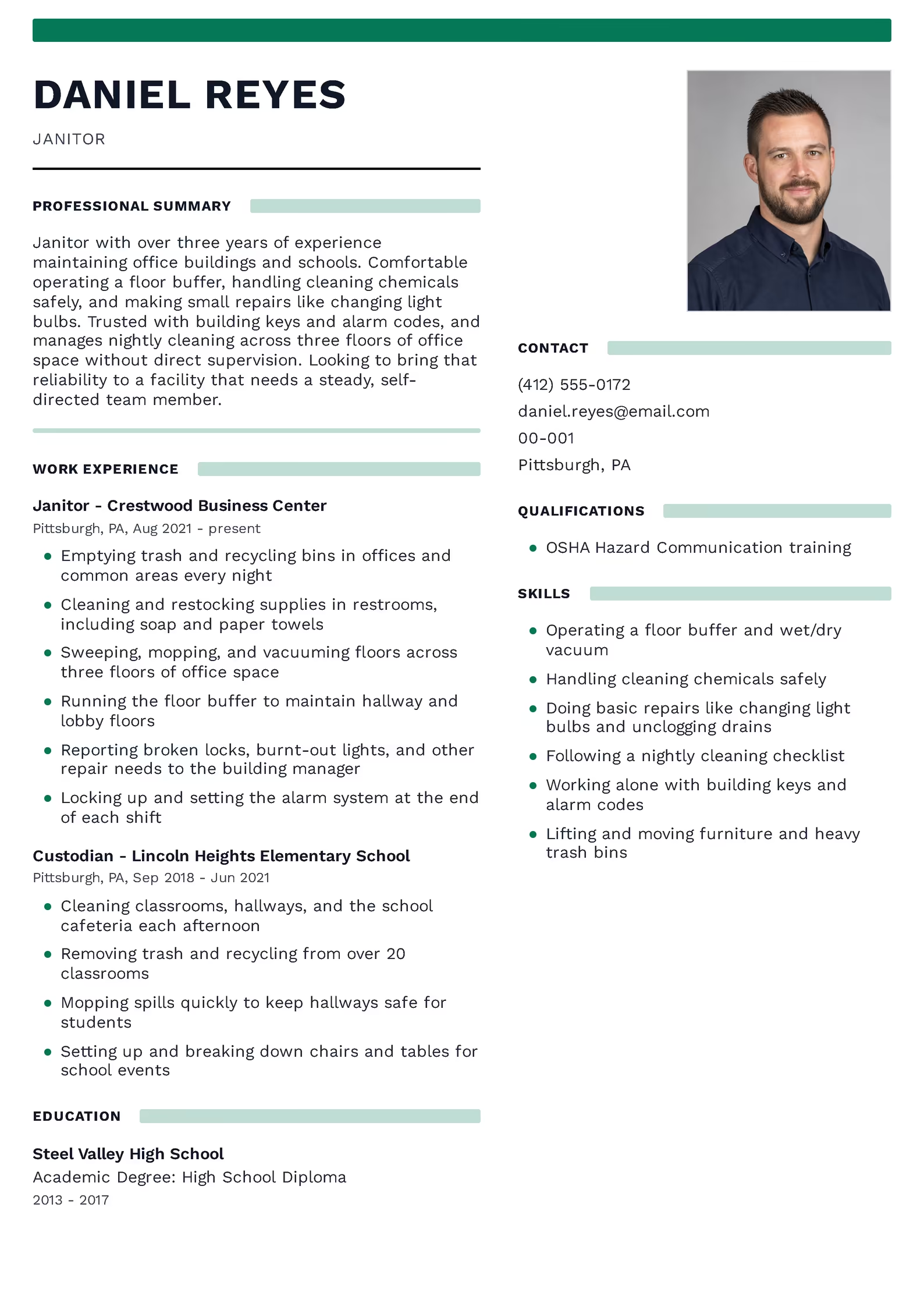
Hard and Soft Skills for a Resume (List + Examples)
Many job seekers either skip the skills section entirely or fill it with vague, repeated phrases that don’t say much. That’s a missed opportunity, since the skills section is one of the most heavily weighted areas for both recruiters skimming quickly and applicant tracking systems scanning for keyword matches.
Below is a complete breakdown of the difference between the two skill types, ready-to-use lists organized by job category, and a formula for proving soft skills with real evidence instead of empty adjectives.
Hard Skills vs. Soft Skills: What's the Difference?
Both matter, but they serve different purposes on a resume. Hard skills tend to get you past the first screening (especially with an ATS), while soft skills often come up again during interviews to assess team fit.
| Hard Skills | Soft Skills | |
|---|---|---|
| Definition | Teachable, technical abilities | Behavioral and interpersonal traits |
| Examples | Excel, welding, bookkeeping, CPR certification | Communication, adaptability, leadership |
| How they're measured | Certifications, tests, years of experience | Observed behavior, references, interviews |
| Where they matter most | ATS keyword matching, technical screening | Interviews, team culture fit |
How Many Skills Should You Include on a Resume?
A shorter, targeted list is easier for a recruiter to scan in a few seconds, and it signals that you understand exactly what the role requires. A list of 25+ generic skills does the opposite — it reads as padding and makes it harder for the reader to spot what’s actually relevant.
Aim for a mix: roughly two-thirds hard skills specific to the role, and one-third soft skills that support how you’d perform in it.
Hard Skills List by Job Category
Hard Skills by Job Category
| Job Category | Example Hard Skills |
|---|---|
| Office & Administrative | Data entry, Microsoft Office, scheduling software, filing systems, invoicing |
| Trades & Manual Labor | Forklift operation, blueprint reading, power tool operation, welding, OSHA safety compliance |
| Healthcare & Caregiving | Patient charting, CPR/BLS certification, medication administration, electronic health records (EHR) |
| Sales & Customer Service | CRM software, point-of-sale (POS) systems, upselling, cold calling, order processing |
| Technical & Office Software | Excel formulas, QuickBooks, project management software, basic coding, database entry |
* Always cross-check this list against the specific job posting — the exact tool names and certifications the employer lists matter more than a general category match.
Soft Skills List for Every Job
Soft Skills by Category
| Category | Example Soft Skills |
|---|---|
| Communication | Active listening, public speaking, written communication, conflict resolution |
| Work ethic | Reliability, punctuality, attention to detail, follow-through |
| Teamwork | Collaboration, adaptability, cross-functional coordination |
| Leadership | Delegation, mentoring, decision-making, accountability |
| Problem-solving | Critical thinking, troubleshooting, prioritization under pressure |
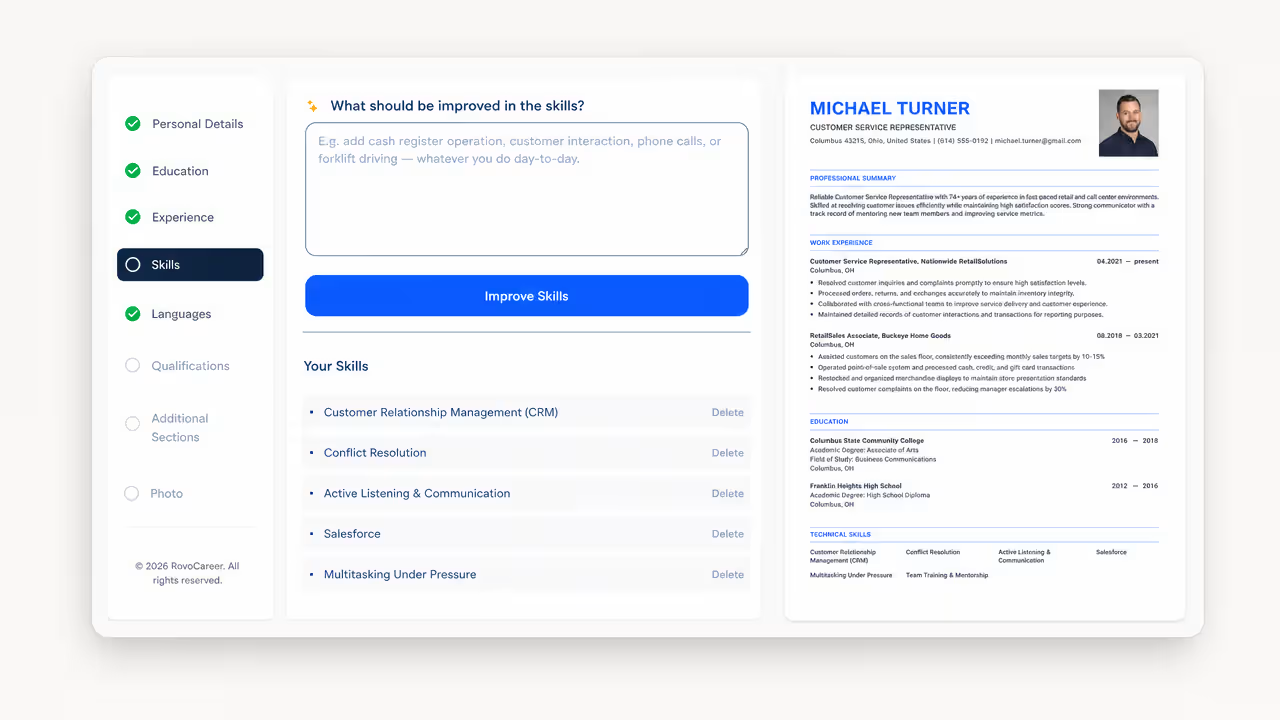
Not sure which skills to prioritize? Our resume builder suggests relevant hard and soft skills based on the job title you enter.
Build your resume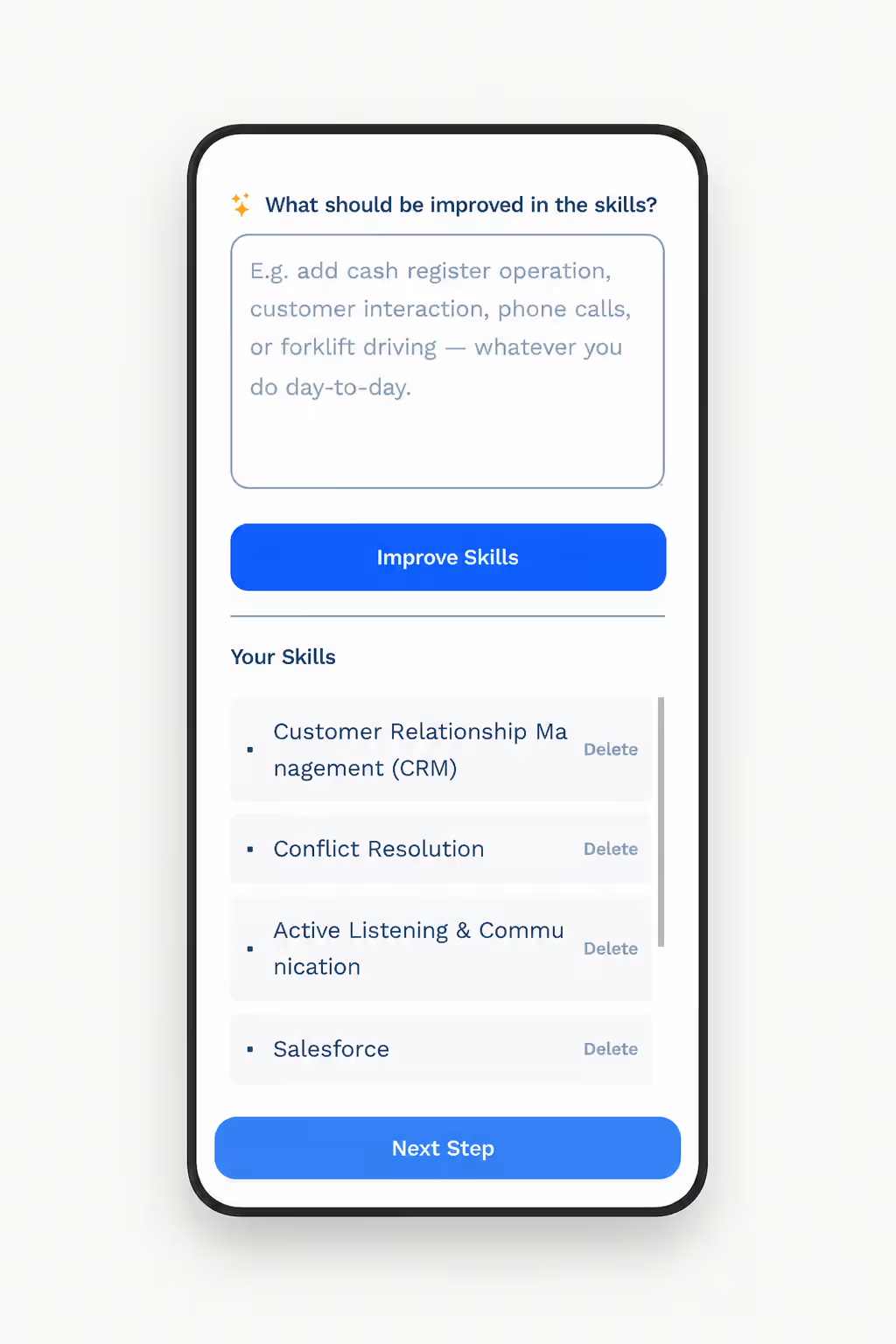
How to Prove Soft Skills With Evidence, Not Just Buzzwords
Where to Put Skills on Your Resume
Skills can also reinforce themselves inside your work experience bullets, where a hard skill gets tied to a specific, measurable result.
Resume example — Warehouse Supervisor
Marcus Bailey
+1 555 340 8821
marcus.bailey@email.com
Columbus, OH
Warehouse supervisor with 6 years of experience overseeing inventory, staffing, and shipment accuracy for a 50,000 sq ft distribution center.
03.2020–Present Midwest Distribution Co.
Position: Warehouse Supervisor
2016–2018 Columbus State Community College
Major: Logistics and Supply Chain Management
Matching Your Skills List to a Job Posting
Common Mistakes When Listing Skills on a Resume
| Mistake | Fix |
|---|---|
| Listing 20+ skills with no clear priority | Narrow to the 8–12 most relevant to the target job |
| Only using generic soft skills (“team player”) | Pair at least a few with measurable evidence in your bullets |
| Copying the same skills list for every application | Adjust the list to match each job posting's specific terms |
| Claiming skills you can't back up in an interview | Only list skills you can genuinely speak to and demonstrate |
Build a Resume With the Right Skills Highlighted
If you want the formatting and layout handled for you while you focus on choosing the right skills, a structured resume builder can save a lot of back-and-forth.
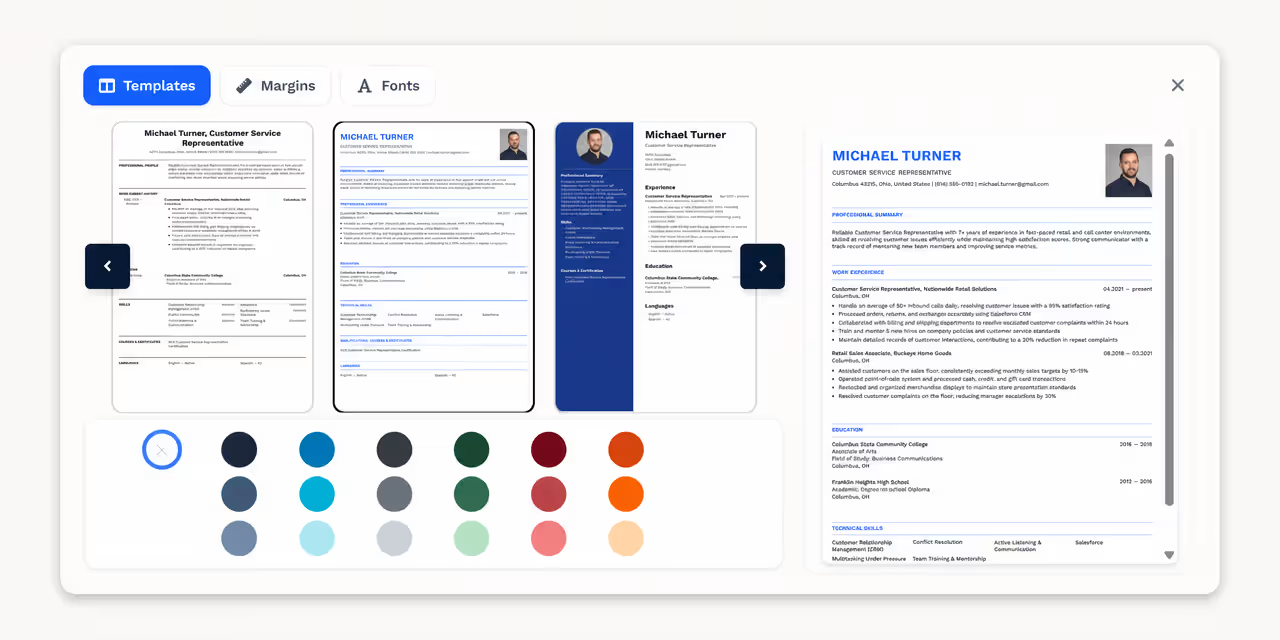
Explore our resume templates to find a layout that highlights your skills section clearly, whatever industry you're in.
Browse resume templates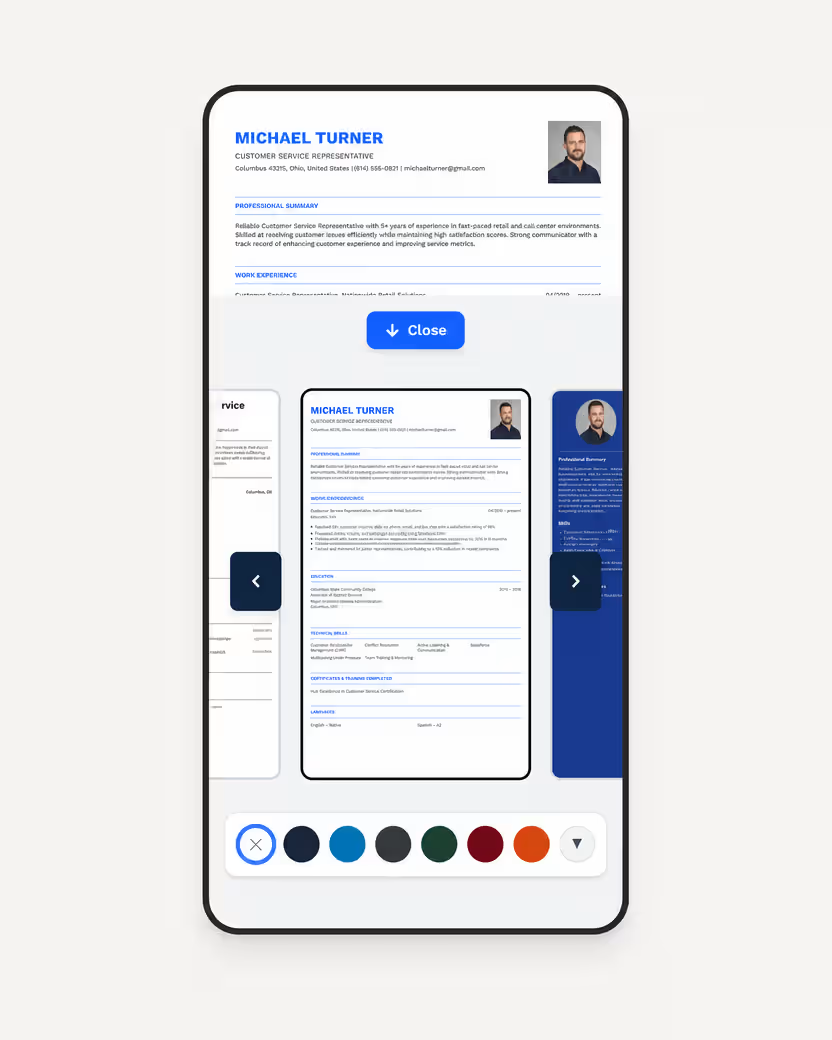
Sources
Frequently Asked Questions
The most important hard skills are the ones explicitly listed in the job posting you're applying to — matching those specific terms carries more weight with both recruiters and applicant tracking systems than a generic, widely-applicable skill list.
No. Most roles require at least some hard skills to be considered qualified, and soft skills work best as a supplement that shows how you'll apply those technical abilities, not as a substitute for them.
Not usually — most resumes work best with a single skills section that blends hard and soft skills together, since separating them can make the section longer without adding clarity.
Only list a skill if you can speak to it comfortably in an interview; if you're still learning a tool, it's more honest and often more effective to mention it in your summary as a skill you're currently developing.
Yes. Even without much work experience, coursework, certifications, and school projects usually provide several legitimate hard skills worth listing alongside your soft skills.
It's fine as a starting point, but you should still adjust the specific wording to match each job posting, since applicant tracking systems often favor exact keyword matches over close synonyms.
A rough guideline is about two-thirds hard skills and one-third soft skills within your 8–12 total skills, though this can shift depending on how technical the target role is.