Should You Include a Photo on Your Resume?
There’s no single global rule here, which is exactly why so much conflicting advice exists online. The right answer depends on where the job is, who’s hiring, and how that country’s employment laws treat personal information on application documents.
This guide breaks down the U.S. and U.K. guidance in detail, shows what the research actually says about how photos affect callback rates, and walks through the country-by-country differences so you can make the right call for your specific situation.
What U.S. and U.K. Recruiters Say About Resume Photos
The reasoning is straightforward: once a hiring manager sees your face, they may consciously or unconsciously register your age, race, gender, or other protected characteristics before ever reading your qualifications. If a rejected candidate later files a discrimination complaint, a resume photo on file can be used as evidence that the employer had that information available at the time of the decision.
The United Kingdom follows a similar logic under the Equality Act 2010, which protects against discrimination based on age, disability, race, sex, and other characteristics during hiring. Because of this, most UK employers and recruitment agencies also prefer resumes and CVs without photos.
Does a Resume Photo Help or Hurt? What the Research Shows
The results were uneven in a way that should give any job seeker pause. Attractive male candidates received meaningfully more callbacks than men with no photo at all. Women, however, saw the opposite pattern — candidates with no photo received a higher callback rate than either attractive or average-looking women with a photo attached.
In other words, a resume photo doesn’t just carry legal risk — it introduces an unpredictable variable that can work against you regardless of how you look, simply because it activates bias the resume format was designed to remove in the first place.
Resume Photo Rules by Country: Where It's Expected vs. Discouraged
Resume/CV Photo Norms by Region
| Region / Country | Photo Expectation |
|---|---|
| United States, Canada | Discouraged — omit it |
| United Kingdom, Ireland, Australia | Discouraged — omit it |
| Germany, Austria, Switzerland | Traditionally expected, though not legally required |
| France, Spain, Italy | Common and generally accepted |
| Japan, South Korea, China | Often expected on standard CV formats |
| Sweden, Netherlands | Usually omitted, similar to UK/US norms |
* Norms shift over time and by industry — when a job posting gives explicit instructions, always follow those over general regional guidance.
When a Resume Photo Might Still Make Sense
The Safer Alternative: Let LinkedIn Do the Work
This approach gives you the best of both: your resume stays focused on qualifications and experience, while anyone curious about your appearance can find a professional photo one click away, in the context where it’s culturally expected.
Just make sure the resume itself stays clean and easy to scan — our guide on common resume mistakes covers other formatting choices that can quietly hurt your chances the same way an unnecessary photo can.
How Applicant Tracking Systems Handle Resume Photos
In the U.S. and U.K. specifically, some companies configure their ATS to automatically flag or set aside applications that include a photo, precisely to stay consistent with anti-discrimination compliance. A resume that fails to parse correctly may never reach a human reviewer at all, regardless of how strong the candidate is.
If you're building your resume from scratch, starting from a clean, single-column layout avoids this problem entirely — you can browse ATS-friendly resume templates that are structured to parse correctly without needing a photo placeholder.
If You Do Include a Photo: Formatting Guidelines
Resume Photo Technical Guidelines
| Element | Recommendation |
|---|---|
| Background | Plain, neutral color (white, light gray, or soft blue) |
| Framing | Head and shoulders, facing the camera |
| Attire | Same standard you'd use for an in-person interview |
| File format | JPEG, at least 400×400 pixels for digital resumes |
| Placement | Top corner of the document, never overlapping text |
* Avoid selfies, group photo crops, or filtered images — use a plain, well-lit headshot.
Common Mistakes Job Seekers Make With Resume Photos
Quick Decision Guide and Next Steps
Either way, the resume’s job is to get your qualifications read clearly and quickly. If you're not sure your current layout is doing that well, it's worth reviewing the whole document rather than just the photo decision.
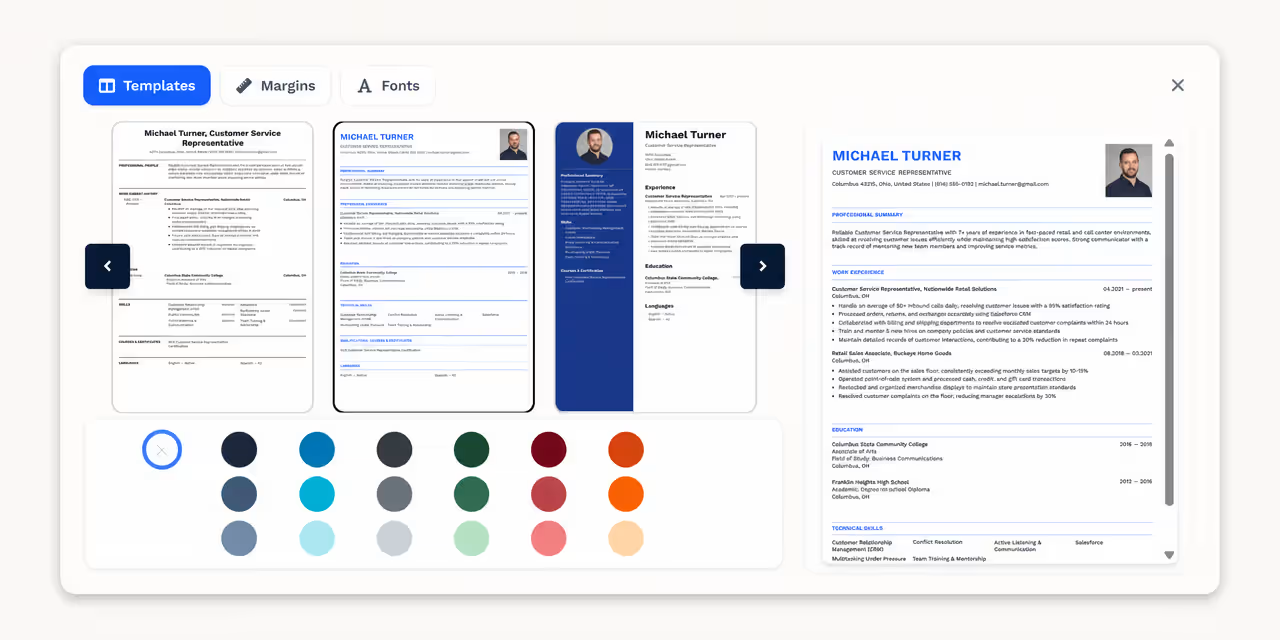
Our resume builder lets you add or remove a photo with one click, so you can match the format to wherever you're applying.
Build your resume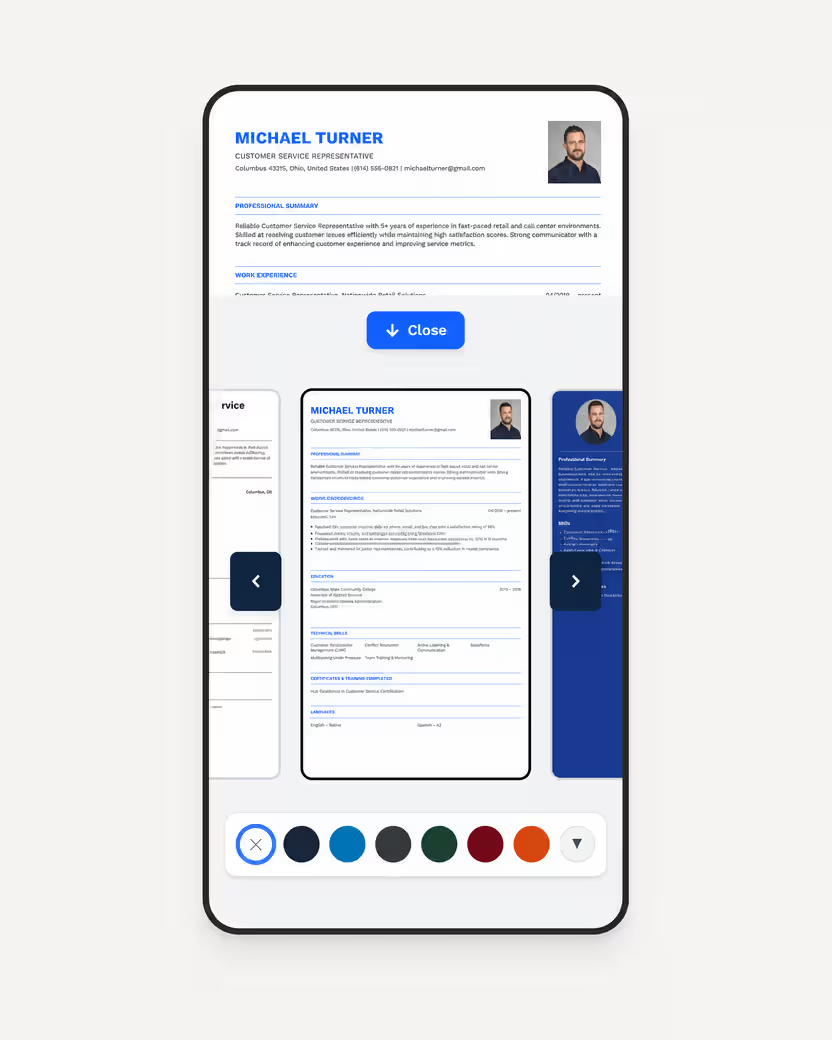
Sources
Frequently Asked Questions
It's not illegal for a candidate to include one, but it creates legal risk for the employer, which is why the EEOC advises against employers requesting photos and why most U.S. companies avoid processing resumes that include them.
In some cases, yes. Certain applicant tracking systems are configured to flag or set aside resumes with embedded photos to reduce discrimination risk, and image files can also interfere with how the system parses the surrounding text.
It depends on which office is hiring. If you're applying to a European headquarters where photos are customary, including one is usually fine; if you're applying to that same company's U.S. or U.K. office, follow the local no-photo norm instead.
Research on this is mixed at best — a large field study found photos boosted callbacks for attractive male candidates but reduced callbacks for female candidates compared to resumes with no photo at all, suggesting the effect is unpredictable rather than reliably positive.
A LinkedIn profile link is the standard alternative — it gives recruiters access to a professional photo in a context where it's culturally expected, without adding one directly to your resume.
Yes, this is one of the few clear exceptions — appearance is directly relevant to these roles, so a professional headshot is expected and usually attached as a separate file rather than embedded in the resume text.
No. Most standard U.S. and U.K. resume templates are designed without a photo section at all, so a photo-free resume reads as fully professional and expected in these markets — not as a missing element.