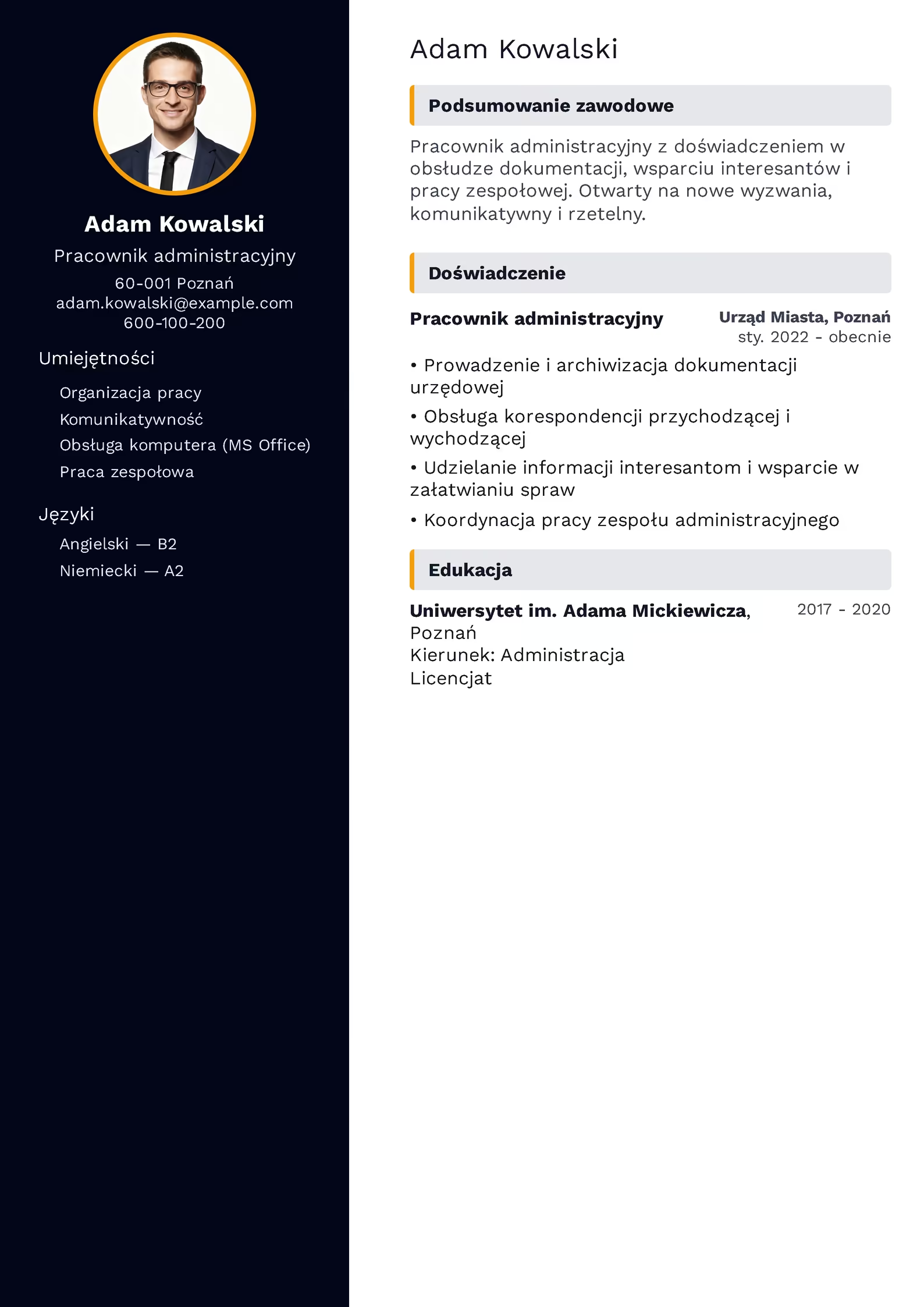
How to Write a Resume in 2026 That Actually Gets Read
The good news is that the rules are clearer than ever. A strong resume in 2026 follows a predictable structure, uses the right keywords, and communicates your value in concrete terms. Whether you are applying for your first job or making a career move after 15 years in the same role, this guide walks you through every step.
In the sections below, you will learn how to choose the right format, write each section from scratch, avoid the most common mistakes, and adapt your resume for both automated systems and human readers. By the end, you will have everything you need to put together a document that stands out.
Choose the Right Resume Format Before You Write a Single Word
The chronological resume lists your work history starting from the most recent position. It is the most widely accepted format and the safest choice for anyone with a consistent work history in a single field. Accounting professionals, administrative staff, and logistics managers typically do best with this format.
The functional resume leads with skills rather than job titles. It works for career changers or people with significant employment gaps, but many ATS systems struggle to parse it correctly — use it only when you have a compelling reason.
The combination resume blends both approaches: a skills summary at the top followed by a chronological work history. It suits experienced professionals who want to highlight competencies while still showing a solid career timeline.
Resume Format Comparison
| Format | Best for | ATS-friendly |
|---|---|---|
| Chronological | Consistent career path, same industry | Yes |
| Functional | Career changers, long employment gaps | Often no |
| Combination | Senior professionals, career pivots | Usually yes |
* ATS compatibility depends on the specific software used by the employer.
What to Include in a Resume: The 6 Essential Sections
1. Contact information — your full name, phone number, professional email address, city and state (no full street address), and a LinkedIn URL if your profile is up to date.
2. Resume summary — 2 to 4 sentences at the top of the document that position you for the specific role. This is not an objective statement. It is a short pitch.
3. Work experience — listed in reverse chronological order, with company name, your title, dates of employment, and 3 to 6 bullet points per role.
4. Education — your highest degree, the institution, and graduation year. If you graduated more than 10 years ago, move this section below work experience.
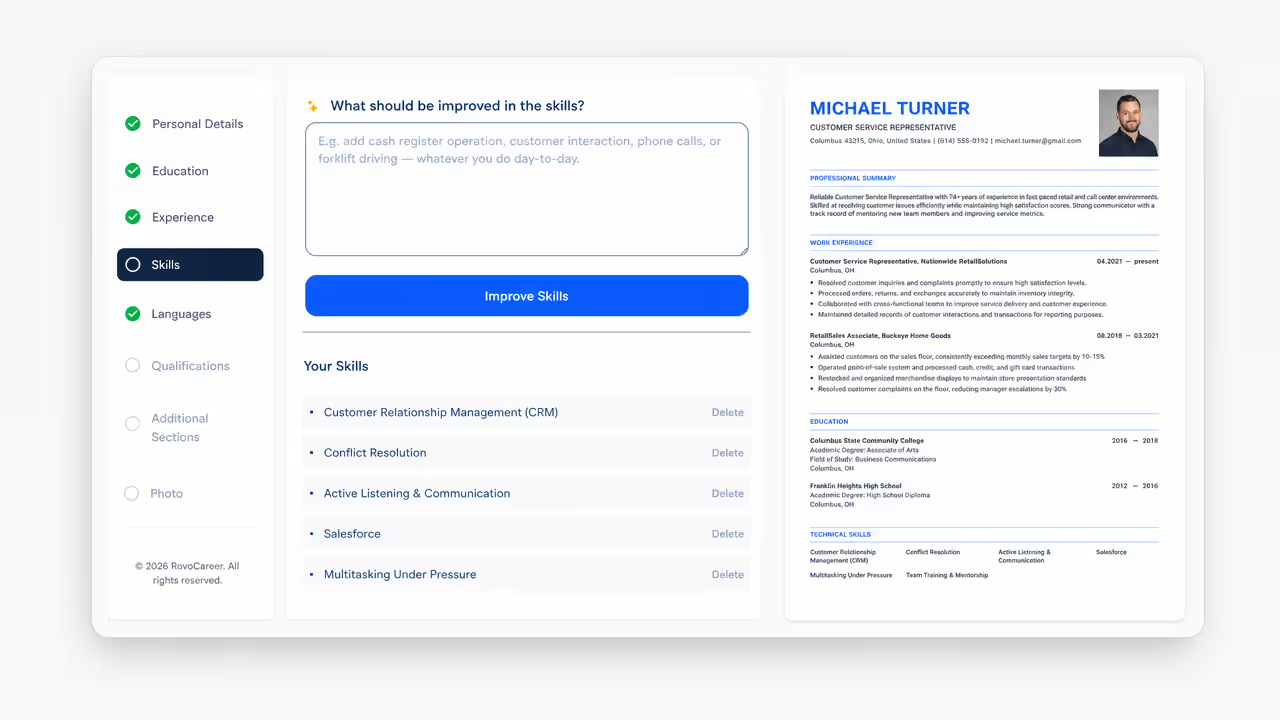
5. Skills — a concise list of hard and soft skills relevant to the role. This section is critical for ATS keyword matching.
6. Optional sections — certifications, volunteer work, languages, or publications depending on your field.
Resume Structure — Example Layout
Michael Carter
+1 (312) 555-0192
michael.carter@email.com
Chicago, IL | linkedin.com/in/michaelcarter
Detail-oriented accountant with 8 years of experience in financial reporting and tax compliance. Proven track record of reducing reporting errors by 30% and streamlining month-end close processes. Seeking to bring analytical expertise to a mid-sized firm in the Chicago area.
03.2019 – Present Hartfield & Associates LLC
Position: Senior Accountant
2015 – 2019 University of Illinois at Chicago
B.S. in Accounting
I consent to the processing of my personal data for recruitment purposes.
How to Write a Resume Summary That Makes Recruiters Keep Reading
A strong summary answers three questions in two to four sentences: Who are you professionally? What is your most relevant achievement? What are you looking for next?
Avoid vague phrases like „highly motivated self-starter" or „results-driven professional." Every candidate says that. Instead, lead with your job title, years of experience, and one specific, quantified result.
How to Describe Work Experience on a Resume: The Formula That Works
Use the Action + Task + Result formula for every bullet point. Start with a strong action verb, describe what you did, and end with a measurable outcome wherever possible. If you don't have exact numbers, use percentages, time frames, or scale descriptors.
Also pay attention to verb tense: use past tense for previous roles and present tense for your current position. It's a small detail, but inconsistency here signals carelessness to recruiters reviewing hundreds of applications.
For context on how to describe your work duties in a way that attracts recruiters, the same core principle applies across markets: specificity always beats generality.
How to Write a Resume That Passes ATS in 2026
The key to passing ATS is keyword alignment. Read the job posting carefully and identify the specific terms the employer uses. If they say „inventory management," use that exact phrase — not „stock control" or „warehouse oversight," even if those mean the same thing to you.
Avoid common ATS pitfalls: headers and footers (many systems skip them), tables and graphics (they confuse parsers), and unusual fonts or colors. Stick to clean, single-column layouts in standard fonts like Calibri, Arial, or Georgia.
For a deeper look at how to write a resume that passes automated recruitment systems, the formatting principles are the same whether you are applying in the US or elsewhere.
Pick a clean, ATS-friendly layout from our resume template library and start filling it in minutes.
Browse Resume Templates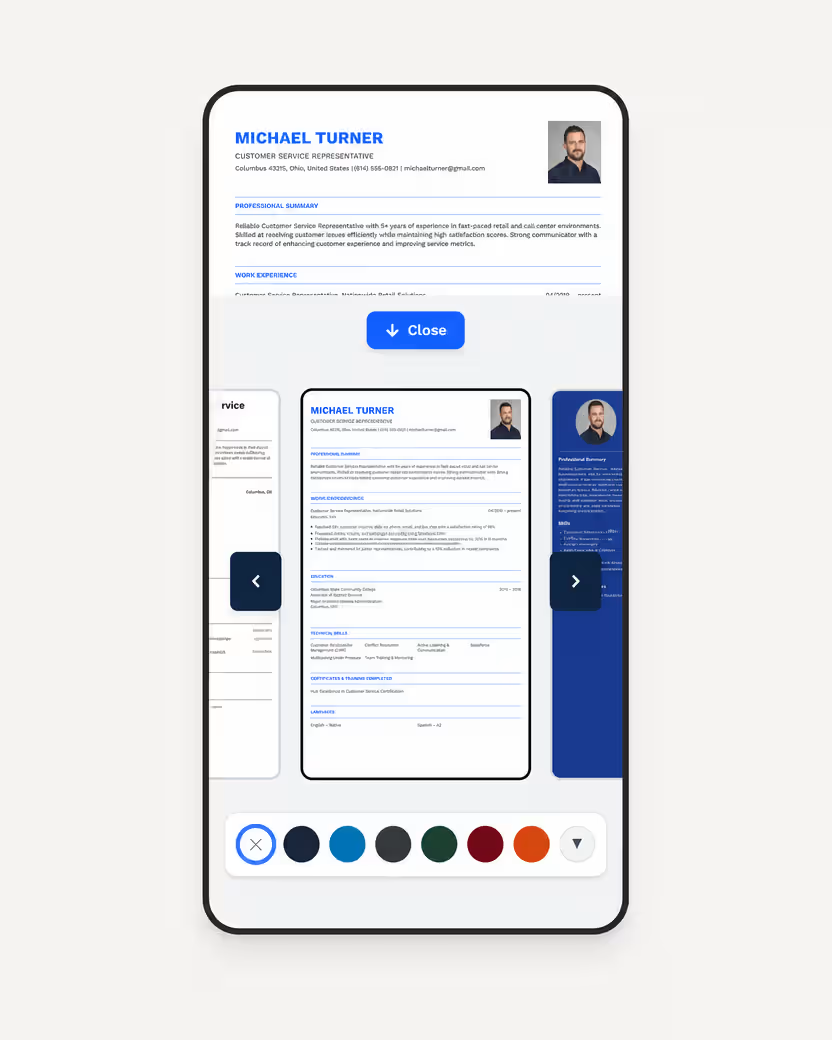
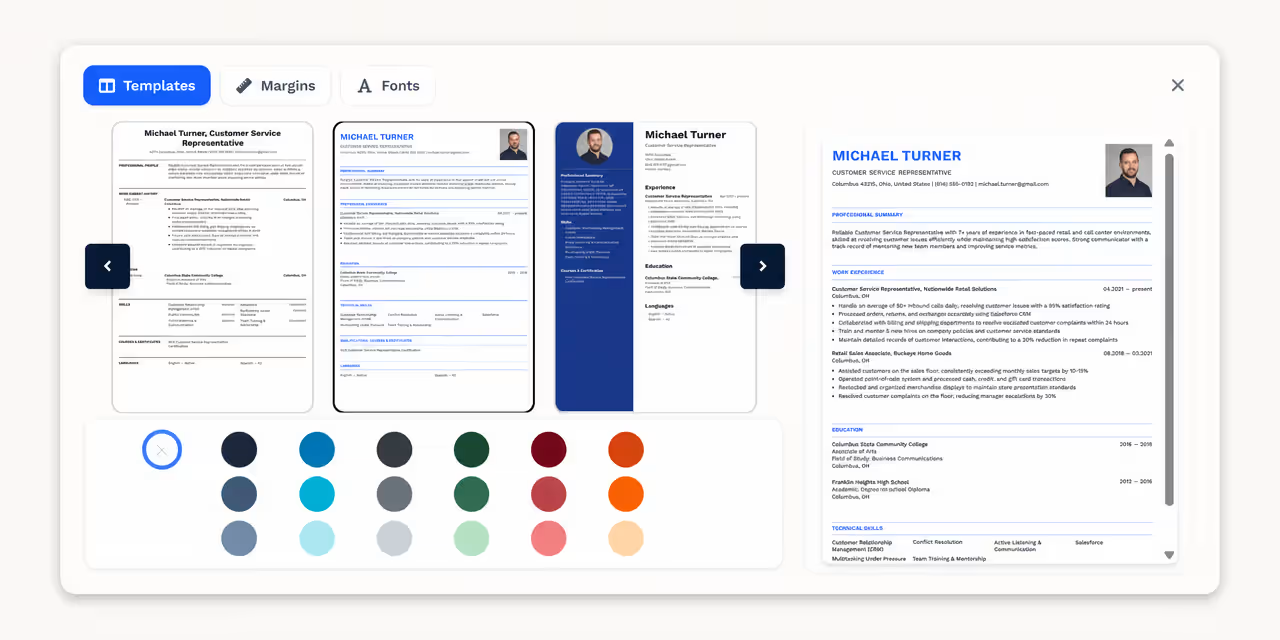
The Skills Section: What to List and What to Leave Out
Hard skills are specific, teachable abilities: software proficiencies, certifications, languages, technical processes. List only those relevant to the role you are applying for. A customer service representative applying for an office manager position should highlight scheduling software and budget management — not general communication skills.
Soft skills should be used sparingly and only when supported by evidence elsewhere in the resume. „Strong communicator" means nothing on its own. But if your experience section shows you led team meetings and trained new hires, listing „team leadership" in your skills section makes sense.
A reliable approach is to keep your skills list between 8 and 12 items, grouped into two categories: technical skills and interpersonal skills. Anything beyond that starts to look like keyword stuffing.
Resume Length, Font, and Formatting Rules for 2026
Length: One page for candidates with fewer than 10 years of experience. Two pages for senior professionals with a long, relevant track record. Never go to three pages unless you are submitting an academic CV.
Font: Use a single professional font between 10 and 12 points for body text. Resume headers can go up to 14–16 points. Calibri, Arial, Garamond, and Georgia are all safe choices.
Margins: Keep them between 0.5 and 1 inch on all sides. Anything smaller looks cramped; anything larger wastes valuable space.
White space: Recruiters appreciate breathing room. Use consistent spacing between sections and don't cram every inch with text. A resume that looks dense and exhausting is less likely to be read carefully.
For guidance on whether your resume should be one or two pages, the answer almost always comes down to the density of relevant experience — not the amount of content you want to include.
How to Tailor Your Resume for Every Job Application
Tailoring doesn't mean rewriting your entire resume for each application. It means making targeted adjustments: updating your summary to reflect the specific role, reordering your bullet points to put the most relevant achievements first, and adjusting your skills section to mirror the language in the job posting.
Start by reading the job description twice. Highlight the required qualifications, preferred skills, and any repeated phrases. Then check your resume: are those terms present? Are your most relevant experiences positioned prominently? Does your summary mention the job title you are applying for?
This process takes 15 to 20 minutes per application. It consistently leads to higher callback rates. For a structured approach to tailoring your resume to a specific job posting, the core method translates directly to the US market.
Common Resume Mistakes That Cost You the Interview
Using an unprofessional email address. An address like „partyguy1987@gmail.com" signals a lack of professionalism before a recruiter reads a single bullet point. Create a simple, name-based address.
Including a photo. In the United States, including a photo on your resume is strongly discouraged. It opens employers to unconscious bias claims and many companies have policies against reviewing documents that include photos.
Listing references as „available upon request." This phrase wastes space and is implied. Recruiters know they can ask for references. Don't include it.
Using passive language. Phrases like „was responsible for" or „helped with" are weaker than active alternatives. „Managed," „led," „reduced," and „increased" communicate ownership and impact.
Inconsistent formatting. Mixed fonts, misaligned bullet points, and inconsistent date formats (some written as „Jan 2023," others as „01/2023") all signal sloppiness. Proofread for formatting consistency as carefully as you proofread for typos.
For a full breakdown of the most frequent resume errors and how to fix them, the list is longer than most candidates expect.
How to Write a Resume With No Experience or Limited Work History
Lead with your education if you are a recent graduate. Place it above your work experience and include relevant coursework, academic projects, and any honors or awards. A receptionist applying with no formal work history might highlight a college course in business communication, a semester managing a student organization's calendar, or a part-time volunteer role at a local nonprofit.
For people returning after a career break, address the gap briefly in your summary — don't hide it. „Returning to the workforce after a three-year caregiving leave" is clear, professional, and far less damaging than an unexplained two-year gap that recruiters will notice immediately.
Freelance work, volunteer roles, and internships all count as experience. List them the same way you would a paid position: company or organization name, your role, dates, and bullet points describing what you accomplished. For more detailed guidance, writing a resume based on internships and volunteer work follows the same structural logic.
Resume vs. CV: What Is the Difference and Which One Do You Need?
A resume is a concise, targeted document of one to two pages. It summarizes your most relevant experience and is tailored to a specific job. It is the standard document for nearly all private-sector job applications in the US.
A CV (curriculum vitae) is a comprehensive document that can run 5 to 10 pages or more. It includes a complete record of your academic background, publications, research, presentations, awards, and professional memberships. It is used almost exclusively in academia, medicine, and research — and when applying for positions at international institutions.
If you are applying for a standard corporate, retail, healthcare, logistics, or administrative role in the US, you need a resume — not a CV. For a detailed comparison of the differences between a CV and a resume, the distinction matters more than most people realize when applying internationally.
Step-by-Step Resume Writing Checklist for 2026
Resume Checklist — 2026
| Item | Done? |
|---|---|
| Contact info is complete and professional | ☐ |
| Email address is name-based and appropriate | ☐ |
| Summary is tailored to the specific role | ☐ |
| Work experience uses Action + Task + Result format | ☐ |
| Bullet points start with strong action verbs | ☐ |
| Keywords from the job posting are present | ☐ |
| Skills section is relevant and not overcrowded | ☐ |
| No photos, references, or irrelevant personal info | ☐ |
| Formatting is consistent throughout | ☐ |
| Resume is saved as a PDF (unless otherwise specified) | ☐ |
| Document is 1–2 pages maximum | ☐ |
| Proofread at least twice | ☐ |
Start Writing Your Resume Today
If you are not sure where to begin, start with your most recent job. Write three bullet points using the Action + Task + Result formula. Then write your summary. Then fill in the rest. The order doesn't matter as much as starting.
The best resume is not the one with the most impressive credentials — it's the one that most clearly communicates why you are the right fit for this specific role. Take the time to tailor it, and the callbacks will follow. You can build your resume step by step using our online resume builder, which guides you through each section and formats everything automatically.
Use our resume builder to create a professional, ATS-ready resume in minutes — no design skills required.
Build My Resume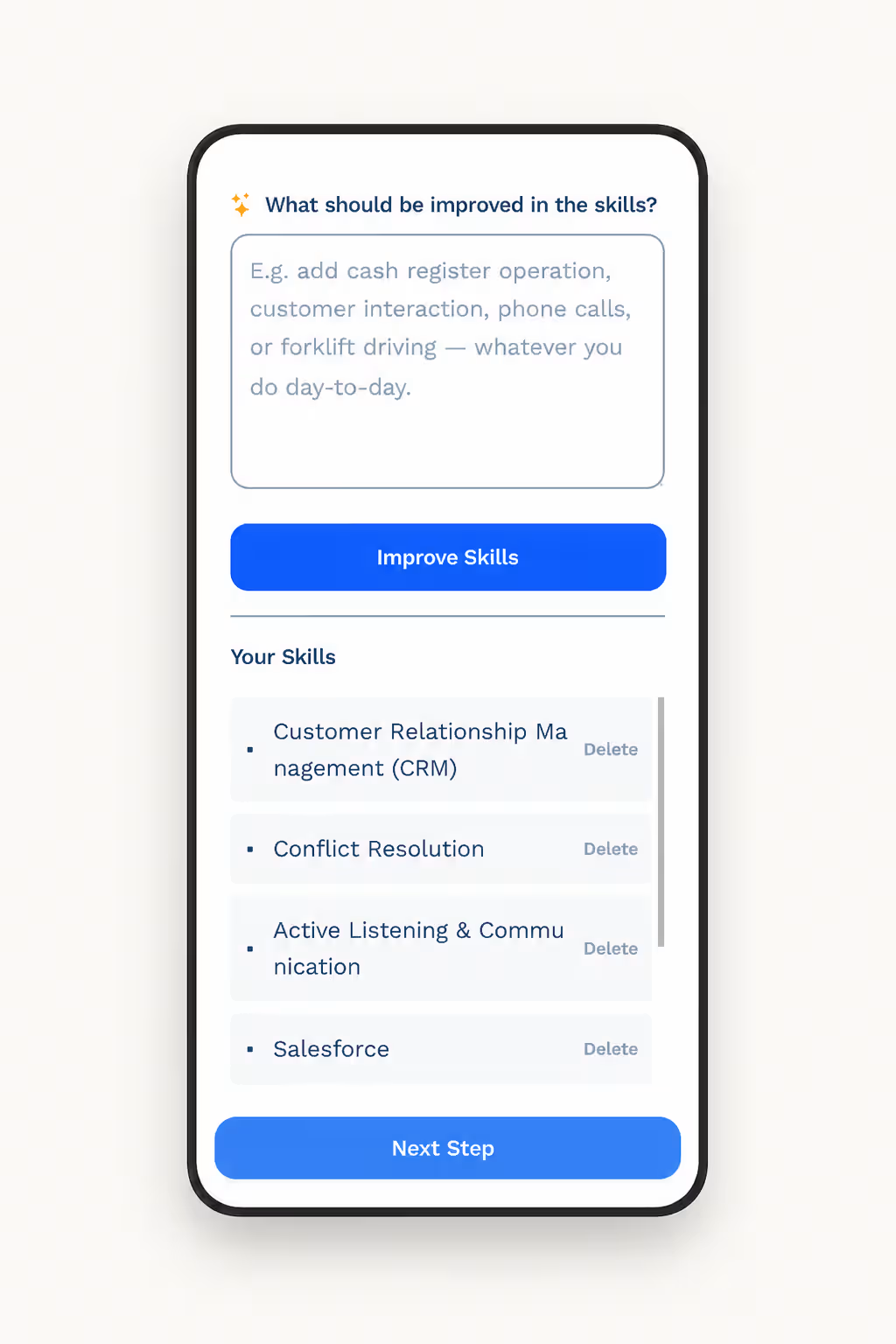
Frequently Asked Questions
For most candidates, one page is ideal if you have fewer than 10 years of experience. Senior professionals with a long, relevant track record can use two pages. Going beyond two pages is rarely justified for private-sector roles — save the long-form format for academic CVs.
No. In the United States, including a photo on your resume is strongly discouraged and considered unprofessional in most industries. Many employers have policies against reviewing applications that include photos to avoid unconscious bias.
A combination resume usually works best for career changers. It leads with a skills summary that highlights transferable competencies, followed by a chronological work history. This lets you present relevant skills upfront without hiding your employment background.
Focus on your education, academic projects, internships, volunteer work, and any freelance or informal experience. Place your education section above work experience, and write bullet points for each role using the same Action + Task + Result structure you would use for paid positions.
Most career experts recommend listing the last 10 to 15 years of work history, which typically covers 3 to 5 positions. Older roles can be summarized in a single line or omitted entirely if they are no longer relevant to your current career direction.
Save and send your resume as a PDF unless the job posting specifically requests a Word document. PDF preserves your formatting across all devices and operating systems, while Word files can render differently depending on the software version the recruiter uses.
You don't need to rewrite your resume from scratch each time, but you should tailor it for every application. At minimum, update your summary to match the role, adjust your skills section to reflect the job posting's language, and reorder bullet points to highlight the most relevant experience first.
The most important keywords are the ones used in the specific job posting you are applying to. Read the description carefully, identify repeated phrases and required qualifications, and make sure those exact terms appear in your resume — particularly in your skills section and work experience bullet points.