What Warehouse Managers Actually Look for on a Forklift Operator Resume
That means your resume should lead with facts, not general claims. Instead of writing "experienced with machinery," say exactly which forklifts you've run and what you moved with them. This article walks through a full example resume, plus the skills, duties, and mistakes that matter most for this job.
The Most Common Mistakes on a Forklift Operator Resume
Leaving out the certification. Most warehouses require a current forklift certification before they'll even schedule an interview. If you have one, it should be easy to find on your resume, not buried at the bottom.
Writing duties too vaguely. "Operated machinery" could mean almost anything. Naming the actual equipment and task makes your experience easy to picture.
Not mentioning a safety record. If you've worked without accidents or safety violations, that's worth saying directly — it's one of the first things a warehouse manager checks for.
Skipping the type of forklift. Sit-down, stand-up, and reach trucks are operated differently. Naming which ones you've run tells the employer exactly what training you'll need, if any.
Here's the same duty written two different ways.
A Full Forklift Operator Resume Example
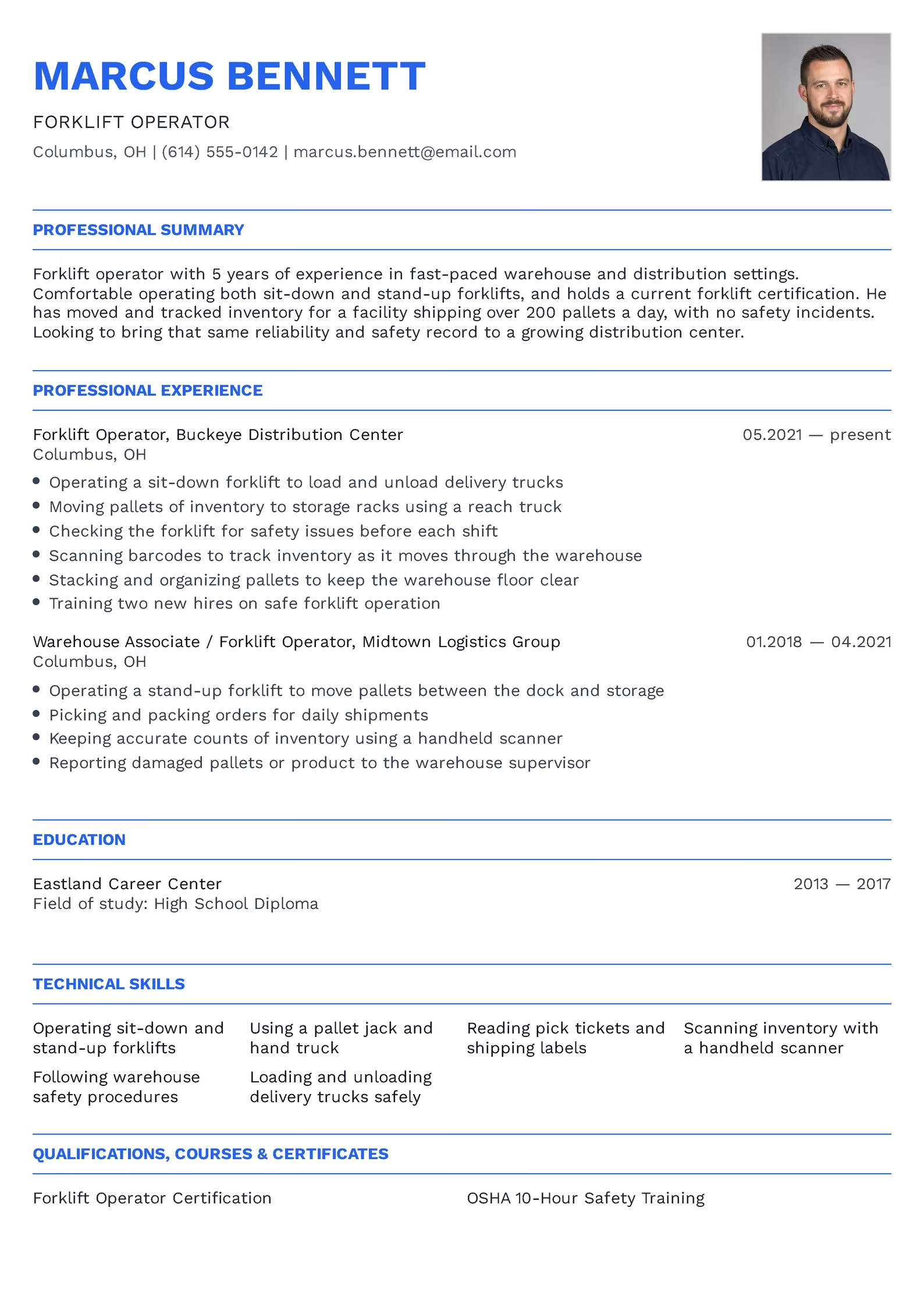
Notice that his most recent job lists more detail than the older one — that's intentional. Employers care most about your current or most recent role, so that's where the specific tasks and equipment names should go.
Resume Example — Forklift Operator
Marcus Bennett
Columbus, OH
Forklift operator with 5 years of experience in fast-paced warehouse and distribution settings. Comfortable operating both sit-down and stand-up forklifts, and holds a current forklift certification. He has moved and tracked inventory for a facility shipping over 200 pallets a day, with no safety incidents. Looking to bring that same reliability and safety record to a growing distribution center.
Forklift Operator
Buckeye Distribution Center, Columbus, OH
05.2021 – Present
Warehouse Associate / Forklift Operator
Midtown Logistics Group, Columbus, OH
01.2018 – 04.2021
High School Diploma
Eastland Career Center
2013 – 2017
Writing a Professional Summary for a Forklift Operator Resume
Keep it to 3–4 sentences. Below are three examples for different experience levels — notice that each one names a specific type of forklift instead of just saying "warehouse equipment."
Which Skills Belong on a Forklift Operator Resume
Aim for 6–10 skills. If a job posting mentions a specific forklift type or software, like a reach truck or a scanning system, and you've used it, add it to your list.
Skills for a Forklift Operator Resume
| Job-Specific Skills | Personal Strengths |
|---|---|
| Operating sit-down and stand-up forklifts | Staying alert and focused for a full shift |
| Using a pallet jack and hand truck | Following instructions accurately |
| Reading pick tickets and shipping labels | Working well as part of a team |
| Scanning inventory with a handheld scanner | Staying calm during busy shipping days |
| Following warehouse safety procedures | Being on time and dependable |
| Loading and unloading delivery trucks safely | Paying close attention to detail |
| Doing daily equipment safety checks | Communicating clearly with supervisors |
| Stacking and organizing pallets efficiently | Willingness to learn new equipment |
| Valid forklift certification | Physical stamina for lifting and standing |
| Basic inventory recordkeeping | Problem-solving when orders don't match stock |
What Does a Forklift Operator Actually Do on a Shift?
Typical Forklift Operator Duties
| Area | Example Forklift Operator Duties |
|---|---|
| Loading and unloading | Operating a forklift to load and unload delivery trucks at the dock |
| Moving inventory | Moving pallets of product from the dock to storage racks |
| Order picking | Picking pallets or cases for outgoing shipments based on pick tickets |
| Safety checks | Inspecting the forklift for issues like low tires or fluid leaks before each shift |
| Inventory tracking | Scanning barcodes to update inventory counts in the warehouse system |
| Stacking | Stacking and organizing pallets to use warehouse space efficiently |
| Reporting damage | Reporting damaged pallets, product, or equipment to a supervisor |
| Training | Showing new employees how to operate a forklift safely |
| Equipment maintenance | Reporting when a forklift needs maintenance, like a battery charge or repair |
| Housekeeping | Keeping aisles and the warehouse floor clear of debris and hazards |
Not sure how to describe your own duties? Our resume builder walks you through it step by step.
Build Your Resume

Should a Forklift Operator Resume Look Different From an Office Resume?
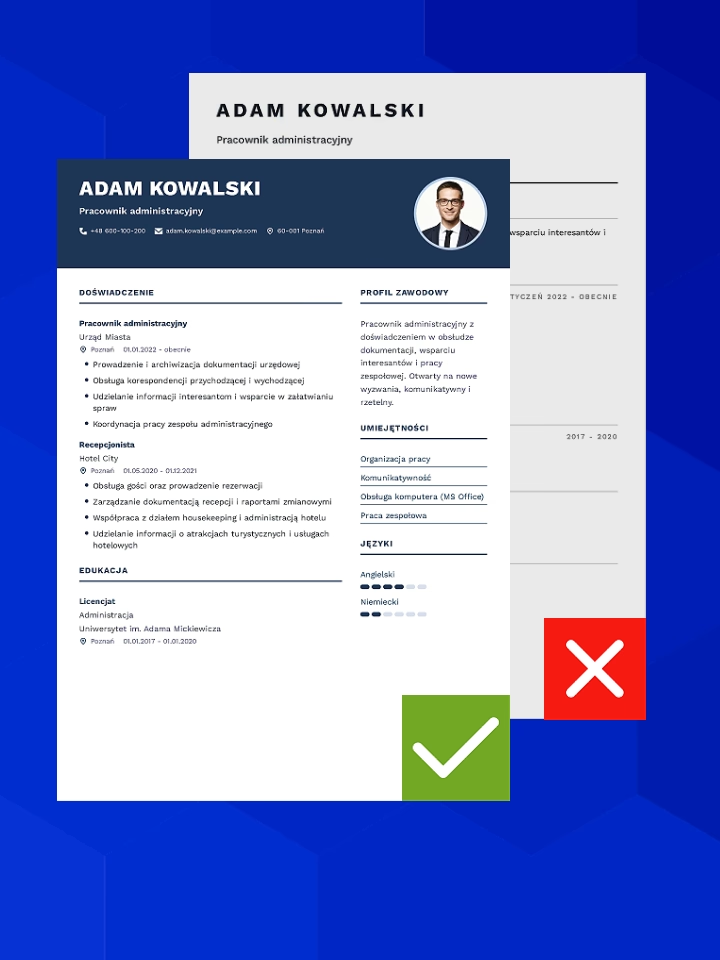
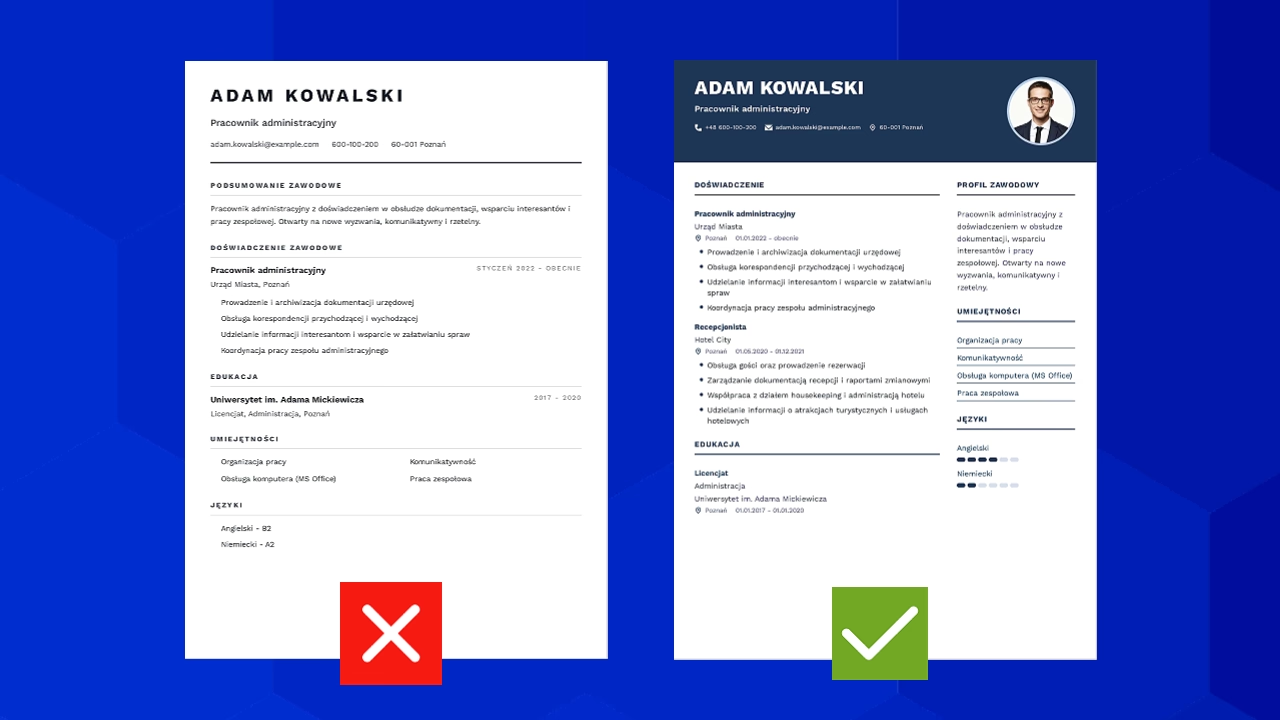
Choose a simple template with clear section headings, so your forklift certification and safety record are easy to spot at a glance, even on a phone screen.
Not sure which template fits best? Try our template library, or build one from scratch with our resume generator.
Build Your Resume

Key Takeaways for Your Forklift Operator Resume
- Put your forklift certification where it's easy to find, not buried at the bottom.
- Name the specific forklifts you've operated — sit-down, stand-up, or reach truck.
- Mention your safety record if you have one, since it's one of the first things checked.
- Describe your daily tasks clearly, like loading trucks or scanning inventory.
- Keep your work history to your two or three most recent warehouse jobs.
- Choose a simple, easy-to-scan template so nothing important gets missed.
For a refresher on resume basics before you start, our complete resume guide walks through every section in plain language.
Frequently Asked Questions
Most warehouses require a current forklift certification before you start operating equipment, though some will train and certify you on the job. If you already have one, list it clearly near the top of your resume. If not, mention that you're willing to complete training, since some employers still consider candidates without one.
That's fine — just name the specific type you've used, like a sit-down or stand-up forklift, instead of just writing "forklift." Being specific about one type still shows real, hands-on experience, and many warehouses will train you on other types if needed.
If you've worked without accidents or safety violations, say so directly, such as "no safety incidents in five years." If you're newer to the job, you can mention that you completed a safety training course, like OSHA 10-Hour Safety Training, instead.
Focus on your forklift certification, if you have one, along with any warehouse, retail, or manual labor experience where you handled physical tasks or worked as part of a team. In your summary, mention that you're certified and ready to start, even without paid forklift experience yet.
Stick to your two or three most recent warehouse jobs and describe each one with 4–6 specific duties. Older jobs can be summarized in a single line or left off completely if they're not relevant anymore.
Yes, if you know the number. A detail like "moved over 200 pallets a day" gives the hiring manager a clear sense of the pace you're used to working at, which is more convincing than a general phrase like "fast-paced environment."
In most cases, yes. Forklift operator jobs usually don't require a college degree — a high school diploma plus a forklift certification is the standard requirement at most warehouses and distribution centers.
Being too vague. Phrases like "operated machinery" or "warehouse duties" don't tell a hiring manager anything specific. Naming the actual equipment, tasks, and any safety record you have makes your experience far easier to trust and remember.
Read Also
Ready for your own resume?
Go to the builder and start with the first step in seconds.
Create Resume