The Real Challenges of Truck Driving — and What Your Resume Needs to Prove
Fleet managers hiring drivers care about specific things: your license type, your driving record, and whether you understand the rules around how long you can drive before you need rest. This article walks through a full truck driver resume example so you know exactly what to include, whether you're an experienced driver or just finished CDL training. For general resume basics, see our guide on how to write a resume.
Writing a Truck Driver Resume That Passes the First Look
Start with your name and contact information, then a short summary that mentions your CDL — a commercial driver's license, required to legally drive a large truck — along with your years of experience and driving record. After that, list your work experience, your skills, your education (which for this job usually means CDL training rather than college), and any endorsements, like a hazmat endorsement if you have one.
You don't need to format this by hand. Our resume builder lays out a structure like the one below and fills it in with your details.
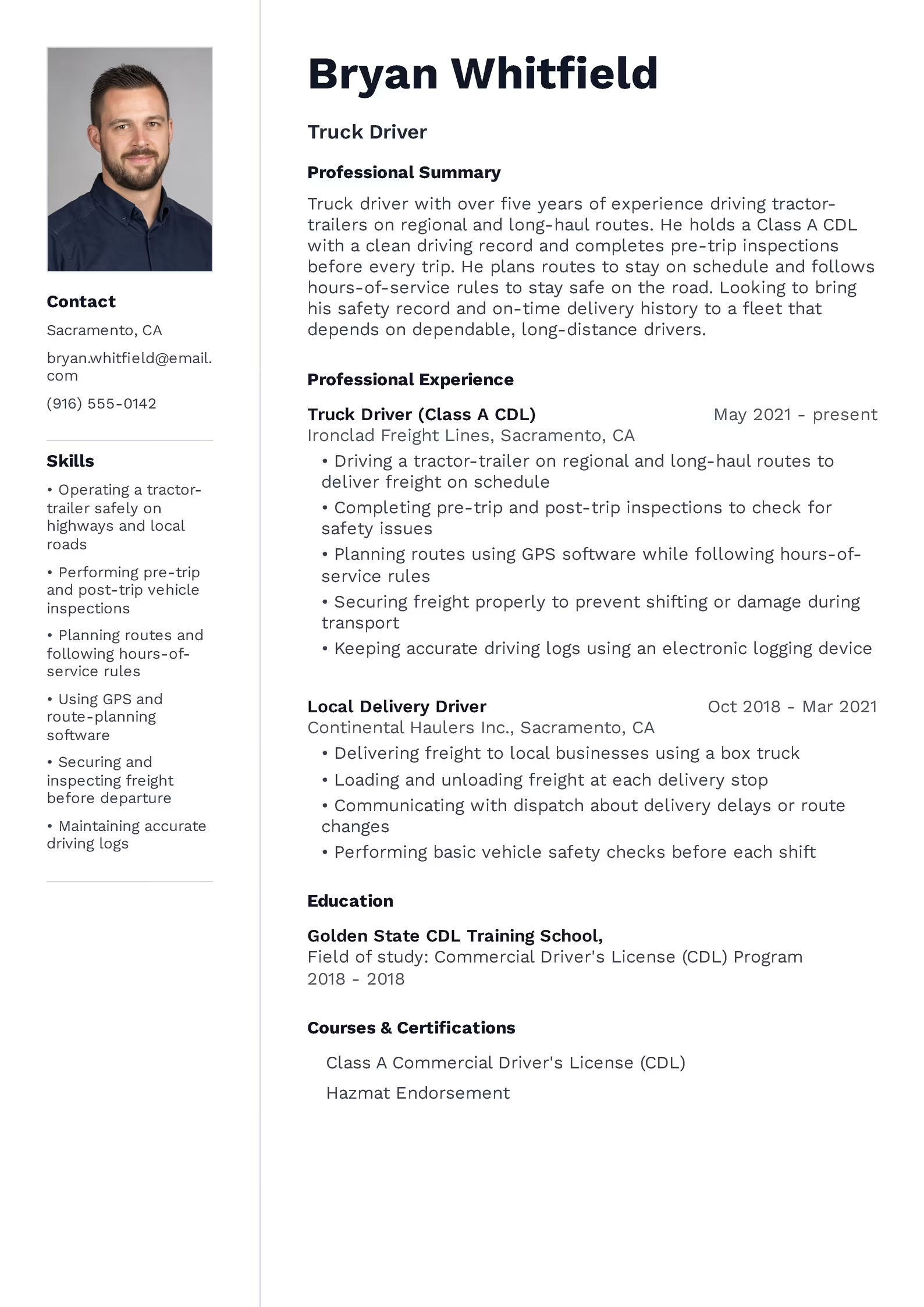
Resume Example — Truck Driver
Bryan Whitfield
Sacramento, CA
Truck driver with over five years of experience driving tractor-trailers on regional and long-haul routes.
Holds a Class A CDL with a clean driving record and completes pre-trip inspections before every trip. Plans routes to stay on schedule and follows hours-of-service rules to stay safe on the road.
Truck Driver (Class A CDL)
Ironclad Freight Lines, Sacramento, CA
04.2021 – Present
Local Delivery Driver
Continental Haulers Inc., Sacramento, CA
09.2018 – 03.2021
Commercial Driver's License (CDL) Program
Golden State CDL Training School
2018
What a Strong Line on a Truck Driver Resume Actually Looks Like
Compare the examples below — both describe similar experience, but only one gives a fleet manager something real to check.
Writing a Professional Summary That Leads With Your License and Record
Below are three versions for different experience levels. Each one leads with something a fleet manager can verify, not a vague claim.
Skills That Matter Most on a Truck Driver Resume
Be specific instead of general. "Good driver" says little. "Following hours-of-service rules" — the federal limits on how long you can drive before resting — tells a fleet manager exactly what you understand.
Skills for a Truck Driver Resume
| Job-Specific Skills | Personal Strengths |
|---|---|
| Operating a tractor-trailer safely | Staying alert during long hours on the road |
| Performing pre-trip and post-trip inspections | Following safety rules without being reminded |
| Planning routes with GPS software | Managing time to hit delivery windows |
| Following hours-of-service rules | Staying calm in heavy traffic or bad weather |
| Securing and inspecting freight | Communicating clearly with dispatch |
| Keeping accurate driving logs | Working independently without close supervision |
| Basic vehicle maintenance checks | Staying organized with paperwork and logs |
| Backing up and maneuvering a large vehicle | Maintaining a clean, accident-free driving record |
What a Truck Driver Actually Does, Route by Route
The table below turns these into full sentences you can copy or adjust for your own resume.
Typical Truck Driver Duties
| Area | Example Truck Driver Duties |
|---|---|
| Vehicle Inspection | Performing pre-trip and post-trip inspections to catch safety issues early |
| Route Planning | Planning routes using GPS software to stay on schedule |
| Freight Handling | Securing freight properly to prevent shifting or damage during transport |
| Hours-of-Service Compliance | Following federal hours-of-service rules to stay legal and safe |
| Documentation | Keeping accurate driving logs using an electronic logging device |
| Safety | Reporting mechanical issues or safety concerns before they become bigger problems |
| Dispatch Communication | Communicating with dispatch about delays, route changes, or delivery issues |
| Vehicle Maintenance | Performing basic maintenance checks like tire pressure and fluid levels |
| Delivery Scheduling | Delivering freight within scheduled time windows across multiple stops |
| Regulatory Compliance | Following weight limits and other trucking regulations on every route |
A Clear, Organized Resume Layout Builds Trust Fast
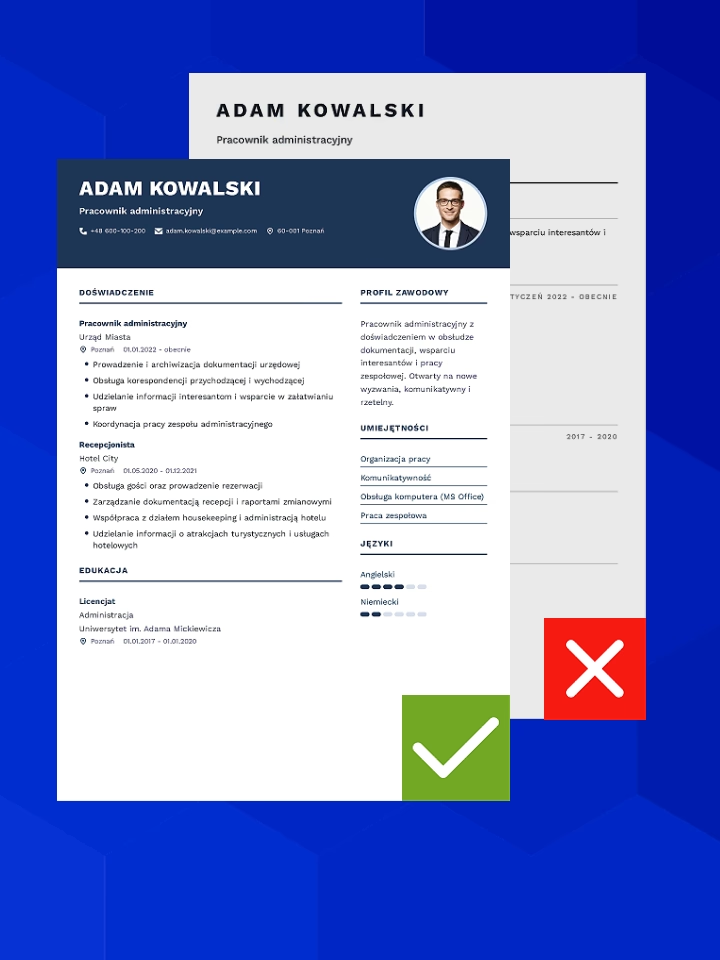
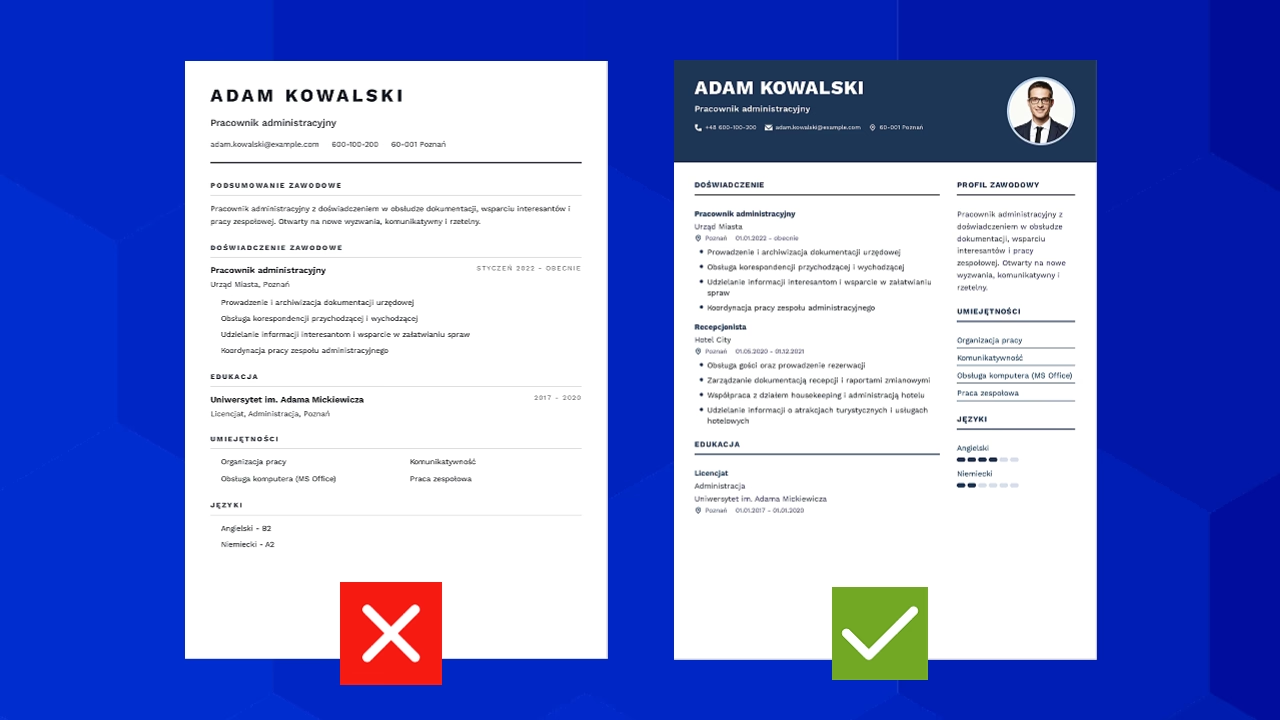
Choose a simple, professional template — no unusual fonts or cluttered layouts that make key details harder to spot.
Not sure which template fits best? Try our template library.
Build Your Resume

Mistakes That Keep Truck Driver Resumes From Getting a Call
Not listing your CDL class clearly. A Class A CDL allows you to drive a tractor-trailer, while other classes cover smaller vehicles. Make sure your exact license class is easy to find, not buried in a paragraph.
Leaving out your driving record. A clean driving record is one of the first things a fleet manager checks. If yours is clean, say so directly.
Writing "drove trucks" instead of real details. Mention route type — regional, long-haul, or local — along with safety habits like completed inspections or accident-free years.
Skipping endorsements you already have. Endorsements like hazmat (for hauling hazardous materials) or tanker open up more jobs — list them clearly if you have them.
Forgetting hours-of-service knowledge. Understanding these federal rest and driving-time rules shows a fleet manager you can be trusted to follow regulations without close supervision.
Using an unprofessional email address. Something like "roadwarrior99@email.com" can make a manager pause. Use a simple version of your name instead.
Making the resume too long. One page is usually enough, even with years of experience. Focus on your most recent, most relevant routes and results.
Key Takeaways for Your Truck Driver Resume
Lead with your CDL class and driving record — these are the first things a fleet manager checks.
List any endorsements — hazmat, tanker, or other endorsements can open up more job options.
Be specific about routes and safety habits — mention route type and inspection routines instead of a vague "drove trucks."
Show you understand hours-of-service rules — this proves you can be trusted to follow federal regulations.
Keep the design clean and organized — one page, with your license and record easy to find.
Don't hide limited experience — recent CDL training and a clean record are worth highlighting on their own.
If you're applying by email, a short cover letter can help reinforce your reliability and safety record before a fleet manager even opens your resume.
Frequently Asked Questions
Lead with your CDL class and the fact that your driving record is clean, since that matters more than years of experience at this stage. Mention your CDL training program, including how long it was, and any driving experience you have even outside of trucking. Show that you're ready to learn a company's specific routes and equipment.
A Class A CDL allows you to drive a tractor-trailer and other combination vehicles, which most long-haul trucking jobs require. A Class B CDL covers single vehicles like straight trucks or buses, without the trailer. Check the job posting carefully, since the required license class varies by role.
Yes, if you have them. Endorsements like hazmat, for hauling hazardous materials, or tanker, for liquid or gas cargo, show you're qualified for more types of jobs. List them clearly near your CDL information so a fleet manager sees them right away.
One page is usually enough, even for drivers with many years of experience. Focus on your most recent routes, your license and endorsements, and your safety record rather than listing every job you've ever had.
No. Most trucking jobs require a high school diploma and a CDL, which comes from a dedicated training program rather than a college degree. Fleet managers care much more about your license, driving record, and safety habits than your education level.
The strongest resumes combine driving skills, like operating a tractor-trailer and performing vehicle inspections, with personal strengths like staying alert on long drives and following hours-of-service rules. Listing both gives a fleet manager a complete picture of how you'd handle the job.
The most common mistake is writing a vague line like “drove trucks” instead of specific details. A fleet manager can't verify that. Mention your CDL class, route type, and safety habits like completed inspections instead of a general phrase.
Read Also
Ready for your own resume?
Go to the builder and start with the first step in seconds.
Create Resume