Your License and Your Driving Record Get Read Before Anything Else
Everything else matters after that. What size bus you drove, how many passengers, whether you can start at 4:45 a.m. This guide shows you where to put each one, gives you a full example to copy, and covers what happens after you apply — the road test, the medical, and the training many agencies pay for. If you are writing your first resume, our step-by-step resume guide covers the basic layout.
CDL Class, Endorsements, and the DOT Card — Put the Paperwork in the Top Third
Write the class and the endorsements. An endorsement is an extra permission added to a commercial license after a test. The passenger endorsement, written as P, lets you carry passengers. The school bus endorsement, written as S, is needed for school routes and comes with a background check.
Two more details get missed constantly. Check that your license does not carry an air brake restriction, because almost every bus has air brakes. And write the expiry of your DOT medical card — the certificate showing you passed the commercial driver medical exam, usually valid for two years.
Licenses and Documents to List on a Bus Driver Resume
| Document | What it lets you drive or do | What to write next to it |
|---|---|---|
| Class B CDL | buses and large single vehicles, the standard bus license | the class and the year it expires |
| Class A CDL | tractor-trailers as well as buses | list it if you hold it, charter companies like it |
| Passenger endorsement (P) | carrying passengers on a bus | required for nearly every bus job, add the year |
| School bus endorsement (S) | driving a school bus with children on board | needed for school routes, plus a background check |
| Air brakes | driving a bus with air brakes, which is most of them | confirm you have no air brake restriction |
| DOT medical card | shows you passed the commercial driver medical exam | the expiry date, usually two years out |
| Driving record | shows tickets and accidents from recent years | write clean driving record only if it truly is |
| Passenger securement training | using the wheelchair lift and securing straps | the year you took it |
| Defensive driving course | employer or state safety training | the year, and who ran it |
| First aid or CPR | helping a passenger who is unwell on board | the year, if it is still current |
A Finished Bus Driver Resume, Ready to Hand In
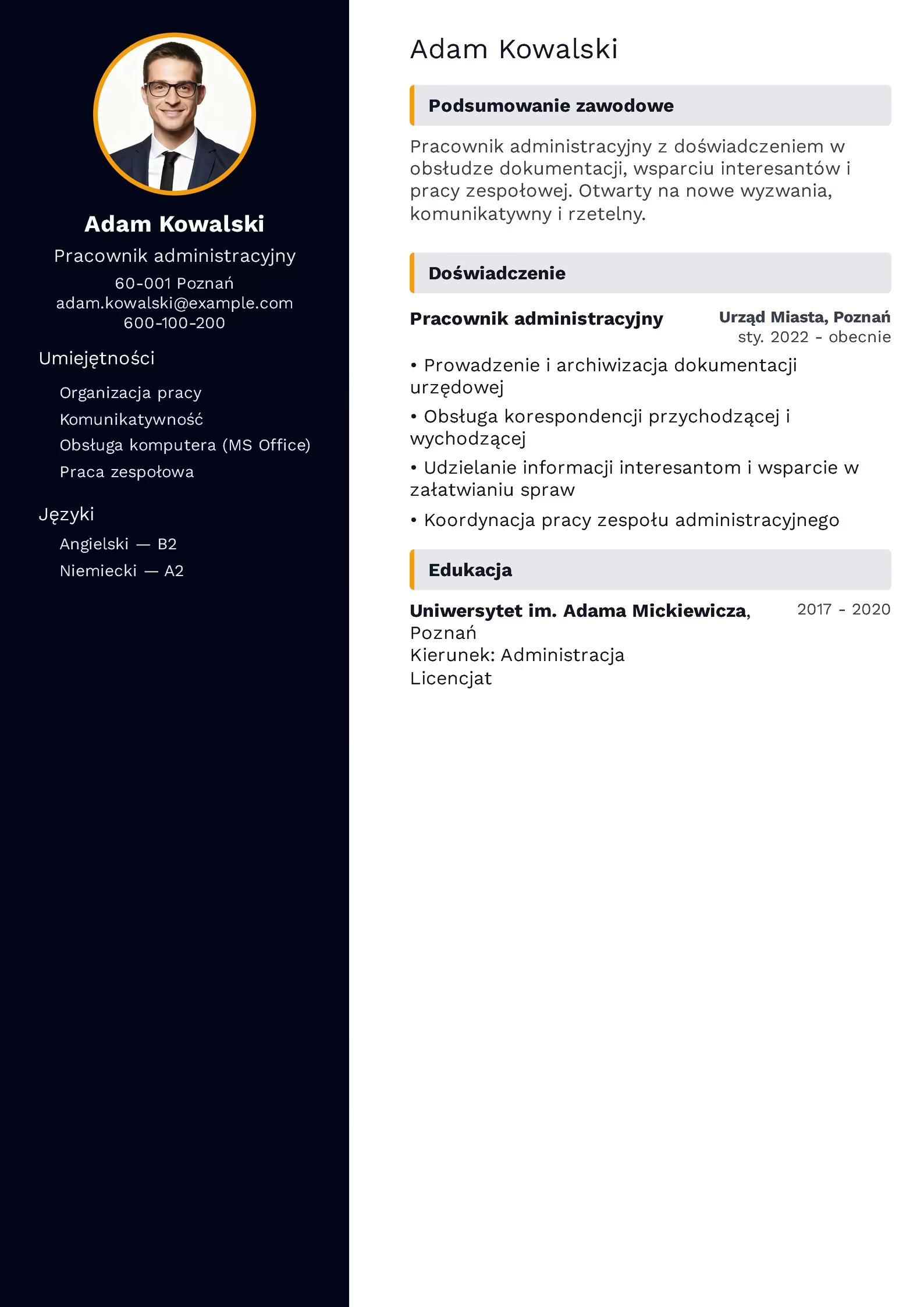
His license and endorsements appear twice — once in the opening paragraph and once with an expiry date near the bottom. That repetition is deliberate. It is the fastest way to answer the only question that matters at the first glance.
His third job was delivery driving, and it stays on the page because it shows years behind the wheel and a clean record. If you are moving into passenger work from trucks or delivery, do the same. Swap in your own bus sizes, routes, and passenger numbers.
Resume Example — Bus Driver
Marcus Hollins
Sacramento, CA
Bus driver with 8 years carrying passengers, currently on city routes in Sacramento.
Drives a 40-foot bus with around 300 riders a day and runs a full pre-trip inspection before every shift.
Holds a Class B CDL with passenger and school bus endorsements and a current DOT medical card.
Has driven eight years without an accident and is available for split shifts and weekends.
Transit Bus Operator
Capital Valley Transit Authority, Sacramento, CA
06.2021 – Present
School Bus Driver
Riverpark Unified School District, Sacramento, CA
08.2018 – 05.2021
Delivery Driver
Ridgeline Beverage Distributors, Sacramento, CA
03.2016 – 07.2018
High School Diploma
Foothill Ridge High School, Sacramento, CA
2008 – 2012
Pre-Trip Checks, Fixed Routes, Wheelchair Lifts — Writing a Shift the Way It Runs
Then give the specifics: the size of the bus, the type of route, and how many passengers. “A 40-foot bus with around 300 riders a day” tells a manager more than a paragraph about safe driving.
Include the awkward parts of the job too. Running late, a fare dispute, a passenger who is unwell. What a depot wants to know is what you did next — radioed dispatch, wrote it up, kept the bus safe.
A Bus Driver's Shift and How to Put It on a Resume
| Part of the shift | What it involves | How to write it |
|---|---|---|
| Pre-trip inspection | checking brakes, tires, lights, mirrors, and exits before pulling out | Doing a full pre-trip inspection before every shift |
| Starting the run | leaving the yard on time for the first trip | Starting the first run at 4:45 a.m. six days a week |
| The route | fixed stops, a timetable, and traffic that ignores both | Driving a 40-foot bus on fixed city routes |
| Passengers boarding | fares, passes, questions about stops and connections | Taking fares, checking passes, and answering questions about connections |
| Wheelchair lift | lowering the lift, positioning, strapping in securely | Operating the wheelchair lift and securing wheelchairs |
| Running late | traffic, roadworks, a breakdown ahead on the route | Radioing dispatch when the route ran late and adjusting safely |
| Trouble on board | an argument, a fare dispute, a passenger who is unwell | Calming disputes on board and calling dispatch when needed |
| School runs | the stop arm, children crossing, seat checks | Checking every seat after each run so no child was left on the bus |
| Incidents | a near miss, a fall on board, a minor collision | Writing incident reports the same day |
| End of shift | fueling, the post-trip walk-around, reporting faults | Writing up faults so mechanics could work on the bus overnight |
Need wording for your routes and checks? Start from ready-made duty lines in the resume builder and add your own numbers.
Build Your Resume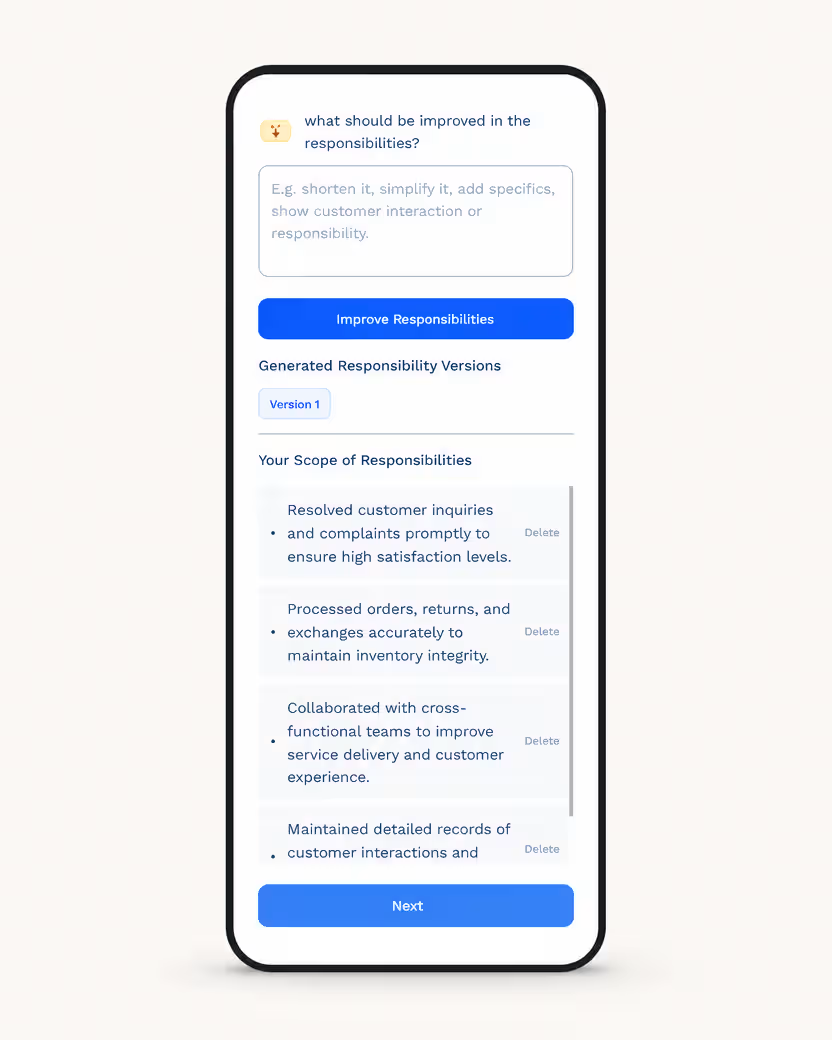
Reading a Driver Job Posting and Answering It Line by Line
The posting asks for a clean driving record. Your answer is the number of years you have driven without an accident. It asks for ADA experience, meaning helping passengers with disabilities board and travel safely. Your answer is the wheelchair lift.
Use the posting's own words where they are true for you. Depots often search resumes for exactly those phrases.
Skills to Put on a Bus Driver Resume
| What the job posting asks for | What it actually means | How to show it on your resume |
|---|---|---|
| Valid Class B CDL with P endorsement | you can legally carry passengers | Class B CDL with passenger and school bus endorsements, valid to 2029 |
| Clean driving record | no recent accidents or serious violations | Eight years driving passengers with no accidents |
| Must pass a DOT physical | a commercial driver medical exam before you start | Current DOT medical card, valid to 2027 |
| Pre-trip and post-trip inspections | checking the bus before and after every shift | Doing a full pre-trip inspection before every shift |
| Knowledge of routes and schedules | keeping the timetable without rushing the driving | Keeping to the timetable in heavy traffic on fixed city routes |
| Customer service skills | hundreds of passengers a day, some of them unhappy | Answering passenger questions about stops and connections |
| ADA experience | helping passengers with disabilities board safely | Operating the wheelchair lift and securing wheelchairs |
| Ability to work split shifts | an early block, a long gap, then an afternoon block | Available for split shifts, weekends, and holiday cover |
| Radio communication | reporting delays and problems to dispatch | Radioing dispatch about delays and incidents |
| Safety-first attitude | reporting a fault instead of driving on | Writing up faults at the end of every shift |
| Cash handling | fares, change, and balancing at the end | Taking fares and checking passes on a fixed route |
Split Shifts, 4:45 a.m. Starts, and the Extraboard — Say What You Can Cover
A split shift means driving an early block, going home for several hours, then driving an afternoon block. Peak travel is morning and evening, so many routes are staffed that way. New drivers often start on the extraboard — a standby list where you cover other drivers' routes at short notice, with the schedule changing week to week.
School routes run to the school year. That usually means unpaid or reduced summers, mornings and afternoons with a gap between, and extra work driving field trips and sports teams. Charter and coach work is the opposite: long single days, weekends, and overnight trips.
Write one honest line about what you can do. “Available for split shifts, weekends, and holiday cover” is worth more than any adjective. If early starts are not possible for you, say what is — depots would rather know now.
What Belongs in the Summary at the Top of a Driver's Resume
Four things fit in four sentences. Years carrying passengers. What you drive now and on what kind of route. Your license class, endorsements, and medical card. Your driving record and availability.
Leave out “safe and reliable driver.” Every applicant writes it. “Eight years without an accident” says the same thing and can be checked.
Road Test, DOT Physical, and Paid CDL Training — What Happens After You Apply
First they pull your driving record. Every ticket and accident from recent years is on it, so nothing you leave off your resume stays hidden. Then comes the DOT physical — vision, hearing, blood pressure — and a drug test.
Next is a road test in their bus, not yours. Expect a walk-around inspection you have to talk through out loud, some yard maneuvers, and a short drive. Practice saying the pre-trip checks aloud before you go.
Then training. Many transit agencies and school districts will pay for your CDL and train you from scratch, which is why the delivery and truck drivers reading this should still apply. New drivers usually ride with a mentor for a few weeks before taking a route alone. One thing worth knowing: at many depots routes are picked by seniority, so the first schedule you get is rarely the one you keep. A short cover letter helps here, especially if you are switching from freight to passengers.
Missing Endorsements and Hidden Violations — What Ends a Driver's Application
1. The license buried at the bottom. Class, endorsements, and expiry belong in the summary at the top as well as in your certifications.
2. Writing only “CDL.” Without the class and the endorsements a manager cannot tell whether you can legally carry passengers.
3. No expiry dates. A license or DOT medical card with no date reads as expired. Add the year for both.
4. Hoping a violation stays hidden. They pull your record before they call you. Leave it off the resume, but be ready to explain it plainly at the interview.
5. Not naming the vehicle. A 40-foot transit bus, a 72-seat school bus, a coach, and a 14-seat shuttle are different jobs. Say which you drove.
6. No numbers. Passengers a day, stops on the route, miles a day, years without an accident.
7. Nothing about pre-trip inspections. It is the first safety habit a depot looks for.
8. No availability. Split shifts, early starts, weekends, and holiday cover are the hardest slots to fill, so saying yes to any of them moves you up.
The Last Walk-Around Before You Send Your Resume
License class and endorsements are in the top paragraph, with the expiry year further down.
Your DOT medical card is listed with its expiry, and your record is described honestly.
The bus and the route are named — size, type, passengers a day, stops, and whether it was transit, school, charter, or shuttle.
Pre-trip inspections and availability both appear somewhere on the page. Keep it to one page and two or three jobs, and keep earlier truck or delivery work if it shows years behind the wheel.
Driving is a job where your record speaks for you. Make the page easy to check and let it. Our complete resume guide covers the rest of the layout.
Want a clear layout that puts your license where it gets seen? Pick one from our template library.
Build Your Resume
Frequently Asked Questions
Often not. Many transit agencies and school districts pay for your commercial license and train you from scratch, because drivers are hard to find. You will usually need a clean driving record, a regular license held for a few years, and the ability to pass a medical exam and drug test. If you are applying to one of those programs, say plainly that you are looking for a role with training provided. If you already hold a permit or have booked the test, put that on the page with the date.
A city or transit bus needs a Class B commercial license with the passenger endorsement, written as P. A school bus needs the passenger endorsement plus the school bus endorsement, written as S, along with a background check and usually fingerprinting. Both mean your license must not carry an air brake restriction, since almost every bus has air brakes. Write out the class and each endorsement in full on your resume rather than just the letters.
Yes, with its expiry date. The DOT medical card shows you passed the commercial driver medical exam, and most are valid for two years. A depot cannot put you on a bus without a current one, so it saves them a phone call. If yours expires soon, book the exam before you apply and write the new date once you have it. Cards issued for one year instead of two are common and not a problem to list.
Do not put it on your resume, but do not count on it staying hidden either. Employers pull your driving record before they interview you. Only write clean driving record if it is genuinely clean. Be ready to explain the ticket in one calm sentence at the interview: what happened, when, and what you changed. A single old ticket rarely ends an application, but being caught out by it can.
Yes, and it is a common route in. Years behind the wheel, daily vehicle checks, and a clean record all carry over directly. Keep that job on your resume and describe it in driving terms: the vehicle, the miles, the checks, the record. The main new skill is passengers, so say anything that shows you deal with the public well. Many agencies will add the passenger endorsement training themselves.
A split shift means driving an early block, having several hours off, then driving an afternoon block. Buses are busiest at those two times, so many routes are staffed that way. New drivers also often start on a standby list, covering other drivers' routes at short notice. Say plainly what you can cover — split shifts, early starts, weekends, holidays. Those are the hardest slots to fill, so a yes moves your resume up.
Enough to give a sense of scale. Passengers a day, stops on a route, the size of the bus, miles driven, and years without an accident all work. For example, a 40-foot bus with around 300 riders a day, or 28 stops on a school route. Estimates are fine as long as they are honest, and nobody expects exact counts. The years-without-an-accident figure is the one a safety manager remembers.
Most employers ask for a high school diploma or an equivalent, though some will hire without one if your record and licenses are right. Age matters more: many places require you to be 21, and some allow 18 for routes that stay within one state. Put education in one short line near the bottom of the page. The space is better used on your license, endorsements, medical card, and driving record.
Read Also
Ready for your own resume?
Go to the builder and start with the first step in seconds.
Create Resume