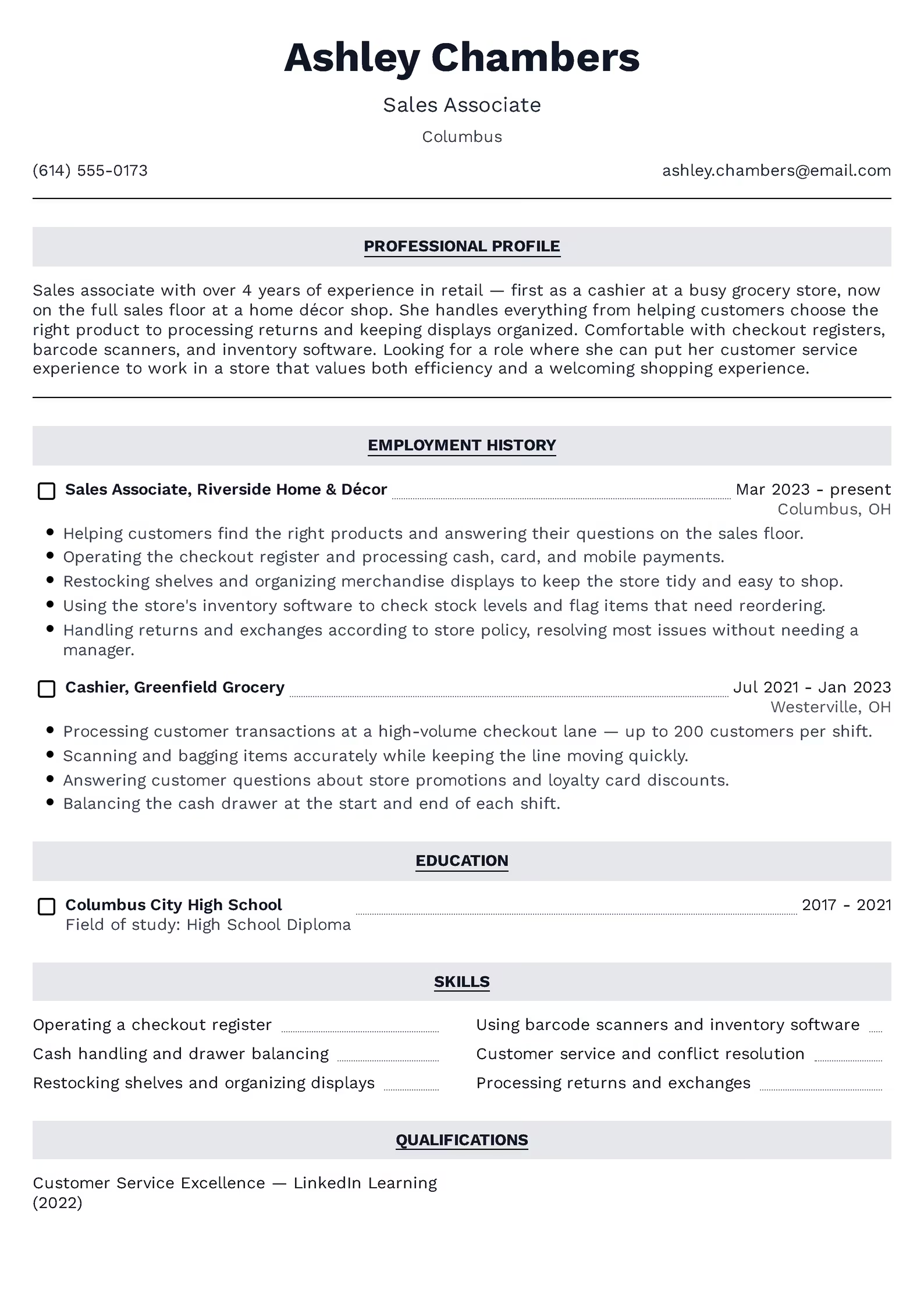
How to Negotiate Your Salary: The Short Answer
Most people skip this step entirely. According to the Pew Research Center, only about 30% of U.S. workers recall asking for higher pay the last time they were hired, even though most of the people who do ask end up better off. That gap between fear and outcome is exactly what this guide is built to close.
Below you will find the exact timing to use, the research to do beforehand, word-for-word scripts for both job offers and raise conversations, and the most common mistakes that quietly cost people thousands of dollars a year. Whether you are negotiating a starting salary or asking your current employer for a raise, the same core principles apply, and a little preparation goes a much longer way than most people expect.
Why So Many People Never Ask for More
The data tells a different story. Pew Research Center's survey of 5,188 U.S. workers found that only 32% of men and 28% of women said they asked for higher pay the last time they were hired. Among those who did ask, roughly two-thirds ended up with a better offer than the one they started with: 28% got exactly what they requested, and another 38% got more than the original number, even if not the full ask.
Put differently, silence is the risky choice, not the negotiation itself. Rescinded offers over a polite, well-reasoned counter are rare, because by the time a company sends you a written offer, it has already decided you are the person it wants. Reopening a search costs a company far more time and money than meeting a reasonable request halfway.
Who Asks — and What Happens When They Do
| Metric | Share of workers |
|---|---|
| Asked for higher pay when last hired (men) | 32% |
| Asked for higher pay when last hired (women) | 28% |
| Got exactly the amount they asked for | 28% |
| Got more than the original offer, less than requested | 38% |
| Got only the original offer after asking | 34% |
Source: Pew Research Center survey of 5,188 U.S. workers, published April 2024.
When Is the Right Time to Negotiate Your Salary
A written offer gives you a concrete number to respond to, removes real-time pressure, and gives you time to think without an interviewer watching your reaction. It is completely normal — and professional, not rude — to say thank you for the offer and ask for 24 to 48 hours to review it before responding.
For an existing job, the best timing is usually right after you have delivered a clear, documented win: closing a major account, finishing a project ahead of schedule, or taking on responsibilities beyond your job description. Performance review season is a natural moment too, but do not wait for it if you already have strong evidence of your value — a good manager will often make room for the conversation outside the formal cycle.
Avoid negotiating during a company hiring freeze, immediately after layoffs, or in the middle of a stressful product launch. Reading the room costs nothing and can make the difference between a “yes” and a “not right now.”
How to Research Your Market Value Before You Ask
Start with the U.S. Bureau of Labor Statistics Occupational Outlook Handbook, which publishes median pay for hundreds of occupations based on national survey data rather than self-reported figures. Pair that with the broader wage trend: according to the BLS Employment Cost Index, private-sector wages and salaries rose 3.4% over the 12 months ending in March 2026 — a useful benchmark for what counts as a “normal” raise this year versus a below-market one.
Build a salary range rather than a single number. Look at the national median for your role, then adjust for your metro area, years of experience, and any specialized certifications or skills. The same job title can pay very differently in a large city than in a smaller regional market, so quoting a flat national average in a high cost-of-living area will undersell you.
Finally, talk to people. Former colleagues, industry associations, and professional networks often have a better sense of real, current local pay than any single online tool. Combine at least two sources before you settle on your target number.
Core Salary Negotiation Techniques That Actually Work
Let the employer name a figure first. If you are asked for your salary expectations before an offer exists, redirect politely: ask about the budgeted range for the role instead of naming a number yourself. In regions with pay transparency laws, many employers will simply tell you, which removes the guesswork entirely.
Anchor with a range, not a wish. If you do have to give a number, offer a range with the bottom aligned to the top of what you would genuinely accept. This protects your floor without shutting the conversation down, and research on anchoring shows that the first number mentioned strongly shapes where the final offer lands.
State your ask, give your reason, then stop talking. After naming your number, resist the urge to fill the silence with apologies or extra justification. A short pause after your ask is doing important work — it signals confidence and gives the other side room to respond rather than immediately counter your own offer downward.
Negotiate the whole package, not just base pay. If the base salary truly is fixed, ask about a signing bonus, extra vacation days, remote-work flexibility, a earlier performance review, or professional development budget. These items often have more room to move than the number on the offer letter.
Salary Negotiation Scripts and Examples
These are starting templates, not scripts to read word-for-word. Adjust the details to your role, your evidence, and your own voice so the conversation still sounds like you.
Negotiating a New Offer vs. Asking for a Raise
Job Offer vs. Raise Negotiation
| Factor | New job offer | Raise in current role |
|---|---|---|
| Your leverage | High — they already chose you | Depends on documented results |
| Best timing | After a written offer | After a clear win or at review time |
| Key evidence | Market rate for the role | Performance data, added responsibilities |
| Relationship risk | Low — new relationship | Higher — ongoing daily relationship |
| What to also ask for | Signing bonus, start date, PTO | Title change, scope, review timeline |
Common Salary Negotiation Mistakes to Avoid
Negotiating before you have anything in writing. Verbal enthusiasm is not a commitment. Always wait for a written offer before naming a specific number, so both sides are responding to the same concrete terms.
Comparing yourself to a friend's salary instead of market data. A friend's number tells you nothing about your city, your employer's budget, or your specific responsibilities. Objective data from the Bureau of Labor Statistics or a recognized salary survey carries far more weight.
Making it personal instead of evidence-based. “I need more money because rent went up” is understandable but rarely moves a budget. “I've taken on the accounts that used to belong to two people” is a business case a manager can actually bring to finance.
Accepting the first counter out of relief. If an employer moves even slightly from their opening number, that movement usually signals there is more room. It is reasonable to say thank you and ask if there is any further flexibility before agreeing.
Treating the conversation as a fight instead of a shared problem. A negotiation framed as “me versus them” tends to make the other side defensive, while a negotiation framed as “let's find a number that works for both of us” invites cooperation. Managers who advocate for your raise usually have to justify it to finance or to peers, so giving them clear, usable evidence makes their job — and your outcome — easier.
Building the Evidence That Backs Up Your Ask
This is also the moment to make sure your resume reflects that same evidence, since a resume full of vague duties undersells you just as much as a vague ask in a negotiation. Quantified bullet points such as “reduced order-processing errors by 22%” or “trained 6 new team members” give you concrete talking points and make your case sound like fact rather than opinion. If you are not sure your bullet points are pulling their weight, our guide on common resume mistakes and how to avoid them is a good place to start.
It also helps to separate what you can do from what you have already achieved. Our breakdown of hard and soft skills for a resume explains how to list both in a way recruiters and hiring managers actually notice, which strengthens your position long before a number ever comes up.
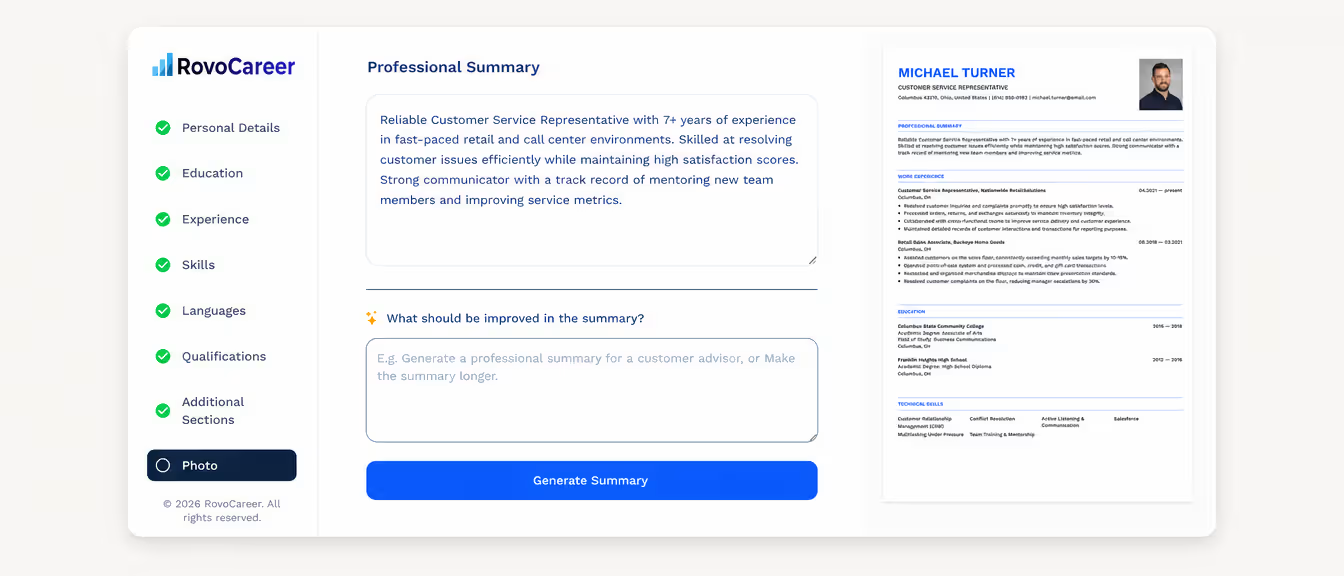
If your resume still lists responsibilities instead of results, it is worth rebuilding it before your next negotiation, not after. Our online resume builder walks you through turning everyday duties into the kind of measurable, achievement-based language that supports a stronger ask — whether that ask is a new job offer or a raise with your current employer.
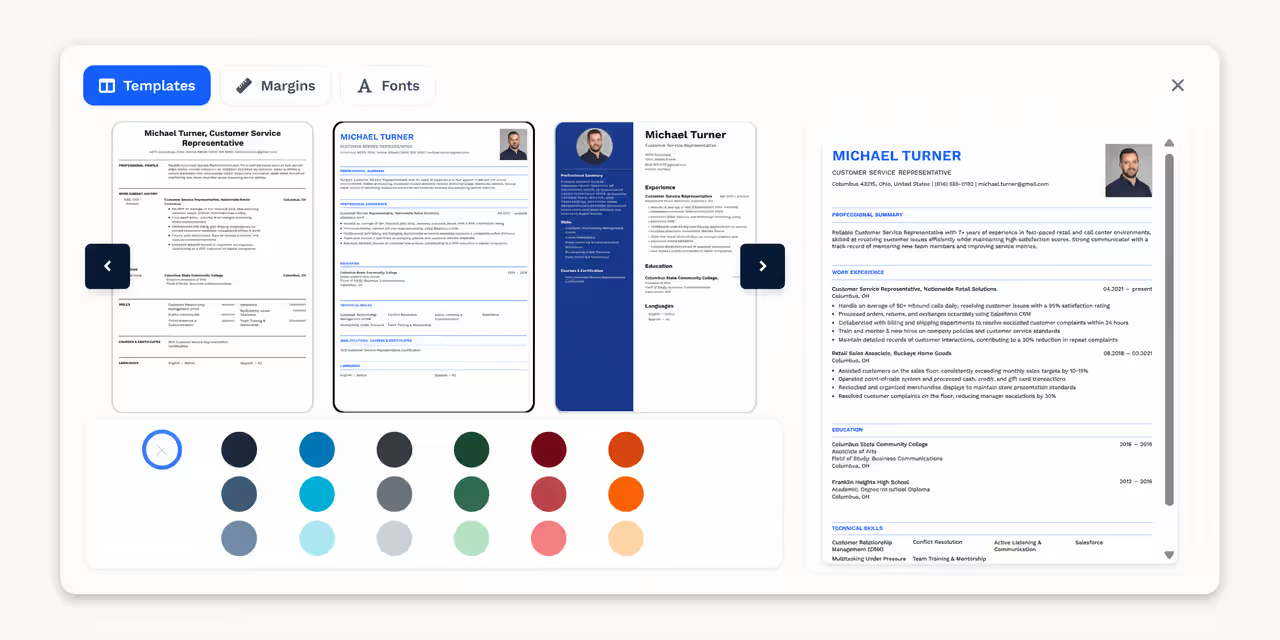
Start from a professional layout with our resume templates and fill in your own achievements in minutes.
Browse resume templates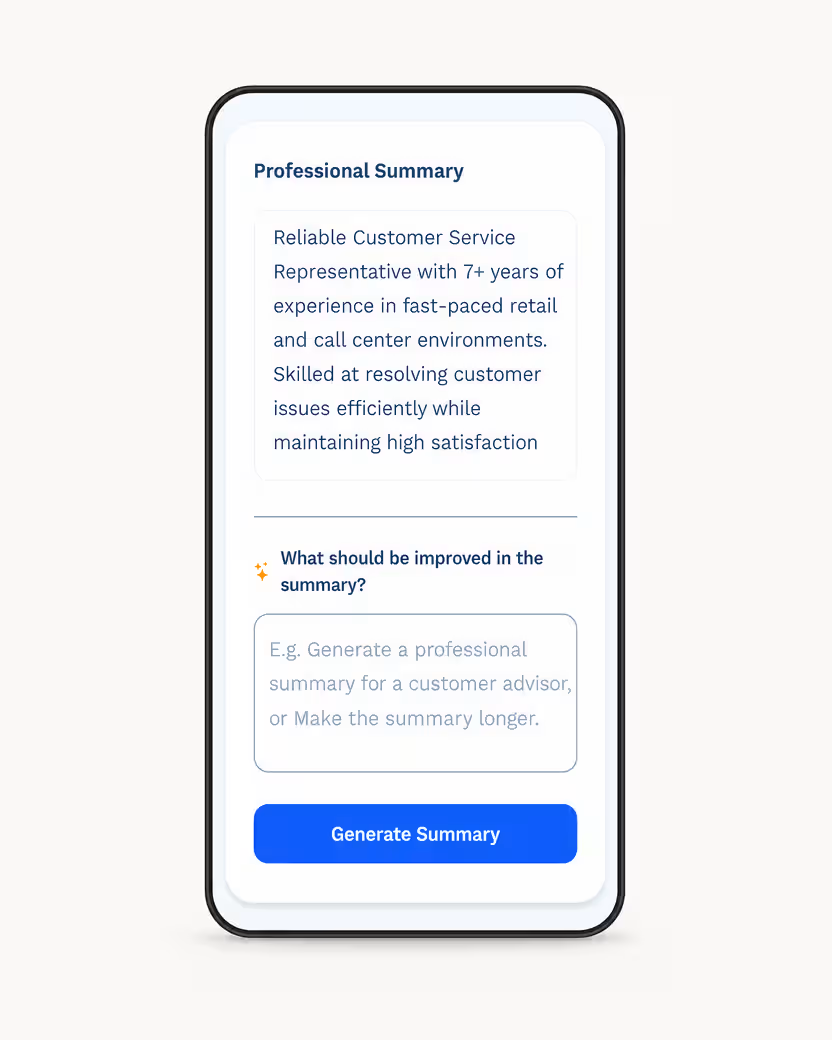
What to Do If the Answer Is No
If base pay truly cannot move, ask what would need to be true for a raise at the next review, or request the conversation be revisited in three to six months with clear, agreed-upon goals attached. A useful line here is: “I understand the base is fixed right now — could we agree to revisit this in six months tied to specific goals?” That turns a closed door into a scheduled opportunity rather than a dead end.
It is also worth asking about non-salary items even after a firm “no” on base pay: signing bonuses, extra paid time off, remote-work days, or a defined path to promotion. Many of these carry lower cost to the employer than a base salary increase but real value to you.
Whatever the outcome, always get the final agreement in writing, including base pay, bonus structure, start date, and any commitments about future reviews. A verbal yes is encouraging, but a written offer is what actually protects you.
Key Takeaways and Next Steps
To recap: research your market value using objective sources like the BLS, wait for a written offer before naming a number, anchor with a range backed by evidence, and negotiate the whole package if base pay is fixed. Every higher starting salary also becomes the foundation for your next raise, your next offer, and your long-term retirement savings, which is why this single conversation is worth the short-term discomfort.
Before your next negotiation, make sure the document that got you the interview is pulling its weight too. A resume full of quantified, achievement-based bullet points gives you concrete proof to bring to the table — and makes the whole conversation easier to have with confidence. Even your opening lines matter here: take a look at these professional resume summary examples for ideas on framing your value from the very first sentence.
Ready to put your strongest achievements front and center? Create your resume online in minutes, no formatting required.
Create your resume online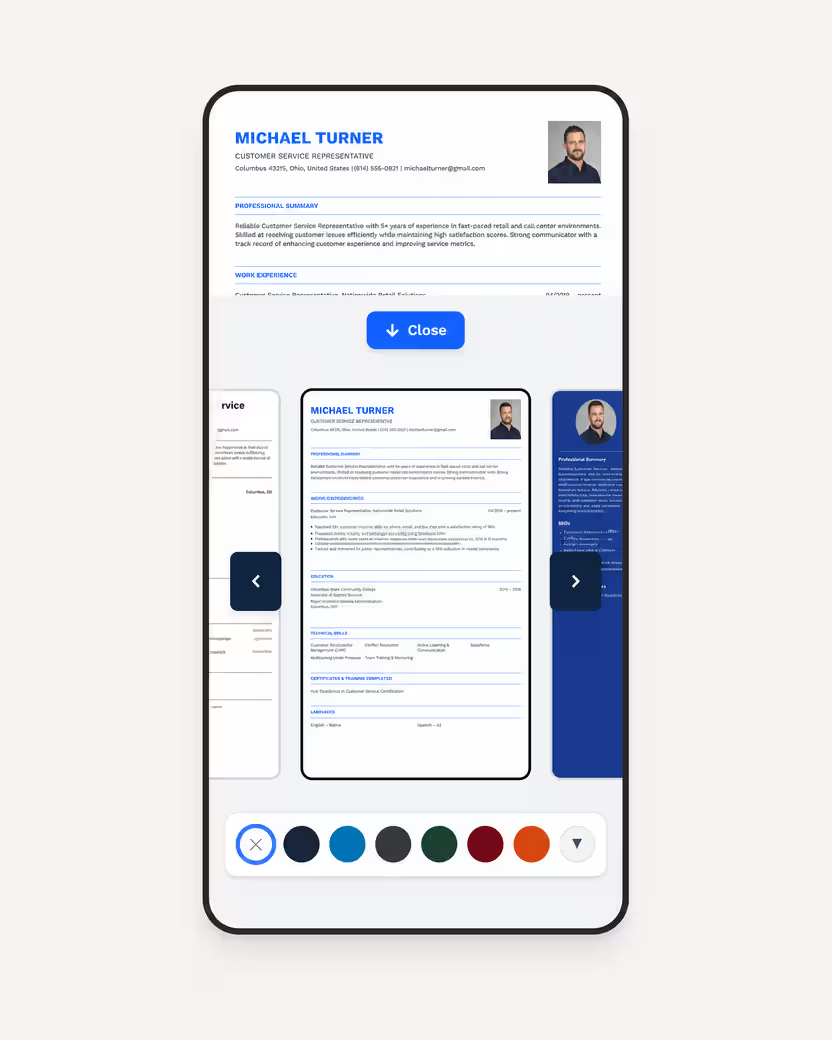
Sources
Frequently Asked Questions
Most negotiation research points to asking 10% to 20% above the initial offer, adjusted to what your market research supports. Basing the number on real data from the BLS or a similar source, rather than a round figure, makes the ask far more credible.
Yes, email is a normal and often preferred channel because it gives both sides time to think and creates a written record. Keep the tone warm and specific, and confirm any verbal agreement in writing afterward regardless of which channel you used.
It is extremely rare for a company to rescind an offer over a polite, reasonable counter, since they have already decided you are the candidate they want. Aggressive ultimatums or unrealistic demands are far more likely to cause problems than a respectful, evidence-based request.
Start with the U.S. Bureau of Labor Statistics Occupational Outlook Handbook for a national median, then adjust for your city and experience level. Asking the employer directly for the budgeted range is also increasingly normal, especially in regions with pay transparency laws.
A genuine competing offer can be a powerful, honest anchor, but only mention one if it actually exists — inventing one is easy to expose and damages trust immediately. If you do have another offer, state the number plainly and let it speak for itself rather than using it as a threat.
Base the request on documented results rather than external leverage: quantify what you have delivered since your last review and connect it directly to the value it created. Framing the raise as maintaining fair pay for strong performance, rather than as a demand, keeps the manager on your side.
According to the Pew Research Center, only about 30% of U.S. workers say they asked for higher pay the last time they were hired. That means the majority of candidates accept the first number, even though most of the minority who do negotiate end up with a better outcome.
Either works, but many negotiators do better replying by email or asking for 24 hours after a verbal offer, since it removes real-time pressure and gives time to prepare a clear, well-reasoned response. If the conversation does happen live, it is still fine to ask for time before giving a final answer.