How to Prepare for a Job Interview (Complete Guide)
Interview preparation isn't about memorizing a script — it's about walking in with enough structure that you can think clearly under a bit of pressure. Employers are evaluating your skills and fit, but they're also gauging how much thought you put into showing up prepared.
This guide walks through a complete prep process, from a week before the interview down to the follow-up email afterward, with real examples of how to structure your answers along the way.
Interview Prep Timeline: A Week Before vs. The Night Before vs. Day-Of
Interview Preparation Timeline
| Timing | What to Focus On |
|---|---|
| 5–7 days before | Research the company, review the job posting, prepare your own examples for common questions |
| 2–3 days before | Practice answers out loud, prepare your questions for the interviewer |
| The night before | Confirm the time, location or video link, and plan your outfit and route |
| The morning of | Review your notes briefly, arrive or log in 10–15 minutes early |
Researching the Company Before Your Interview
Spend your research time on a handful of specific areas rather than browsing aimlessly. The company’s official website, recent news coverage, and the specific team or department you’d be joining are usually more useful than a general overview of the industry.
| Research Area | Where to Look |
|---|---|
| Mission and recent news | Company website, recent press releases or news articles |
| Products or services | Company website, customer reviews |
| Company culture | Employee reviews, company social media |
| The interviewer (if known) | LinkedIn profile, shared connections |
Matching Your Experience to the Job Posting
The STAR Method: How to Answer Behavioral Questions
10 Common Interview Questions and How to Prepare for Them
Common Interview Questions
| Question | What They're Really Asking |
|---|---|
| Tell me about yourself. | A brief, relevant summary of your background — not your full life story |
| Why do you want to work here? | Whether you've done genuine research on the company |
| What's your biggest weakness? | Self-awareness and whether you're actively working to improve |
| Tell me about a time you faced a challenge. | How you problem-solve under pressure (use STAR) |
| Where do you see yourself in 5 years? | Whether your goals align with staying and growing at the company |
| Why are you leaving your current job? | Whether you'll speak professionally about a past employer |
| Tell me about a conflict with a coworker. | How you handle interpersonal friction constructively |
| What are your salary expectations? | Whether your expectations are realistic for the role |
| Why should we hire you? | A concise pitch connecting your skills directly to the job |
| Do you have any questions for us? | Genuine engagement and interest in the role |
Questions You Should Ask the Interviewer
What to Wear and What to Bring
| Bring | Leave Behind |
|---|---|
| A notebook and pen | Coffee, water bottles, or bulky bags |
| Printed copies of your resume | Your phone, or at least keep it muted and out of sight |
| A list of prepared questions | Distracting jewelry or overly casual clothing |
| Directions and contact info for the interviewer | Anything you haven't tested in advance (for virtual interviews) |
If your resume needs an update before the big day, our resume builder makes it quick to create a clean, printable copy.
Build your resume
Preparing for a Virtual Interview
Pay attention to your background and lighting as well — a plain, uncluttered space with good lighting on your face makes it easier for the interviewer to focus on what you're saying rather than what's behind you.
Common Interview Mistakes to Avoid
| Mistake | Fix |
|---|---|
| Arriving with no knowledge of the company | Spend at least 30–45 minutes researching beforehand |
| Speaking negatively about a past employer | Frame past experiences neutrally, focusing on what you learned |
| Rambling without a clear structure | Use the STAR method to keep behavioral answers focused |
| Not asking any questions at the end | Prepare 2–3 questions in advance based on your research |
| Forgetting to follow up afterward | Send a thank-you email within 24 hours of the interview |
After the Interview: Writing a Follow-Up Email
Walk In Prepared, Not Just Qualified
Before your next interview, it's worth making sure the resume you're bringing along is just as polished as your answers.
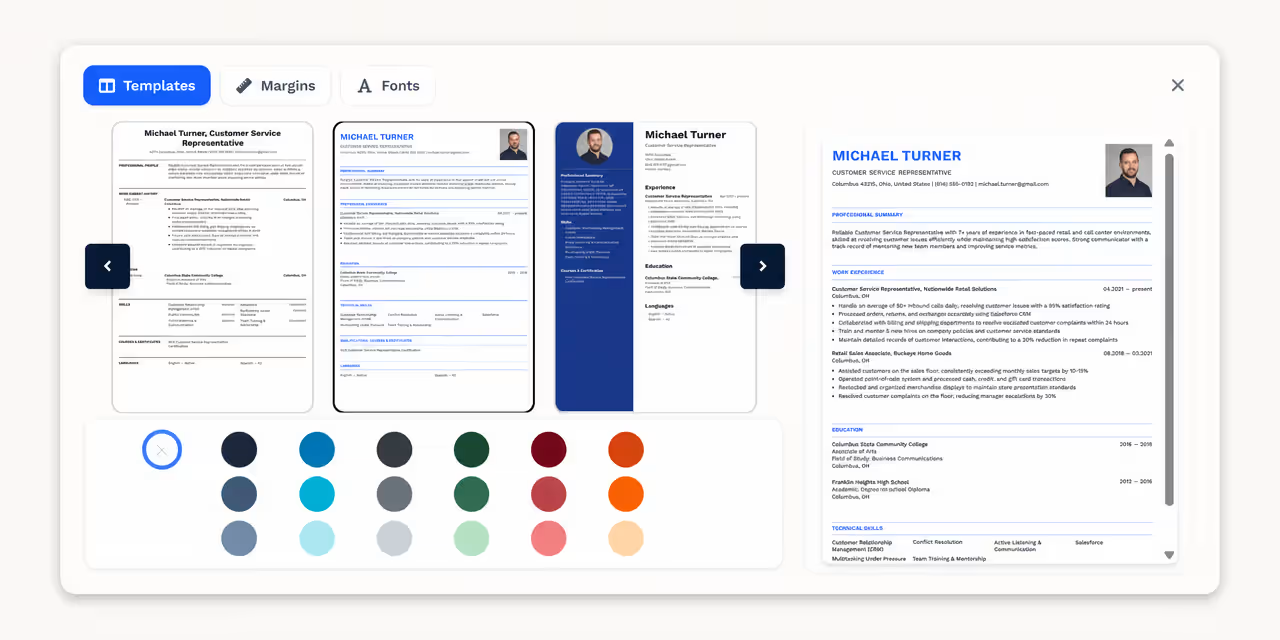
Browse our resume templates to make sure the copy you bring to your interview looks as prepared as you are.
Browse resume templates
Sources
Frequently Asked Questions
Most candidates benefit from spreading preparation across several days rather than one long session — roughly a week for research and practicing answers, with a final review the day before and morning of the interview.
Choose a real weakness rather than a disguised strength, and pair it with a specific example of how you're actively working to improve it — this shows self-awareness without undermining your candidacy.
Yes, a small notebook with a few prepared questions or key points is generally seen as a sign of preparation, not a lack of confidence — just avoid reading full answers directly off a script.
Draw your examples from coursework, volunteer work, or extracurricular activities instead of paid jobs — the STAR method works the same way regardless of where the example comes from.
Yes, bringing a few printed copies is still standard practice, since not every interviewer will have easy access to your online application during the conversation.
Be honest rather than guessing confidently — briefly explain your general approach to figuring it out, since employers often value a clear thought process over a perfect answer.
Within 24 hours is standard. Sending it promptly keeps you fresh in the interviewer's mind and shows continued interest in the role.