What a Welder's Day Actually Looks Like
That day-to-day reality is exactly what should show up on a welder resume. A hiring manager wants to know which welding processes you can run, what kind of metal you've worked with, and whether your welds hold up to inspection. This article breaks all of that down, with a full resume example you can copy.
Turning Your Welding Experience Into a Resume That Gets Noticed
Start with your most recent job and describe your daily tasks in plain terms, the same way you'd explain them to a coworker. If you're AWS certified — meaning you've passed a welding test recognized across the industry — put that near the top, since many job postings ask for it directly.
Keep your resume to one page if you can. A resume created online makes it easier to keep the layout clean while you focus on the details that actually matter.
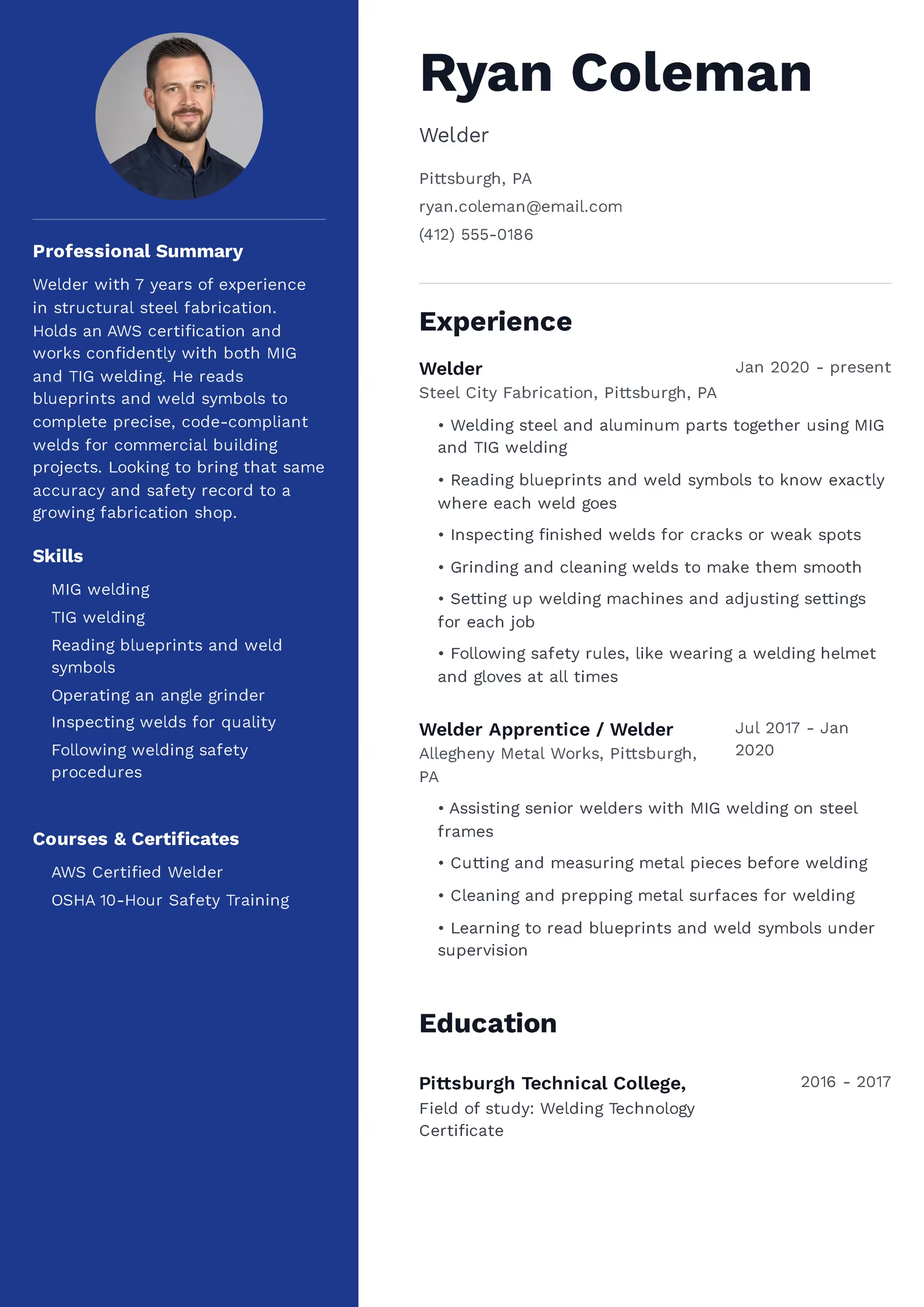
A Complete Welder Resume Example
Notice that his current job lists more specific detail than his earlier apprentice role — that's intentional. A hiring manager cares most about what you're doing right now, so your most recent job should carry the most detail.
Resume Example — Welder
Ryan Coleman
Pittsburgh, PA
Welder with 7 years of experience in structural steel fabrication. Holds an AWS certification and works confidently with both MIG and TIG welding. He reads blueprints and weld symbols to complete precise, code-compliant welds for commercial building projects. Looking to bring that same accuracy and safety record to a growing fabrication shop.
Welder
Steel City Fabrication, Pittsburgh, PA
02.2020 – Present
Welder Apprentice / Welder
Allegheny Metal Works, Pittsburgh, PA
06.2017 – 01.2020
Welding Technology Certificate
Pittsburgh Technical College
2016 – 2017
Writing a Professional Summary for a Welder Resume
Keep it to 3–4 sentences. Below are three examples for different experience levels — each one names a specific welding process instead of just saying "welding experience."
Which Skills to List on a Welder Resume
Aim for 6–10 skills. If a job posting asks for a specific process, like TIG welding, or a specific metal, like stainless steel, and you've worked with it, add it to your list.
Skills for a Welder Resume
| Job-Specific Skills | Personal Strengths |
|---|---|
| MIG welding | Staying focused during long, detailed tasks |
| TIG welding | Working carefully to avoid mistakes |
| Reading blueprints and weld symbols | Following instructions exactly as given |
| Operating an angle grinder | Comfort working in a shop or on a job site |
| Inspecting welds for quality | Taking pride in a clean, finished result |
| Following welding safety procedures | Staying calm around heat and sparks |
| Setting up and adjusting welding machines | Physical stamina for standing and lifting |
| Working with steel, aluminum, or stainless steel | Communicating clearly with a team lead |
| Cutting and measuring metal parts | Willingness to learn new welding processes |
| AWS certified welding process | Problem-solving when a weld doesn't pass inspection |
What Does a Welder Actually Do on the Job?
Typical Welder Duties
| Area | Example Welder Duties |
|---|---|
| Welding | Welding steel or aluminum parts together using MIG or TIG welding |
| Blueprint reading | Reading blueprints and weld symbols to know where and how to weld |
| Setup | Setting up a welding machine and adjusting settings for the type of metal |
| Quality checks | Inspecting finished welds for cracks, gaps, or weak spots |
| Finishing | Grinding and cleaning welds to make them smooth and even |
| Cutting and measuring | Cutting and measuring metal pieces before welding them together |
| Safety | Wearing a welding helmet, gloves, and other safety gear at all times |
| Equipment care | Keeping welding equipment clean and reporting any repairs needed |
| Team coordination | Working with other welders and a shop supervisor to finish projects on time |
| Documentation | Marking finished parts to show they passed inspection |
Not sure how to describe your own duties? Our resume builder walks you through it step by step.
Build Your Resume

Does Resume Design Matter for a Welder?
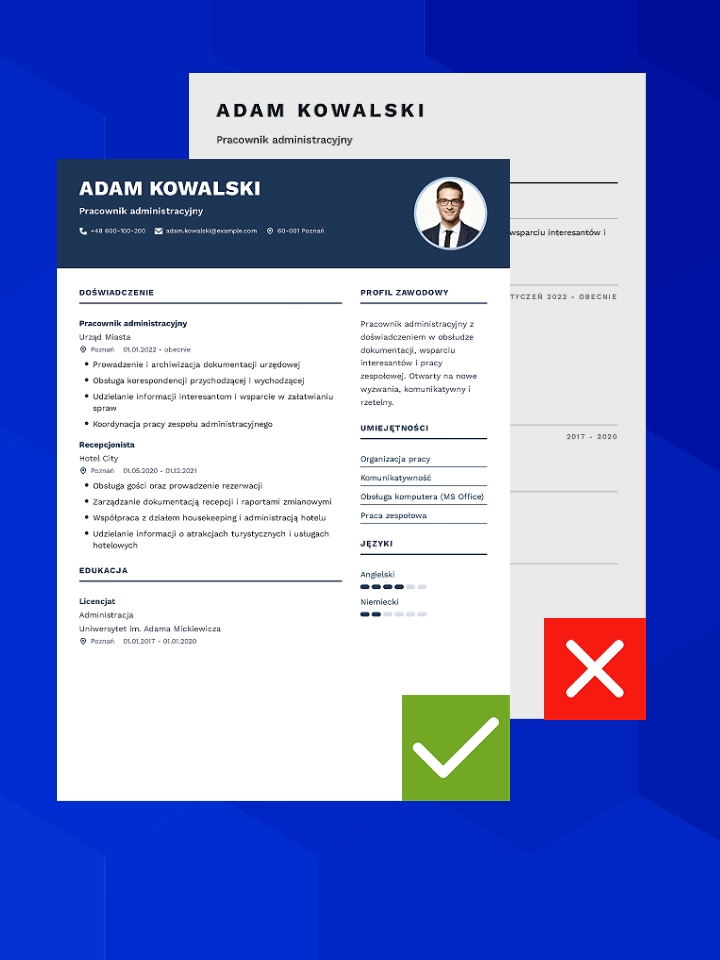
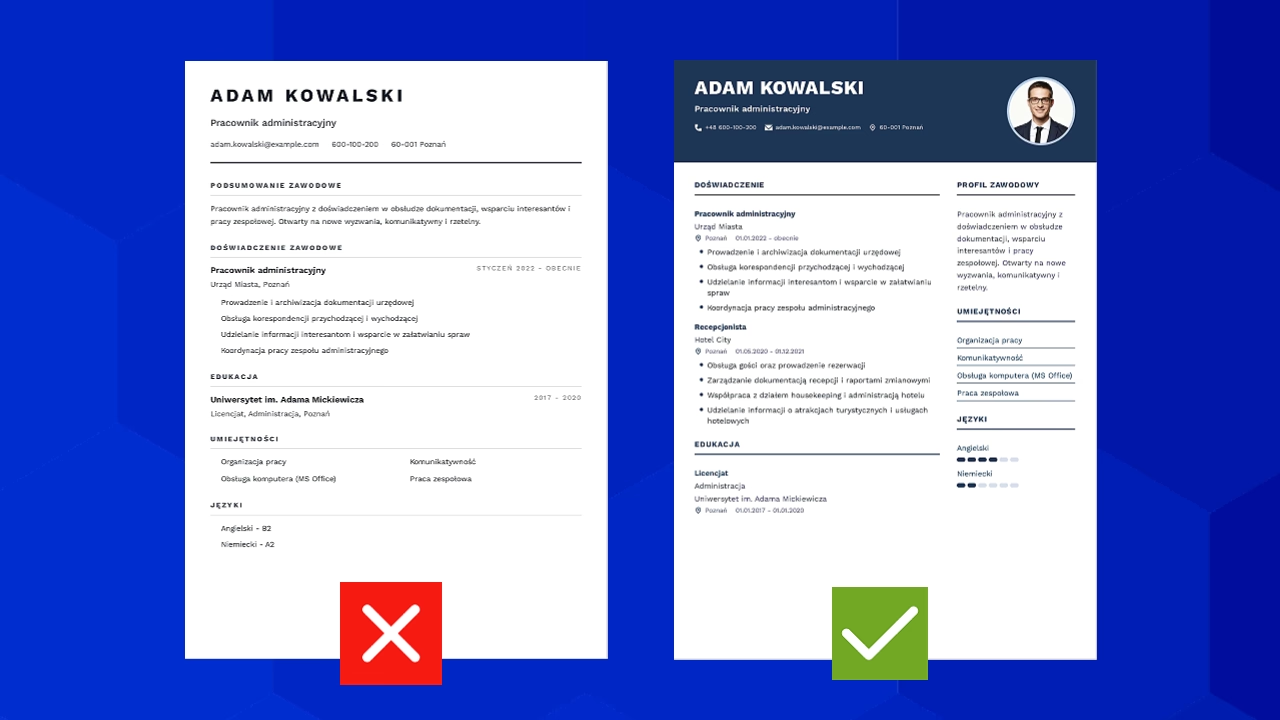
Choose a simple template with clear section headings, so your AWS certification and skills are easy to spot right away, even on a phone.
Not sure which template fits best? Try our template library.
Build Your Resume

Mistakes That Weaken a Welder Resume
Not naming a specific welding process. "Experienced welder" tells a hiring manager nothing. Naming MIG, TIG, or stick welding tells them exactly what you can do.
Leaving off a certification. If you're AWS certified, it should be easy to find, not buried at the bottom of the resume.
Skipping the type of metal. Steel, aluminum, and stainless steel all weld differently. Naming the ones you've worked with shows real, specific experience.
Writing duties too generally. "Did welding work" could describe almost any job. A specific duty is easier to picture and easier to trust.
Forgetting safety training. A course like OSHA 10-Hour Safety Training shows you take shop safety seriously, which matters to most employers.
If you're also sending a cover letter with your application, our cover letter guide shows how to explain your experience in your own words.
Here's the same duty written two different ways.
Key Takeaways for Your Welder Resume
- Name your welding processes — MIG, TIG, or stick welding — instead of just saying "welding experience."
- Put your AWS certification where it's easy to find, if you have one.
- Mention the metals you've worked with, like steel, aluminum, or stainless steel.
- Describe your daily tasks clearly, like reading blueprints or inspecting welds.
- Keep your work history to your two or three most recent welding jobs.
- Choose a simple, easy-to-scan template so your certifications stand out.
For a refresher on resume basics before you start, our complete resume guide walks through every section in plain language.
Frequently Asked Questions
Not always, but many employers prefer it or require it for certain projects, especially in structural or commercial work. AWS certification means you've passed a welding test recognized across the industry. If you don't have it yet, mention any welding training you've completed and your willingness to get certified.
That's completely fine — just name it clearly instead of writing a general term like "welding." Being specific about MIG welding still shows real, hands-on skill, and many shops are willing to train you on TIG or stick welding if needed.
If you know a specific number, like a pass rate on quality inspections, include it. If not, you can mention that your welds consistently pass inspection, or that you've never had a weld rejected. Concrete details like this build more trust than a general phrase like "high-quality work."
Lead with your welding certificate and the specific processes you trained in, like MIG or stick welding. Mention any hands-on projects you completed during training. In your summary, say you're certified, careful, and ready to apply your training on the job.
Stick to your two or three most recent welding jobs and describe each one with 4–6 specific duties. Older jobs can be summarized in a single line or left off if they're not relevant to the work you're applying for now.
Yes. Steel, aluminum, and stainless steel each require different techniques, so naming the ones you've worked with tells a hiring manager exactly what you're prepared for. If a job posting mentions a specific metal, make sure it's on your resume if you have that experience.
No. Most welding jobs require a trade school certificate or an apprenticeship, not a college degree. A welding certification, like one from the American Welding Society, usually matters more to employers than formal education.
Being too vague about your welding process. Phrases like "experienced welder" don't tell a hiring manager what you can actually do. Naming MIG, TIG, or stick welding, along with the metals and certifications you have, makes your resume far more convincing.
Read Also
Ready for your own resume?
Go to the builder and start with the first step in seconds.
Create Resume