What Makes Writing a Caregiver Resume So Hard?
The truth is that these exact tasks are what a family or agency wants to read about. A hiring manager isn't looking for fancy words — they want to know if you can help their loved one safely and kindly, day after day. This article shows you how to turn your real, daily experience into a caregiver resume that says exactly that, with a full example you can copy.
How to Build a Caregiver Resume Step by Step
Start with your most recent caregiving job and list your daily tasks clearly, using real words like "helped with bathing" instead of vague phrases like "provided care." If you have a CPR or First Aid certification, put it near the top of your skills or in its own short section — many families ask for this specifically.
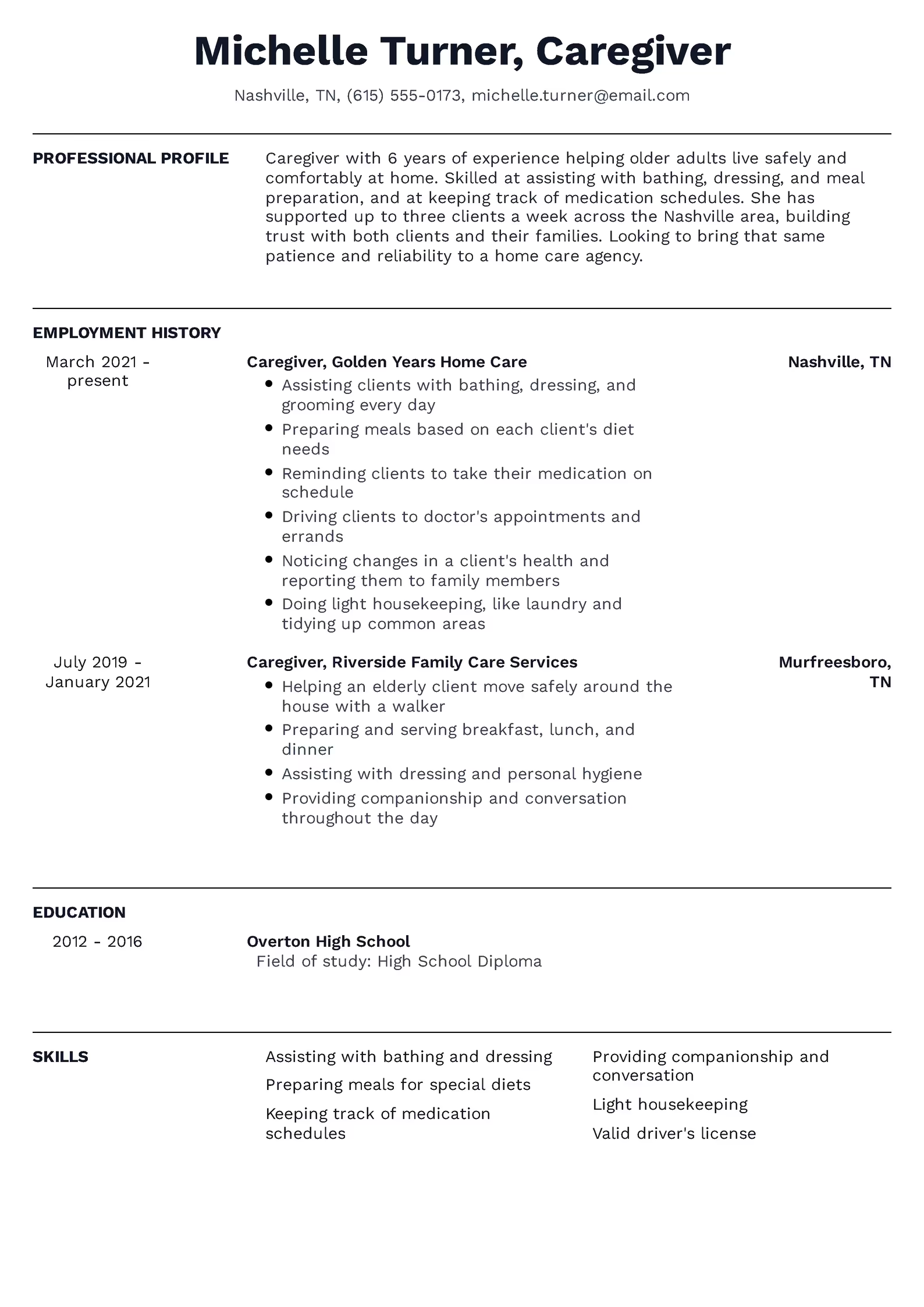
Below is a full example resume for a caregiver named Michelle, based in Nashville, TN. Use it as a starting point, then swap in your own jobs, dates, and skills.
Resume Example — Caregiver
Michelle Turner
Nashville, TN
Caregiver with 6 years of experience helping older adults live safely and comfortably at home. Skilled at assisting with bathing, dressing, and meal preparation, and at keeping track of medication schedules. She has supported up to three clients a week across the Nashville area, building trust with both clients and their families. Looking to bring that same patience and reliability to a home care agency.
Caregiver
Golden Years Home Care, Nashville, TN
03.2021 – Present
Caregiver
Riverside Family Care Services, Murfreesboro, TN
06.2019 – 02.2021
High School Diploma
Overton High School
2012 – 2016
How to Describe Your Caregiving Work So It Actually Stands Out
The trick is to name what you actually did, not just the general idea of "caring" for someone. Below are examples of the same duty, written well and written poorly.
Writing a Professional Summary That Sounds Like You
Keep it to 3–4 sentences. Mention your years of experience, one or two things you're especially good at, and what kind of role you're looking for next. Here are three examples for caregivers at different stages of their career.
Which Skills to List on a Caregiver Resume
Aim for 6–8 skills that match the job. If a job posting mentions something specific, like using a wheelchair or hoyer lift, and you've done it, add it to your list.
Skills for a Caregiver Resume
| Job-Specific Skills | Personal Strengths |
|---|---|
| Assisting with bathing and dressing | Patience with clients who need extra time |
| Preparing meals for special diets | Staying calm during stressful moments |
| Keeping track of medication schedules | Being dependable and showing up on time |
| Helping with mobility (walker, wheelchair) | Clear, respectful communication with clients |
| Light housekeeping and laundry | Comfort working closely with older adults |
| Noticing changes in a client's health | Staying organized without being told twice |
| Driving clients to appointments | Warmth and genuine care for people |
| Basic First Aid and CPR | Handling family questions with honesty |
What Does a Caregiver Actually Do Day to Day?
Typical Caregiver Duties
| Area | Example Caregiver Duties |
|---|---|
| Personal care | Helping a client bathe, get dressed, and brush their teeth each morning |
| Mobility | Assisting a client to walk safely with a cane or walker |
| Meals | Cooking meals that follow a client's diet, like low-sodium or diabetic meals |
| Medication | Reminding a client to take pills at the right times each day |
| Health monitoring | Watching for signs of pain, confusion, or falls and reporting them |
| Companionship | Talking, playing cards, or going for short walks with a client |
| Household tasks | Doing light laundry, dishes, and keeping the home tidy |
| Transportation | Driving a client to doctor visits, the pharmacy, or the grocery store |
| Family communication | Updating family members on how a client is doing each week |
| Emergency response | Knowing what to do and who to call if a client falls or gets hurt |
Not sure how to list your own duties? Our resume builder walks you through it step by step.
Build Your Resume

Does the Design of Your Resume Really Matter?
Pick a simple template with clear headings and enough white space, so someone reading it quickly — often on a phone — can find your experience and contact information right away.
Not sure which template fits best? Try our template library.
Build Your Resume

Mistakes That Hurt a Caregiver Resume
Writing duties too vaguely. "Took care of clients" tells a reader nothing. Say exactly what you did, like "helped a client bathe and get dressed each morning."
Leaving out certifications. If you have a CPR or First Aid certification, list it clearly — many families search for this specifically and may skip resumes that don't mention it.
Forgetting to mention specific conditions. If you've cared for someone with dementia, mobility issues, or a specific illness, say so. It shows you can handle a similar situation again.
Listing every job you've ever had. You don't need ten jobs from ten years ago. Focus on your two or three most recent caregiving roles and describe them in detail.
Skipping your license. If driving clients is part of the job and you have a valid driver's license, add it to your skills — it's often a requirement, not a bonus.
Using stiff, formal language. A resume that sounds like a legal document can feel cold for a caregiving role. Plain, honest language works better here.
If you're also writing a cover letter for this job, our cover letter guide covers how to explain your experience in your own words.
Key Takeaways for Your Caregiver Resume
- Name your real daily tasks — bathing, meals, medication, mobility — instead of vague phrases.
- List certifications like CPR and First Aid clearly, near the top if possible.
- Mention any experience with specific conditions, like dementia or mobility issues.
- Keep your work history to your two or three most recent caregiving jobs.
- Write your summary in plain language you'd actually feel comfortable saying out loud.
- Choose a simple, easy-to-read template so nothing gets lost.
If you want a refresher on resume basics before you start, our complete resume guide walks through every section, or browse more resume templates for other jobs.
Frequently Asked Questions
If you haven't been paid to work as a caregiver yet, list any time you've cared for a family member, volunteered, or completed a First Aid or CPR course. Describe what you actually did, like helping someone with meals or getting around the house. In your summary, mention that you're reliable, patient, and ready to learn. Real experience caring for someone, even unpaid, counts.
It depends on the employer and the state you work in. Many agencies require a CPR and First Aid certification, and some ask for a Certified Nursing Assistant (CNA) credential, especially for medical tasks. If you don't have any certification yet, say so honestly and mention any training you're currently completing.
You can list it like any other job. Use a title like "Family Caregiver," include the dates, and describe your duties the same way you would for a paid position, such as helping with meals, medication, or mobility. Just be clear in your summary or cover letter that it was for a family member, since a hiring manager may ask about it.
Yes. If you've cared for someone with dementia or a similar condition, mention it directly in your work experience or skills section. It's one of the details families and agencies look for most, since it shows you can handle specific challenges like memory loss or confusion calmly.
Stick to your two or three most recent caregiving jobs and describe each one with 4–6 specific duties. If you've worked for many families over the years, you can summarize older jobs in a single line instead of listing every one in detail.
Don't try to hide it by changing your dates. A short gap isn't unusual and most employers won't mind, especially in caregiving. If you were caring for your own family member during that time, you can mention that briefly in your summary or cover letter.
Yes, if the job involves driving clients to appointments or errands. Add "valid driver's license" to your skills section if you have one — many caregiving jobs list this as a requirement, so leaving it off could make your resume get skipped.
One page is usually enough, even if you have several years of experience. Focus on your most recent, most relevant jobs and specific duties rather than trying to fit in everything you've ever done.
Read Also
Ready for your own resume?
Go to the builder and start with the first step in seconds.
Create Resume