A Day on a Warehouse Floor — and What It Means for Your Resume
That's exactly what a hiring manager wants to see on your resume — proof that you can move fast without cutting corners. Vague phrases like "performed warehouse duties" don't show that. This article walks through a full warehouse worker resume example, section by section, so you know exactly what to write, even if you've never made a resume before. For the basics of resume writing in general, see our guide on how to write a resume.
Making Your Warehouse Resume Stand Out From the Pile
After that, list your work experience, starting with your most recent job. Even if you haven't worked in a warehouse before, jobs where you lifted, moved, or organized things still count. Then add your skills, your education, and any certifications — like being forklift certified, which many warehouses look for specifically.
You don't have to build this layout by hand. Our resume builder creates a structure like the one below and fills it in with your own details.
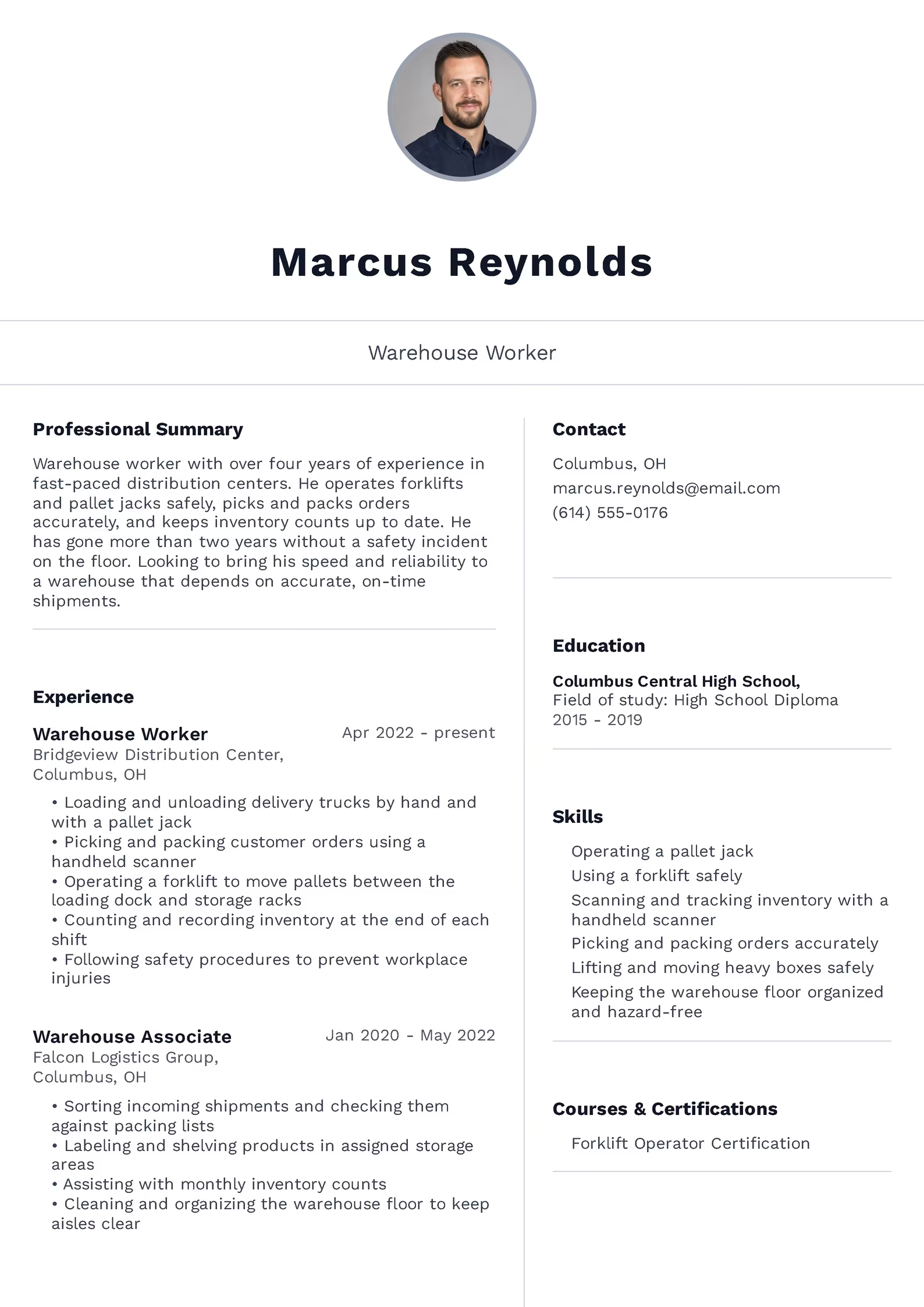
Resume Example — Warehouse Worker
Marcus Reynolds
Columbus, OH
Warehouse worker with over four years of experience in fast-paced distribution centers.
Operates forklifts and pallet jacks safely, picks and packs orders accurately, and keeps inventory counts up to date. Has gone more than two years without a safety incident on the floor.
Warehouse Worker
Bridgeview Distribution Center, Columbus, OH
05.2022 – Present
Warehouse Associate
Falcon Logistics Group, Columbus, OH
01.2020 – 04.2022
High School Diploma
Columbus Central High School
2015 – 2019
Writing a Professional Summary That Sounds Like You, Not a Job Ad
Below are three versions for different levels of experience. Notice none of them use empty phrases — each one gives a manager something specific to picture.
The Skills That Actually Matter on a Warehouse Resume
Be specific wherever you can. "Good with equipment" tells a manager nothing. "Using a forklift safely" tells them exactly what you can do.
Skills for a Warehouse Worker Resume
| Job-Specific Skills | Personal Strengths |
|---|---|
| Operating a pallet jack | Following safety rules without being reminded |
| Using a forklift safely | Staying focused during repetitive tasks |
| Scanning and tracking inventory | Working quickly without sacrificing accuracy |
| Picking and packing orders | Lifting and moving heavy items safely |
| Loading and unloading delivery trucks | Showing up on time for every shift |
| Reading packing lists and shipping labels | Working well as part of a team |
| Using basic warehouse management software | Staying alert during long shifts |
| Organizing storage racks and shelving | Reporting problems or hazards right away |
What Warehouse Workers Actually Do — Broken Down by Task
The table below breaks these into full sentences you can copy or adjust for your own resume.
Typical Warehouse Worker Duties
| Area | Example Warehouse Worker Duties |
|---|---|
| Loading & Unloading | Loading and unloading delivery trucks using a pallet jack or by hand |
| Order Picking | Picking items from storage racks to fill customer orders accurately |
| Packing & Shipping | Packing orders securely and labeling boxes for shipment |
| Inventory | Counting stock and recording inventory numbers at the end of a shift |
| Equipment Operation | Operating a forklift or pallet jack to move pallets around the warehouse |
| Receiving | Checking incoming shipments against packing lists for accuracy |
| Warehouse Organization | Shelving and labeling products so they're easy to find later |
| Safety | Following safety procedures to prevent injuries and equipment damage |
| Quality Control | Checking products for damage before they're shipped out |
| Teamwork | Helping coworkers meet daily order deadlines during busy periods |
A Clean Resume Design Matters, Even for a Warehouse Job
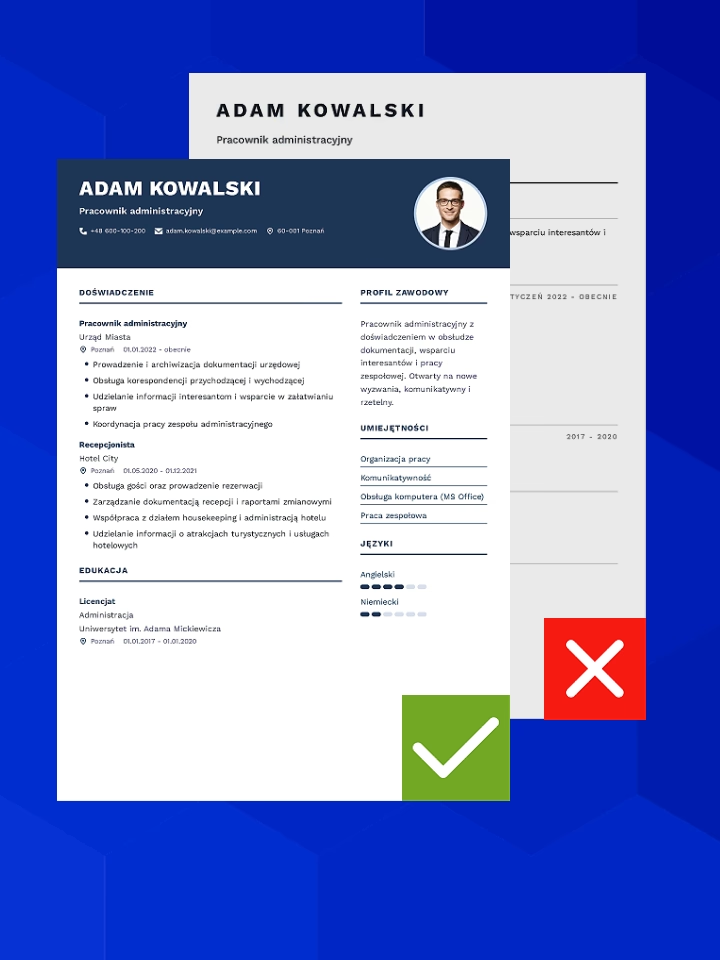
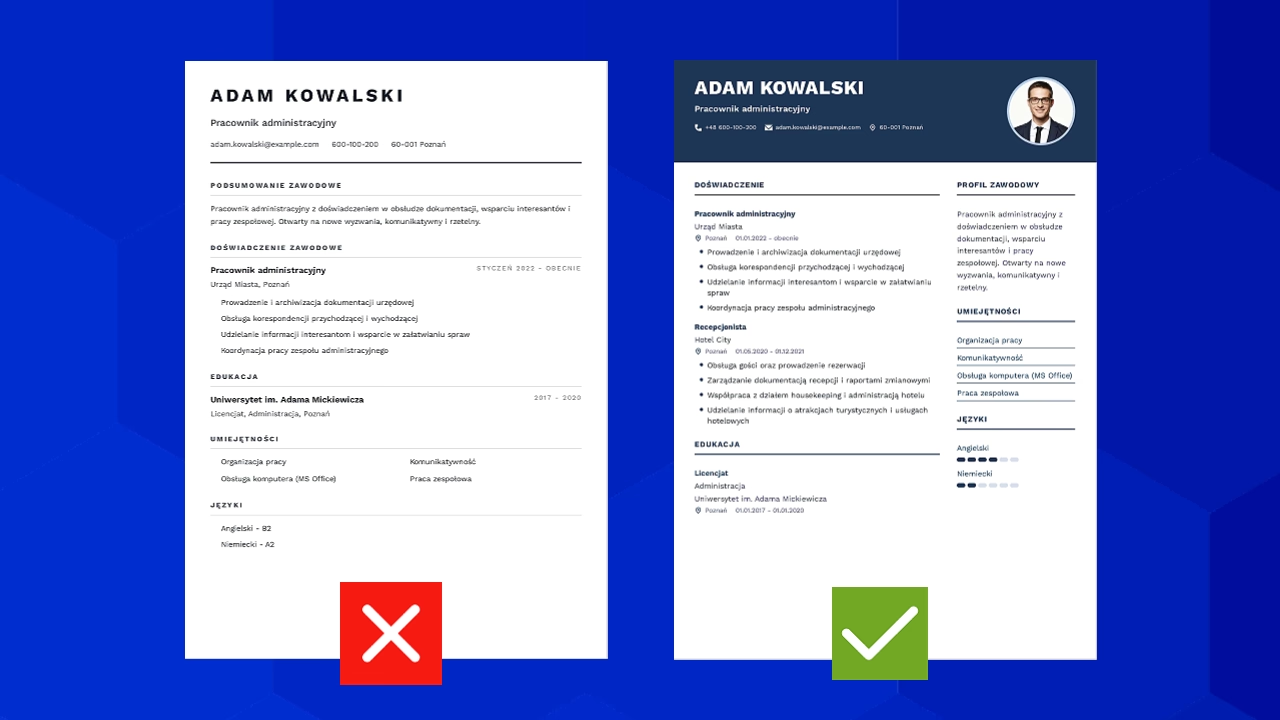
Pick a template that's easy to scan quickly — no unusual fonts or busy backgrounds that slow a manager down.
Not sure which template fits best? Try our template library.
Build Your Resume

Mistakes That Keep Warehouse Resumes Out of the “Yes” Pile
Writing "warehouse duties" instead of real tasks. A manager already knows the general job — they want to know what you specifically did. Replace vague phrases with details, like "picked and packed 100+ orders per shift" or "operated a forklift to move pallets."
Leaving off equipment you're certified or experienced with. If you're forklift certified or have experience with a pallet jack, scanner, or other equipment, list it clearly — this is often the first thing a manager checks.
Not mentioning safety. Warehouses care a lot about safety records. If you've worked injury-free for a stretch of time, or completed safety training, that's worth including.
Skipping physical requirements entirely. Since the job involves lifting and standing for long shifts, a line showing you're comfortable with that kind of physical work can help.
Using an unprofessional email address. Something like "warehousebro99@email.com" can make a manager hesitate. Use a simple version of your name instead.
Making the resume too long or cluttered. One page is enough. Managers hiring for warehouse roles often review many applications quickly, so keep it short and easy to skim.
Not tailoring the resume to the type of warehouse. A grocery distribution center, an e-commerce fulfillment center, and a manufacturing warehouse all move product a little differently. Mention the type of environment you've worked in if you're applying somewhere specific.
Key Takeaways Before You Submit Your Warehouse Resume
Be specific — swap vague phrases for real tasks, like "operated a forklift" instead of "handled equipment."
List your certifications — a forklift certification or similar credential often gets noticed first.
Show your safety record — time without an incident, or completed safety training, builds trust fast.
Mention speed and accuracy together — both matter more in a warehouse than almost any other detail.
Keep the design clean and short — one page, easy to scan in under a minute.
Don't hide a lack of experience — physical fitness, reliability, and willingness to learn all count for something.
If you're applying by email or through a company site, pair this resume with a short cover letter — a few confident sentences about your reliability can go a long way for a fast-moving job like this.
Frequently Asked Questions
Focus on any job or experience where you lifted, moved, or organized things — even if it wasn't in a warehouse. Mention that you're physically able to handle the work, reliable about showing up, and ready to learn equipment like a pallet jack or forklift. A short safety or equipment course, even from school, is worth listing too.
Not always. Many warehouse jobs don't require it, especially entry-level roles focused on picking and packing. But if you already have a forklift certification, list it clearly, since it often makes you eligible for more roles and slightly higher pay.
One page is enough for almost every warehouse application. Managers hiring for these roles usually review resumes quickly, so a short, easy-to-scan resume works better than a long, detailed one.
You can, especially if a job posting mentions a specific weight requirement. A short line like “comfortable lifting up to 50 pounds repeatedly during a shift” shows a manager you understand the physical side of the job without needing to ask.
The strongest resumes combine equipment skills, like operating a pallet jack or forklift, with personal strengths like following safety rules and working quickly without mistakes. Listing both gives a manager a full picture of how you'd handle the floor.
Focus on what you actually did, not how long you stayed. A few specific duties from a short job, like picking orders accurately or operating a scanner, are more useful to a manager than a vague description from a longer job.
The most common mistake is writing vague duties like “warehouse responsibilities” instead of specific tasks. A manager can't picture what you actually did. Replace general phrases with concrete ones, like loading trucks, picking orders, or operating a forklift.
Yes. Warehouses deal with heavy equipment and repetitive physical work, so safety matters a lot to hiring managers. If you've completed safety training or gone a long stretch without an incident, include it — it signals that you're careful and trustworthy on the floor.
Read Also
Ready for your own resume?
Go to the builder and start with the first step in seconds.
Create Resume