Scrap, Returns, and Recalls — What a Quality Inspector's Resume Has to Prove
That is why a resume that only says “checked parts for quality” gets passed over. The resumes that get calls name the gauges, the inspection stages, and the paperwork. This guide gives you a full example to copy, wording for each tool you have used, and the mistakes that cost inspectors interviews. If you have never built a resume before, our step-by-step resume guide covers the basics first.
Calipers, Micrometers, and the CMM — Name Every Gauge You Have Used
Two terms in the table below come up in almost every job posting. A tolerance is the allowed range a size can fall in — for example, a hole that must be between 10.00 and 10.05 mm. A CMM, or coordinate measuring machine, is a machine that measures many dimensions of a part automatically and prints a report.
List only the gauges you have actually held. Interviews for this job often end with someone handing you a caliper and a part.
Measuring Tools to Name on a Quality Inspector Resume
| Tool or gauge | What it measures | How to write it on your resume |
|---|---|---|
| Digital calipers | outside sizes, inside sizes, and depths, quickly | Measuring parts with digital calipers against the drawing |
| Micrometer | diameters and thickness, more exactly than calipers | Checking shaft diameters with a micrometer to the print |
| Height gauge and surface plate | heights and step distances from a flat reference surface | Checking heights and steps on a surface plate with a height gauge |
| Bore gauge | the inside diameter of a drilled or bored hole | Measuring hole sizes with a bore gauge |
| Go/no-go gauge | whether a hole or thread falls inside the allowed range | Checking threads and holes with go/no-go gauges |
| Pin and thread gauges | hole sizes and thread pitch without taking a reading | Using pin and thread gauges on tapped holes |
| Optical comparator | the shape of a small part against a magnified drawing | Checking part profiles on an optical comparator |
| CMM (coordinate measuring machine) | many dimensions at once, from a saved program | Running CMM programs and reading the measurement report |
| Hardness tester | how hard metal is after heat treatment | Running hardness checks on heat-treated parts |
| Gauge calibration records | whether your own tools still read true, and when they are due | Checking gauge calibration dates before each shift |
A Full Quality Control Inspector Resume, Ready to Copy
Notice what carries the weight. Every job entry names a gauge, an inspection stage, and a document he produced. His earliest job was as a machine operator, and it stays on the resume on purpose — moving from running parts to inspecting them is a strong story, not a weakness.
His certificates each have a year, because quality certificates get renewed and a manager wants to see how current yours is. Swap in your own industry, parts, and tools, and keep the shape.
Resume Example — Quality Control Inspector
Trevor Nichols
Greenville, SC
Quality control inspector with 9 years in machine shops and a plastics plant.
Measures parts with calipers, micrometers, and height gauges, and reads engineering drawings to confirm every dimension against the tolerance.
Holds an ASQ Certified Quality Inspector certificate and runs first article checks on every new setup.
Looking for a plant where catching problems early keeps scrap and customer returns down.
Quality Control Inspector
Piedmont Precision Machining, Greenville, SC
02.2021 – Present
Final Inspector
Blue Ridge Plastics Group, Spartanburg, SC
05.2018 – 01.2021
CNC Machine Operator
Catawba Metal Works, Anderson, SC
06.2016 – 04.2018
Certificate, Machine Tool Technology
Greenville Technical College, Greenville, SC
2015 – 2016
First Article, In-Process, Final Check — Writing Each Inspection You Ran
For each job on your resume, write one line for the stage, one for the tool, and one for what you did when a part failed. That last part matters most. Anyone can measure; a manager is paying for someone who will stop the line and write it up.
If you have worked several places, do not describe them all the same way. Give your last two or three roles a few detailed lines, and let older jobs sit in a single line each.
Inspection Stages and What You Do at Each One
| Inspection stage | What you check | What you write down |
|---|---|---|
| Incoming inspection | material and parts from suppliers, before they enter the plant | supplier lot number and a pass or fail result |
| First article | the first part off a new setup, every dimension on the drawing | a full measurement report, signed and dated |
| In-process check | samples pulled during the run, usually once an hour | each reading on the check sheet or control chart |
| Final inspection | finished parts before they are packed and shipped | the final report and a pass stamp on the paperwork |
| Visual check | scratches, burrs, flash, burn marks, missing features | the defect type and how many parts were affected |
| Dimensional check | sizes measured against the drawing and its tolerances | the actual reading next to the allowed range |
| Gauge calibration check | whether the measuring tool itself is still accurate and in date | the gauge number and its calibration due date |
| Hold and rejection | parts that fall outside the allowed range | a rejection tag with quantity, reason, and your name |
| Rework verification | parts that were fixed and sent back for a second look | the new measurement and a release note |
| Customer return review | a part the customer sent back as bad | what was wrong and at which stage it got missed |
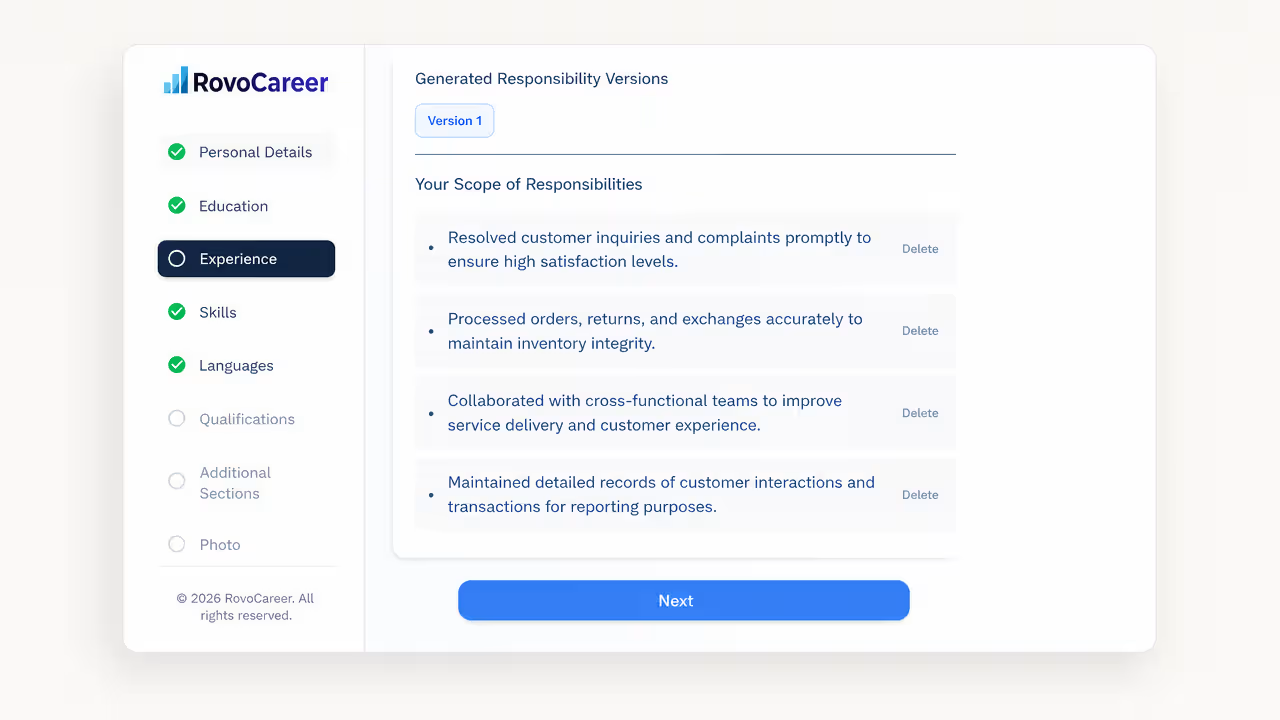
Stuck on how to word an inspection? Start from ready-made duty lines in the resume builder and edit them to your plant.
Build Your Resume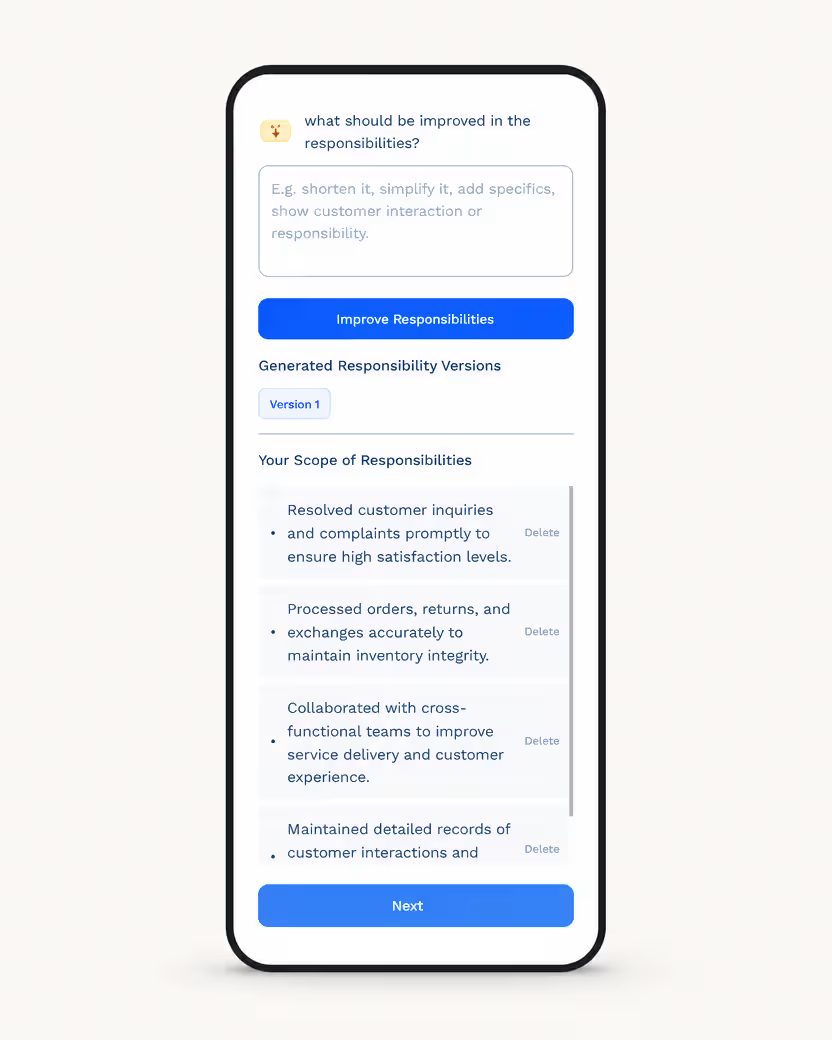
Three Sentences That Show You Can Be Trusted With a Sign-Off
Leave out detail-oriented unless you can back it up in the next sentence. Every inspector writes it, so it proves nothing. A tolerance, a gauge, and a certificate say the same thing with evidence behind them.
Which Inspection Skills Get Picked Up by a Quality Manager's Search
Write each skill as something you do, not as a label. Six to eight lines is plenty. The right column below gives you wording you can lift straight onto the page.
Skills to Put on a Quality Control Inspector Resume
| What you can do | How to write it so a quality manager finds it |
|---|---|
| Measuring parts by hand | Measuring machined parts with calipers, micrometers, and height gauges |
| Reading a drawing | Reading engineering drawings, including tolerances and GD&T symbols |
| Checking a new setup | Running first article checks before a production run continues |
| Sampling during a run | Pulling hourly samples and logging the readings on a control chart |
| Stopping bad parts | Writing rejection tags and holding lots that fall outside the tolerance |
| Keeping records | Writing inspection reports for every lot in the plant quality software |
| Checking supplier deliveries | Inspecting incoming shipments before parts reach the production line |
| Using a measuring machine | Running CMM programs and reading the measurement report |
| Looking after the gauges | Checking calibration dates and pulling out-of-date measuring tools |
| Working with operators | Showing operators what a defect looks like at their own machine |
| Taking part in audits | Supporting ISO 9001 internal audits on the production floor |
| Standing your ground | Holding a shipment until every reading was signed off |
Inspection Reports, Rejection Tags, and Control Charts — the Paperwork Half of the Job
Three documents are worth naming. An inspection report lists the readings you took for a lot, next to the allowed range. A rejection tag is the label you attach to bad parts, with the quantity, the reason, and your name. A control chart is a simple graph where each hourly reading is plotted, so drift shows up before parts go out of range.
If your plant used quality software instead of paper, say so and name the type of system — the exact brand matters less than the fact that you kept lot records. Mentioning traceability, which just means being able to trace a finished part back to its material and its run, is a strong line if you did it.
ASQ CQI, GD&T, ISO 9001 — Which Quality Certificates Are Worth the Line
Here is what the common ones mean. The ASQ Certified Quality Inspector is a test-based certificate from the American Society for Quality, and it is the one most often named in job postings. GD&T stands for geometric dimensioning and tolerancing — the symbols on a drawing that say how much a shape may vary, not just its size. ISO 9001 internal auditor training means you were trained to check that your own plant follows its written quality rules.
Industry certificates count too. Aerospace plants look for AS9100 experience, automotive plants for IATF 16949, and food or medical plants for GMP training on cleanliness rules. Write the year next to each one, and if a certificate has lapsed, list it with the year and say you are ready to renew.
“Checked Parts for Quality” and Other Lines That Cost Inspectors Interviews
1. No gauges named. “Checked parts for quality” could be anyone at any plant. Name the calipers, the micrometer, the bore gauge, the CMM.
2. No inspection stage. Incoming, first article, in-process, and final are four different jobs. Say which you ran.
3. No industry. Aerospace, automotive, medical, and food plants all inspect differently. A manager wants to know if your tolerances were tight and your paperwork heavy.
4. The paperwork left out. Reports, tags, control charts, and lot records are half the job and the half auditors care about.
5. Claiming CMM skills you do not have. Saying you programmed a CMM when you only ran saved programs will come apart in the interview. Write exactly what you did.
6. No year on the certificate. “ASQ CQI” without a date reads as old or unverified. Add the year.
7. Hiding time as a machine operator. Coming from the machine side is a selling point — you know how the defect got made.
8. Never mentioning what you did when a part failed. The sentence about holding a lot or tagging bad parts is often the reason you get called.
The Last Check Before You Send Your Inspector Resume
Name your gauges — calipers, micrometer, height gauge, bore gauge, CMM. Only the ones you have really used.
Name your inspection stages — first article, hourly checks, final inspection, incoming.
Name your documents — inspection reports, rejection tags, control charts, lot records.
Put your ASQ or industry certificate with its year where it can be seen, keep the page to two or three jobs, and add one line about what you did when parts failed. If you are also sending a cover letter, use it to say which industry you know best.
Inspection is a job built on evidence. Write the resume the same way, and it will do the work for you.
Want a clean layout that keeps your gauges and certificates easy to find? Pick one from our template library.
Build Your Resume
Frequently Asked Questions
Yes, and it is one of the most common routes into the job. Lead with the checking you already do: measuring the first part of every run, using calipers, reading the drawing, logging scrap. Say plainly in your summary that you are moving into inspection. A short blueprint reading course adds weight and is cheap to take. Plants often prefer someone who knows how a defect gets made at the machine.
Not usually. Most postings ask for experience and a high school diploma, and list the ASQ Certified Quality Inspector certificate as preferred rather than required. It does help you stand out and it can move you up a pay grade. If you do not have it, do not leave the certificates section empty — list blueprint reading, GD&T, or any safety training you completed, each with the year. Some employers will pay for the certificate once you are on staff.
Always. Inspecting aerospace parts, car brackets, medical devices, and packaged food are very different jobs with different paperwork. Write the industry into your summary and into each job entry, along with the kind of part. It also picks up the words a manager searches for, like automotive, aerospace, or medical. If you have worked across several industries, that flexibility is worth saying too.
Write exactly that: “running CMM programs and reading the measurement report.” Programming a coordinate measuring machine and running a saved program are different skills, and a manager will test which one you have. Being honest here costs you nothing, because most inspector jobs only need someone who can load the part, run the program, and read the result. If you have written or edited programs, say so separately — that is a higher-paid skill.
GD&T stands for geometric dimensioning and tolerancing. It is the set of symbols on an engineering drawing that say how much a shape or position may vary, not just how big a feature is. If the drawings you worked from had those symbols, put GD&T in your skills. It is one of the first things a machine shop looks for. If you have never used it, a short course covers the basics in a day or two.
Often, yes. Many plants finish the interview on the shop floor by handing you a part, a drawing, and a caliper or micrometer, then asking for a reading. Some also ask you to point out where a dimension sits on the drawing. So only list the gauges you can pick up and use straight away. Practising on a few parts before the interview is worth an hour of your time.
Two or three, on one page. Give your most recent inspection roles four to six detailed lines each. Older jobs can be dropped or squeezed into a single line with the title, employer, and years. Keep an earlier machine operator or production job if it shows how you moved into quality. A second page rarely gets read and often gets separated from the first.
For inspector roles, usually not. A high school diploma with plant experience is the normal starting point, and a technical college certificate in machining or quality is a strong plus. Degrees matter more for quality engineer or quality manager jobs. Put your education in one short line near the bottom of the page. The space is better used on gauges, inspection stages, and certificates.
Read Also
Ready for your own resume?
Go to the builder and start with the first step in seconds.
Create Resume