Every Customer Service Team Keeps a Scorecard — Yours Belongs on the Page
Most resumes leave every one of them out. That is why they all read the same: “provided excellent customer service.” The resumes that get callbacks carry numbers, the channels you worked, and the system you logged everything in. This guide shows you where to find your own figures, gives you a full example to copy, and explains the mock call most service teams use before they hire. If this is your first resume, our step-by-step resume guide covers the basic layout.
One Page, Two Jobs, Six Numbers — the Example Resume to Copy
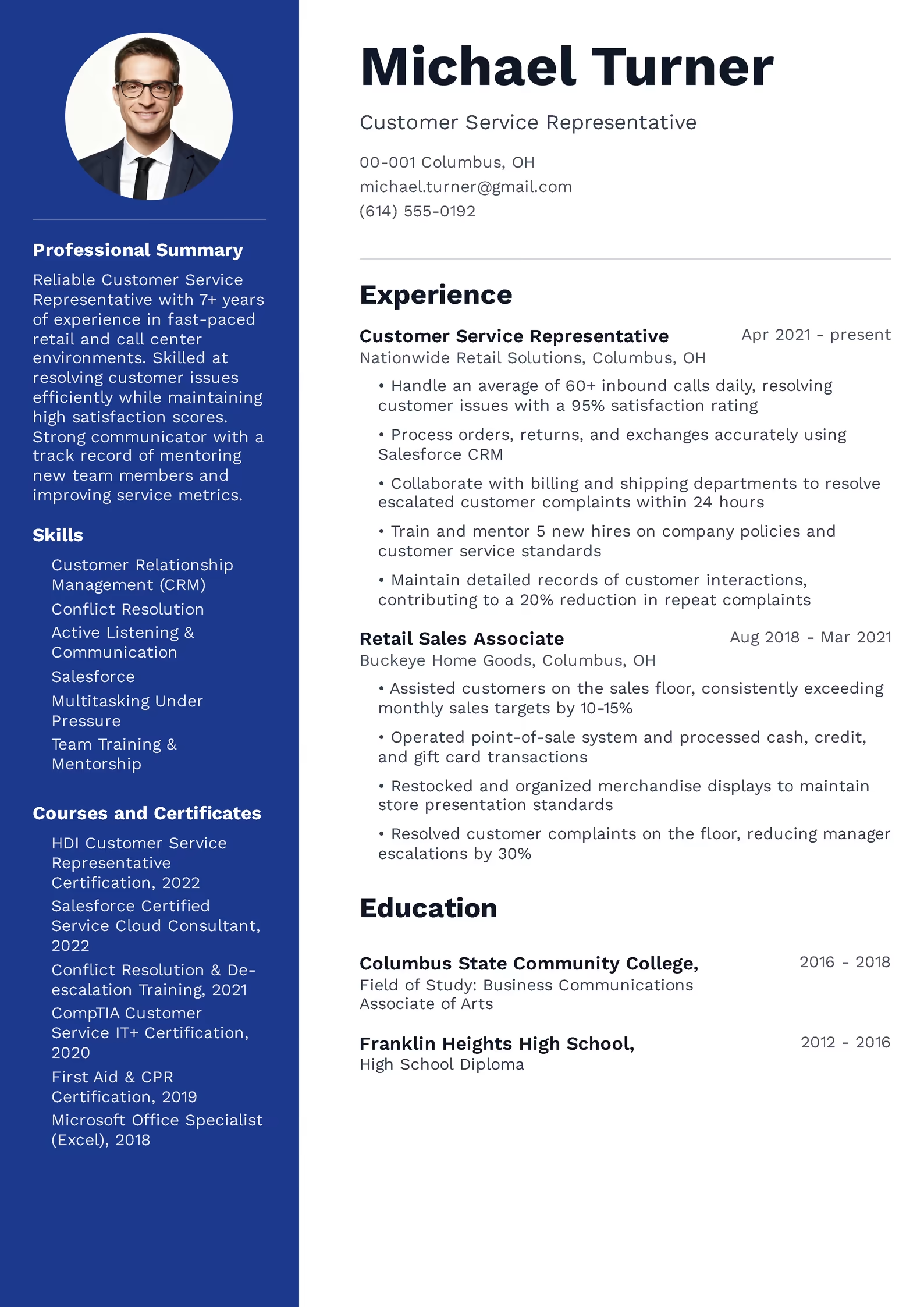
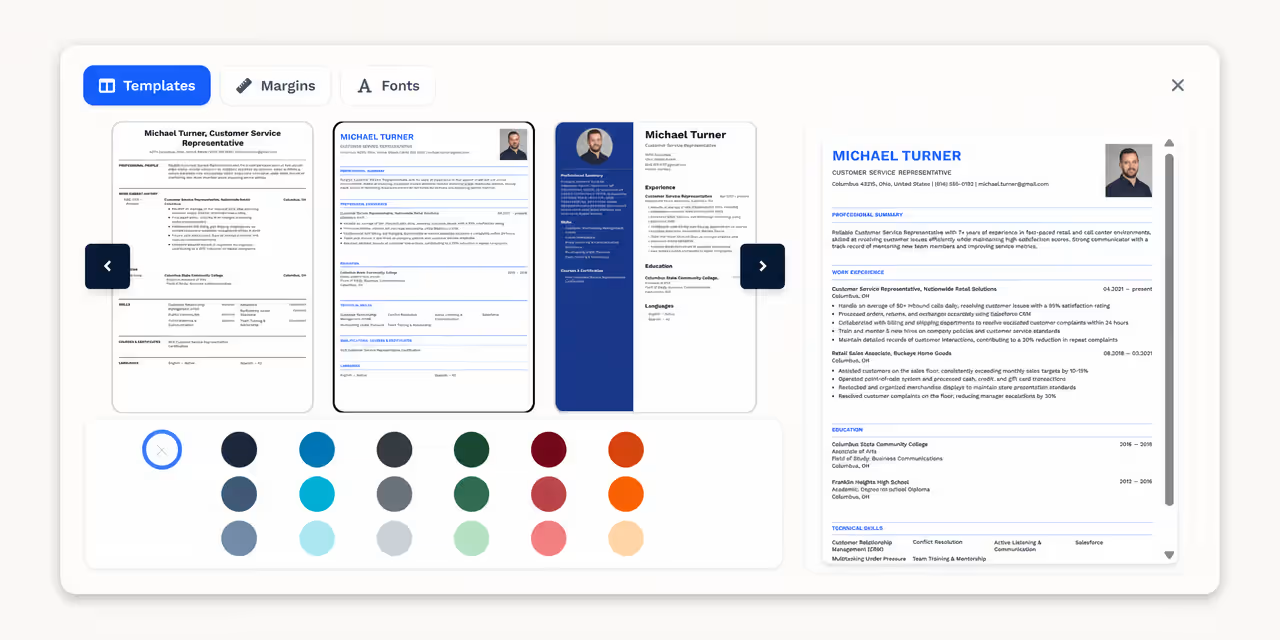
Count the figures on it: 60+ calls a day, a 95% satisfaction rating, complaints resolved within 24 hours, five new hires trained, a 20% drop in repeat complaints, a 30% drop in manager escalations. Six numbers on one page, and every one of them came from a report his employer already produced.
The second job is retail, not a call center, and it stays on the page on purpose. Sales floor work is customer service, and the complaint line in it does more work than any adjective. Swap in your own employers, channels, and figures.
Resume Example — Customer Service Representative
Michael Turner
Columbus, OH
Reliable Customer Service Representative with 7+ years of experience in fast-paced retail and call center environments.
Skilled at resolving customer issues efficiently while maintaining high satisfaction scores.
Strong communicator with a track record of mentoring new team members and improving service metrics.
Customer Service Representative
Nationwide Retail Solutions, Columbus, OH
04.2021 – Present
Retail Sales Associate
Buckeye Home Goods, Columbus, OH
08.2018 – 03.2021
Associate of Arts, Business Communications
Columbus State Community College, Columbus, OH
2016 – 2018
High School Diploma
Franklin Heights High School, Columbus, OH
2012 – 2016
Satisfaction Scores, Call Volume, Repeat Complaints — Where to Find Your Own Numbers
Four places to look. Your last one-to-one review or appraisal notes. The team dashboard on the wall or on your screen. Any email your team leader sent about monthly results. And the survey score customers leave after a call — often called a satisfaction rating.
If you are still in the job, write the numbers down now. People forget them within weeks of leaving, and a former employer will not dig them out for you. If you no longer have exact figures, use a fair estimate and put “around” in front of it. Nobody expects a printout, but a resume with no sense of scale reads as a resume with nothing to show.
Numbers a Customer Service Team Already Tracks
| What is measured | What it actually means | How it looks on a resume |
|---|---|---|
| Contacts a day | how many customers you deal with in a shift | Handle an average of 60+ inbound calls daily |
| Satisfaction rating | the score customers leave after speaking to you | resolving customer issues with a 95% satisfaction rating |
| Quality reviews | your team leader scoring a recorded call or chat | Scoring in the top quarter on quarterly call quality reviews |
| First contact resolution | how often a problem is fixed without the customer calling back | Fixing most issues on the first call without a callback |
| Repeat complaints | the same customer returning with the same problem | contributing to a 20% reduction in repeat complaints |
| Escalations | cases handed up to a supervisor | reducing manager escalations by 30% |
| Resolution time | how long a case stays open before it is closed | resolve escalated customer complaints within 24 hours |
| Sales or add-ons | targets attached to service work in retail | consistently exceeding monthly sales targets by 10-15% |
| Written contacts cleared | emails, tickets, or chats closed in a day | Clearing around 40 email tickets a day |
| New hires trained | people you showed the systems and the scripts to | Train and mentor 5 new hires on company policies |
| Attendance and schedule | being logged in and available when you are rostered | Full attendance across two years of shift work |
Escalations, Returns, and the 24-Hour Fix — Writing What You Actually Resolved
So build every line the same way: what you handled, in what system, and what happened as a result. “Process orders, returns, and exchanges accurately using Salesforce CRM” names the work and the tool. Add the outcome where you have one.
Two words worth using because employers search for them. An escalation is a case passed up to a supervisor, and keeping one off a manager's desk is a real skill. De-escalation means calming someone down before that happens.
If you have worked several service jobs, do not describe them all equally. Give your last two or three a few detailed lines and let older ones sit in a single line each.
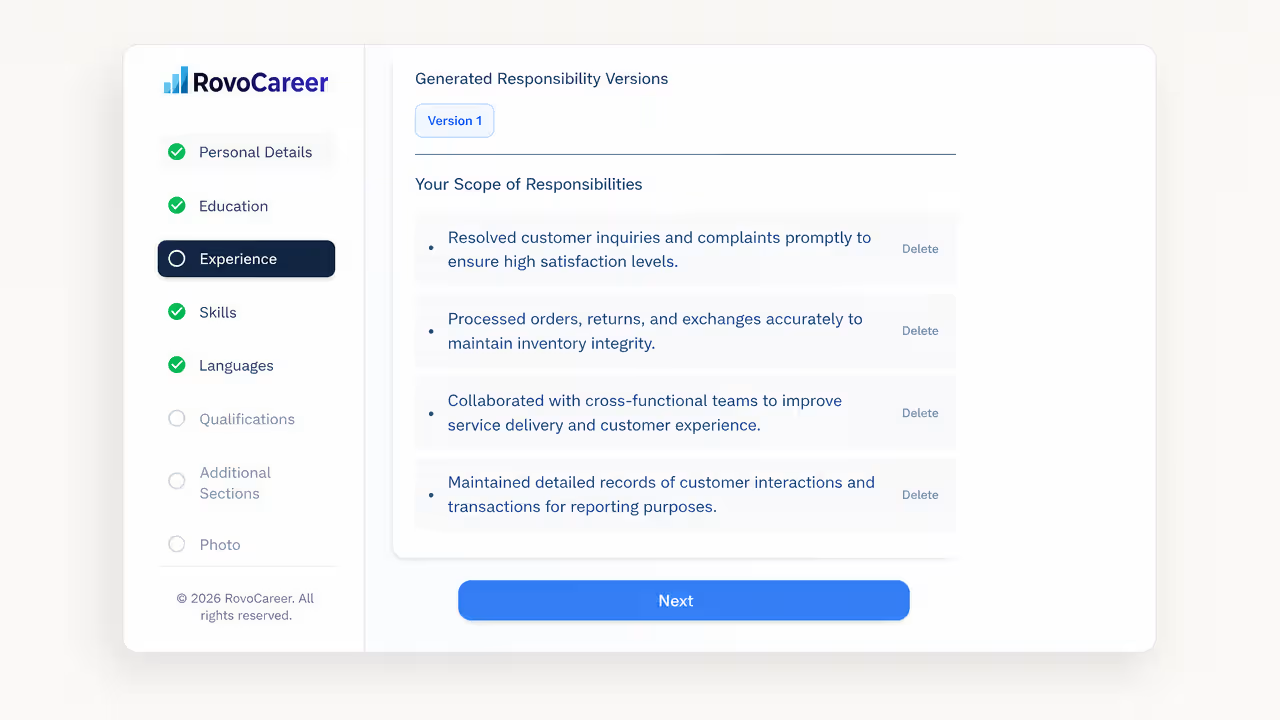
Stuck on wording? Start from ready-made duty lines in the resume builder and drop your own numbers into them.
Build Your Resume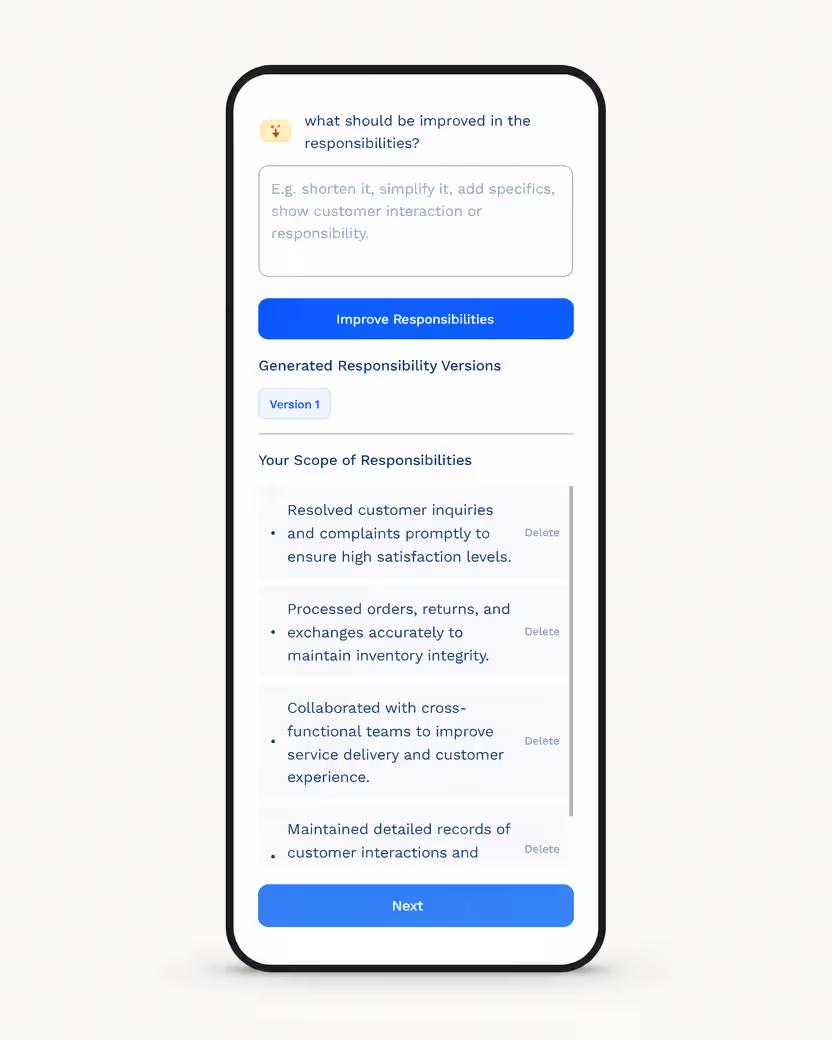
Phone, Chat, Email — and the System You Logged It All In
Then name the software. A CRM is the system that keeps a record of every customer and every contact — Salesforce is the best known, and ticketing tools work the same way. Employers search resumes for those names, because someone who already knows one picks up another in days.
Write the level honestly. “Process orders, returns, and exchanges accurately using Salesforce CRM” is a precise claim. Listing a system you only watched someone else use will come apart in the first week.
Customer Service Channels and How to Describe Them
| Channel | What the work is really like | Example line for your resume |
|---|---|---|
| Inbound phone calls | one call after another, often with a queue waiting | Handle an average of 60+ inbound calls daily |
| Outbound calls | callbacks, chasing a fix, confirming a delivery | Calling customers back once a case was resolved |
| Email and tickets | written replies, often from templates you adapt | Answering around 40 customer emails a day |
| Live chat | two or three conversations running at the same time | Handling up to three live chats at once |
| Social media and reviews | public replies where tone is visible to everyone | Replying to public reviews within one working day |
| Face to face | returns, exchanges, and complaints at a counter | Resolved customer complaints on the floor |
| Back office work | orders, refunds, and records between contacts | Process orders, returns, and exchanges accurately using Salesforce CRM |
| Working with other teams | billing, shipping, or a technical team who own the fix | Collaborate with billing and shipping departments to resolve escalated complaints |
“I've Been on Hold for Twenty Minutes” — Turning Hard Moments Into Skill Lines
There is a better way in. Think of the sentences customers actually open with, then write down what you do next. That turns a vague quality into something a hiring manager can picture, and it usually lands on the same words the job posting uses.
Skills to Put on a Customer Service Resume
| What the customer says | What you are actually doing | The line for your resume |
|---|---|---|
| I have been on hold for twenty minutes. | staying steady when someone opens angry | Calming angry callers before the case goes any further |
| This is the third time I have called. | picking up a case somebody else dropped | Collaborate with billing and shipping to resolve escalated complaints within 24 hours |
| I want to speak to your manager. | keeping a case you can genuinely fix | Resolved customer complaints on the floor, reducing manager escalations by 30% |
| It arrived broken. | returns, replacements, and refunds without fuss | Process orders, returns, and exchanges accurately using Salesforce CRM |
| You charged me twice. | getting another team to correct a payment | Working with the billing team to correct duplicate charges |
| Where is my order? | tracing a delivery and giving a real answer | Checking delivery status with shipping and calling the customer back |
| I do not understand what you just said. | explaining a policy without the policy wording | Explaining return and warranty rules in plain language |
| Nobody wrote anything down last time. | notes that let the next person pick it up | Maintain detailed records of customer interactions |
| Can you just tell me it is sorted? | closing the loop so it does not come back | contributing to a 20% reduction in repeat complaints |
| Is anyone actually there? | handling several conversations without dropping one | Handling up to three live chats at the same time |
| How do I log this one? (from a new colleague) | showing new starters the system and the scripts | Train and mentor 5 new hires on company policies and customer service standards |
What Goes in the Three Lines Above Your Job History
How long you have done this work and in what setting — call center, retail floor, help desk, or all three. What you are measurably good at. And one thing beyond taking contacts, such as training new starters or handling escalations.
Skip “passionate about helping people.” It is on every resume in the pile. A satisfaction score, a call volume, or a line about mentoring new hires does the same job with evidence behind it.
The Mock Call, the Typing Test, and the Phone Screen — How Service Teams Hire
It usually starts with an online assessment: short scenarios asking what you would do next. The answers that score well are the ones where the customer is kept informed and nothing is promised that cannot be delivered.
Then a phone screen. This one is really a test of how you sound on a call. Take it in a quiet room, off speakerphone, and slow down more than feels natural.
Most teams then run a mock call — someone reads out an unhappy customer and you handle it. A simple structure works: greet, listen without interrupting, say back what the problem is, ask one question, then either fix it or say exactly what happens next and when. Chat and email roles often add a typing test. Some employers finish with a background check, then a paid training class of a few weeks, followed by live calls with a coach sitting beside you. A short cover letter is worth sending, especially if you are switching from retail or hospitality.
“Provided Excellent Customer Service” and Other Lines Nobody Believes
1. No numbers at all. In a job where everything is measured, a page with no figures reads as a page with nothing worth reporting.
2. Only what you handled, never what you resolved. Taking 60 calls is the input. The satisfaction score and the drop in repeat complaints are the result.
3. No systems named. The CRM, the ticketing tool, the point-of-sale system. Employers search for those words directly.
4. No channels. Phone, email, chat, social, and face to face are staffed as different jobs. Say which ones you worked and how many at once.
5. Hiding retail, hospitality, or hotel work. It is customer service, often harder than the phone version. Describe it in service words.
6. Figures that look invented. A perfect 100% satisfaction score raises an eyebrow. Use your real number and name what it measured.
7. Ignoring the words in the posting. If it asks for de-escalation and first contact resolution, and you did both, use those words.
8. A summary made of adjectives. Patient, friendly, and hard-working describe everyone who applied.
Check These Six Things, Then Apply
Numbers are on it — contacts a day, satisfaction score, escalations, repeat complaints, people trained.
Systems are named — the CRM or ticketing tool, and the checkout system if you worked a floor.
Channels are clear — phone, email, chat, social, in person, and how many at a time.
Results sit next to duties, not in a separate list of adjectives. Keep it to one page and your last two or three roles, and keep retail or hospitality work if it shows you dealing with people.
If you are still in the job, go and write your figures down this week. They are the hardest part of this resume to get back later. Our complete resume guide covers the rest of the layout.
Want a clean layout that keeps your numbers easy to spot? Pick one from our template library.
Build Your Resume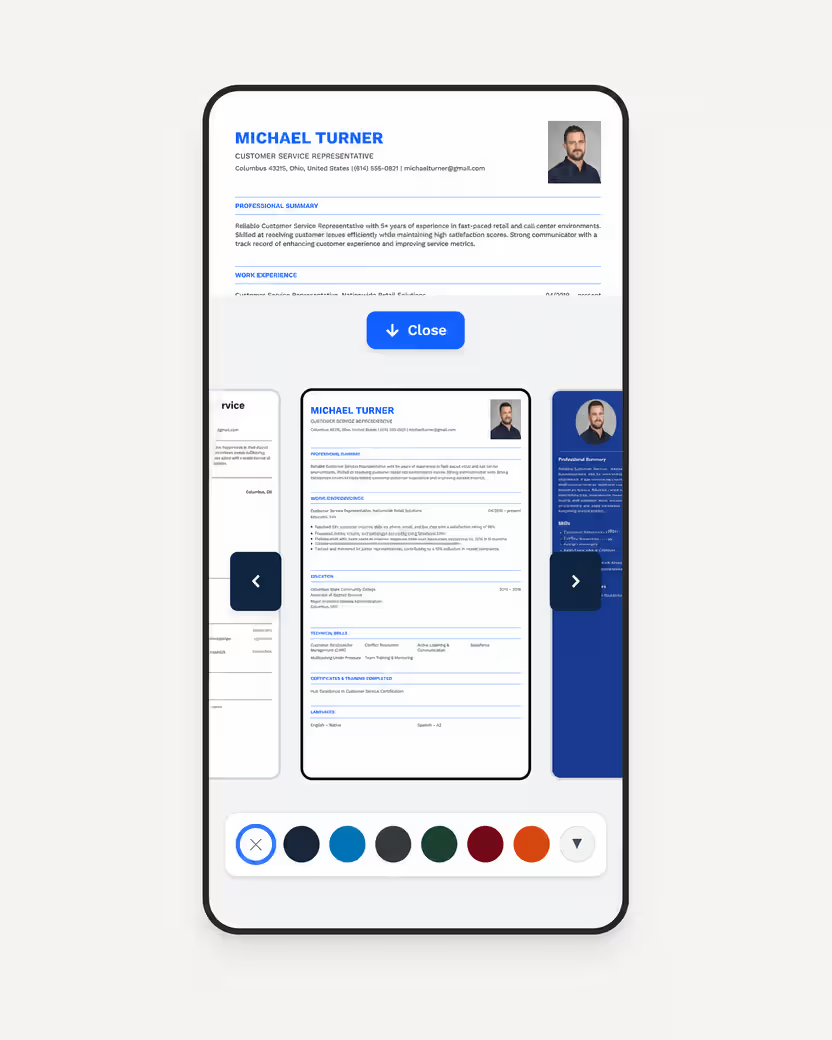
Frequently Asked Questions
Start with your last review notes, the team dashboard, or any monthly results email from your team leader. Most of those figures are easier to find than people expect. If you are still in the job, write them down now, because a former employer will not dig them out for you later. Where you cannot get an exact figure, estimate honestly and use the word around. A fair estimate is far better than a page with no sense of scale at all.
Yes, and hiring managers know it is often harder than phone work, because the unhappy customer is standing in front of you. Describe it in service words: complaints handled, returns and exchanges processed, problems resolved without calling a manager. Add the systems, such as the checkout or the stock system, since that shows you learn software. Then say in your summary that you are moving into a customer service role.
Yes. A CRM is the system that stores every customer and every contact, and they all work in a similar way. Naming yours tells an employer you can work a case in software rather than on paper, and many of them search resumes for those names. Write what you did in it, for example processing orders, returns, and exchanges, rather than just the name. Someone who knows one system is usually productive in another within a week.
A mock call is a role-play where the interviewer acts as an unhappy customer and you handle the conversation. Most service teams use one. Use a simple structure: greet, listen without interrupting, repeat the problem back, ask one question, then fix it or say exactly what happens next and when. Do not promise anything you cannot deliver — that is what they are watching for. Practise once out loud beforehand, because the pace on a real call is faster than it feels in your head.
No. A high school diploma is the usual requirement, and plenty of teams hire on attitude and a good phone manner alone. An associate degree or a college course in business or communications helps, especially for supervisor roles later. Put education in one or two short lines and give the space to your numbers and systems. Short certifications and training courses are often worth more here than a long education section.
They are, especially if you have little formal education or you are changing industries. Service-specific certifications and de-escalation or conflict resolution training show you have been taught the job, not just thrown into it. Software certifications are worth even more, because they point at a system the employer may already use. List each one with the year, and put the most relevant first rather than the oldest.
Show the outcome instead of the emotion. A line like resolving complaints without passing them to a manager says more than describing how difficult the callers were. If you have a figure — a drop in escalations, a satisfaction score that held up — put it next to the line. Mention any de-escalation or conflict training you completed, with the year. Save the story itself for the interview, where the mock call will give you a chance to show it.
One page, with your last two or three roles described in four to six lines each. Older or shorter jobs can be a single line with the job title, employer, and years. Keep the layout to a single clear column, because the resume-screening software many large employers use can scramble heavy two-column designs. If a job lasted under a year, keep it and be ready to explain it plainly rather than leaving a gap.
Read Also
Ready for your own resume?
Go to the builder and start with the first step in seconds.
Create Resume