A Parent Reads Your Resume Asking One Question: Can I Leave My Child With You?
That proof is made of small facts. The ages of the children you cared for. How many at once. Your hours. Whether your CPR certification is current. Whether you drive. This guide shows you where to put each one, gives you a full example to copy, and covers the mistakes that make a parent move to the next resume. If you have never written one, our step-by-step resume guide covers the basic layout first.
Ages, Number of Children, and Hours — the Details Families Look For First
Put those facts right in the job entry, not in a separate note. Write the ages, how many children at once, and your working hours. A family with twins wants a nanny who has handled two at the same time.
Time with one family matters too. Four years with the same family tells a parent more than any adjective. If you left a job quickly, add a short honest reason.
What Families Want to Know About Your Past Jobs
| Detail | Why a parent asks | How to write it |
|---|---|---|
| Ages of the children | a newborn and a nine-year-old need very different care | Caring for twin girls from 6 months old to age 4 |
| How many at once | two under three is a much harder day than one | Caring for two children at the same time, ages 6 and 9 |
| How long you stayed | long stays show the family trusted you | March 2022 to now, with the same family |
| Your hours | the family needs their whole day covered | Monday to Friday, 7:30 a.m. to 5:30 p.m. |
| Live-in or live-out | it changes the whole arrangement | Full-time live-out position |
| Driving | school runs and activities usually need a car | Driving the girls to preschool and swim lessons |
| Special situations | twins, allergies, newborns, or extra needs are skills | Cooking dairy-free meals for one child's food allergy |
| What else you did | families want to know the full scope of the job | Doing the children's laundry and tidying the playroom |
| Why the job ended | a short honest reason stops a parent guessing | Children started school full time |
A Complete Nanny Resume, One Page, Ready to Copy
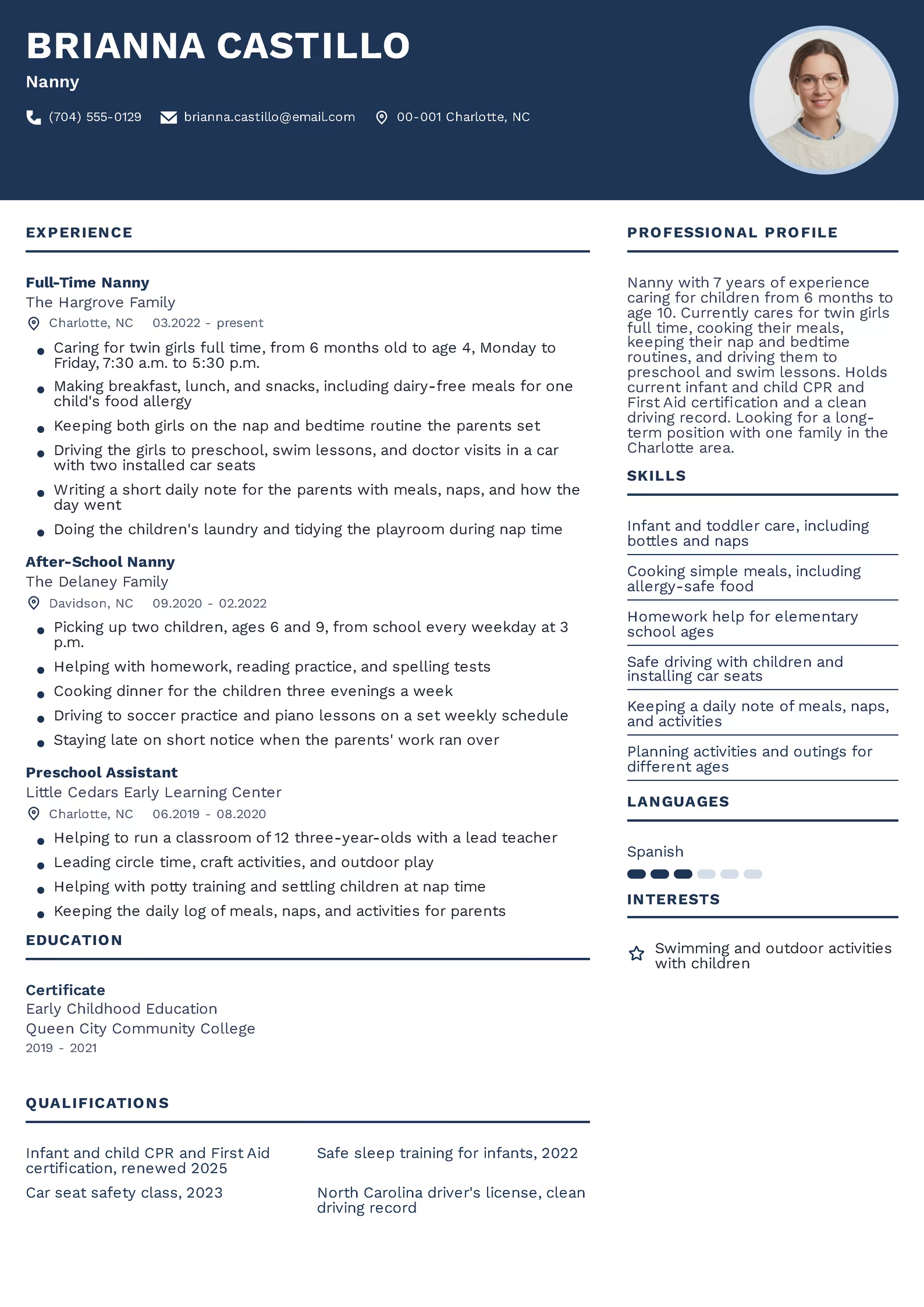
Look at how the families are listed. A private family is written the same way a company would be: “The Hargrove Family, Charlotte, NC”, with dates. Her earliest job was in a preschool, and it stays on the page because classroom experience counts.
Every job entry gives ages, hours, and one thing that made that family's day work — the allergy meals, the school run, the nap routine. Her CPR certification carries a year, because a parent needs to know it is still valid. Swap in your own families and routines and keep the shape.
Resume Example — Nanny
Brianna Castillo
Charlotte, NC
Nanny with 7 years of experience caring for children from 6 months to age 10.
Currently cares for twin girls full time, cooking their meals, keeping their nap and bedtime routines, and driving them to preschool and swim lessons.
Holds current infant and child CPR and First Aid certification and a clean driving record.
Looking for a long-term position with one family in the Charlotte area.
Full-Time Nanny
The Hargrove Family, Charlotte, NC
03.2022 – Present
After-School Nanny
The Delaney Family, Davidson, NC
09.2020 – 02.2022
Preschool Assistant
Little Cedars Early Learning Center, Charlotte, NC
06.2019 – 08.2020
Certificate, Early Childhood Education
Queen City Community College, Charlotte, NC
2019 – 2021
Naps, Meals, School Runs — Writing a Real Day With the Children
Start each line with what you did: making breakfast, driving to preschool, keeping the nap routine, helping with homework. Skip words like “responsible for.” They add nothing.
Include the parts people leave out. Children's laundry, tidying the playroom, packing the school bag, writing the daily note. Families want to know the full scope. If you did none of those, do not claim them — it comes up on day one.
If you have worked for several families, you do not need to describe every one the same way. Give your last two or three a few detailed lines. Older jobs can be one line each.
A Nanny's Day and How to Put It on a Resume
| Part of the day | What a nanny does | How to write it |
|---|---|---|
| Morning start | taking over from the parents, breakfast, getting dressed | Making breakfast and getting two children ready for preschool |
| School or preschool run | driving or walking, drop-off, packing bags | Driving the girls to preschool every morning at 8:30 |
| Morning with a baby | bottles, tummy time, a walk, a playgroup | Taking the baby to a weekly playgroup and the park |
| Meals and snacks | cooking, feeding, bottles, checking food labels | Cooking lunch and snacks, including dairy-free meals |
| Nap time | keeping the routine the parents set | Keeping both girls on the nap routine set by the parents |
| Afternoon pickup | school run, snacks, driving to activities | Picking up two children from school every weekday at 3 p.m. |
| Homework time | reading practice, spelling, school projects | Helping with homework, reading practice, and spelling tests |
| Tidying up | children's laundry, playroom, their dishes | Doing the children's laundry and tidying the playroom during naps |
| Handover | telling the parents how the day went | Writing a short daily note with meals, naps, and activities |
| The unplanned bits | late parents, sick days, a change of plan | Staying late on short notice when the parents' work ran over |
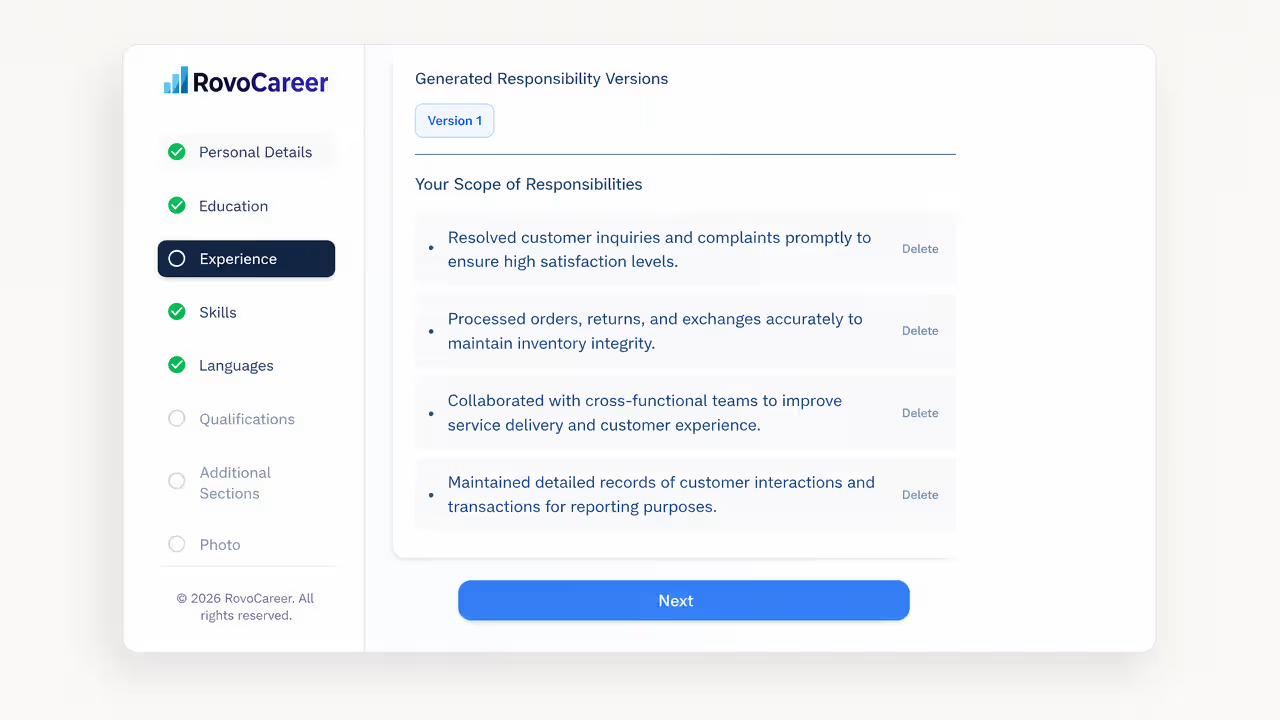
Not sure how to describe your day? Start from ready-made duty lines in the resume builder and edit them to your family.
Build Your Resume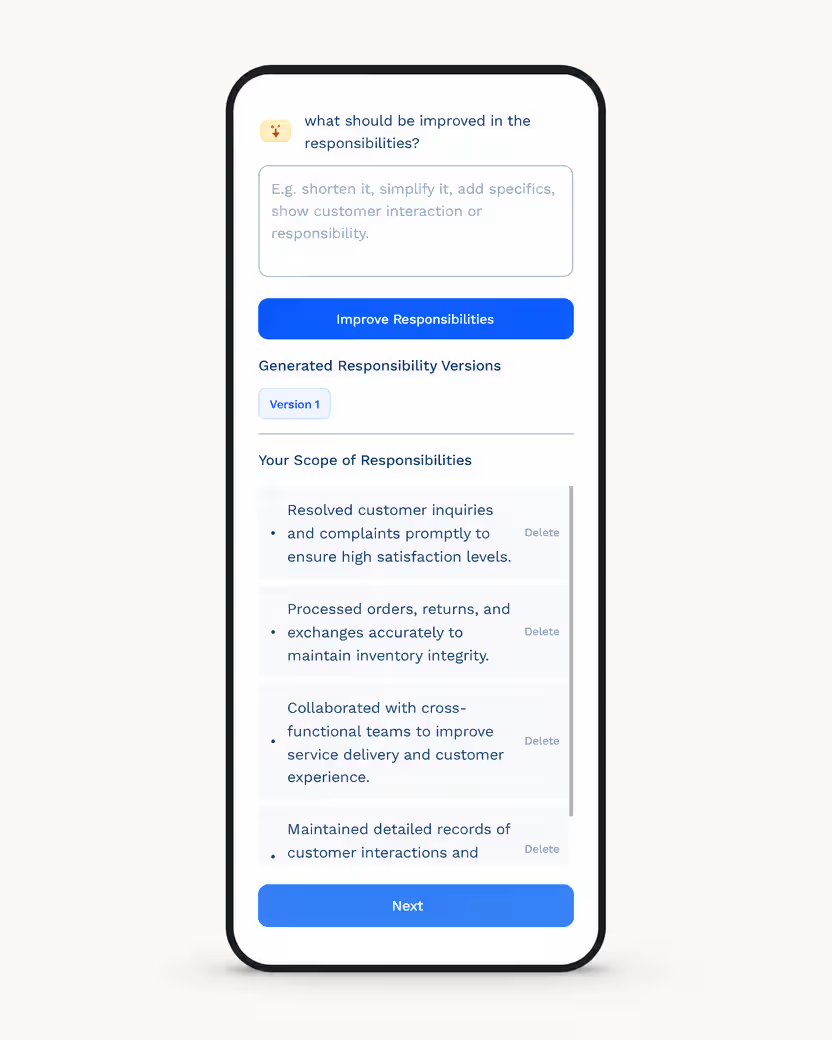
CPR, Allergies, and What You Do in an Emergency — the Lines Parents Reread
CPR and First Aid is a short class. You learn what to do if a child chokes, stops breathing, or gets hurt. Most cards are valid for two years, so write the year you last renewed it. Make sure the class covered infants and children, not just adults.
Three more are worth listing if you have them. Safe sleep training covers how to put a baby down to sleep safely. A car seat safety class covers fitting a seat correctly. Water safety matters if the family has a pool.
Food allergies deserve their own line if you have handled one. Write what you actually did — reading labels, cooking separate meals, carrying the child's allergy medicine. A family with an allergic child will read that line and stop looking.
Your License, Your Own Car, and the School Run
Put three things on the page: your driver's license, whether you have a clean driving record, and whether you have your own car. Families often check driving records before they hire, so only write it if it is true.
Say if you have installed and used car seats. Many parents will not hire a nanny who has never fitted one. If you do not drive, say what you can do instead — walking to school, buses, or the light rail. Being clear beats being vague.
Which Skills to List When Every Nanny Writes That She Loves Children
So turn each skill into a moment from a real day. “Keeping infants on the nap routine set by the parents” says patient and reliable without using either word. Six to eight lines is plenty.
Skills to Put on a Nanny Resume
| Situation with the children | How to describe it on your resume |
|---|---|
| A baby who will not settle | Keeping infants on the nap routine set by the parents |
| A child with a food allergy | Cooking dairy-free meals and checking labels for one child's allergy |
| Two children of different ages at once | Caring for two children at the same time, ages 6 and 9 |
| Getting everyone to school on time | Driving the children to preschool, swim lessons, and doctor visits |
| Homework nobody wants to start | Helping with homework, reading practice, and spelling tests |
| A long afternoon to fill | Planning crafts, park trips, and library visits to suit each age |
| A child learning to use the toilet | Helping with potty training and keeping the same routine every day |
| A scraped knee or a sudden fever | Handling minor injuries with current CPR and First Aid training |
| Parents running late again | Staying late on short notice when the parents' work ran over |
| The house at the end of the day | Doing the children's laundry and tidying the playroom during naps |
| Parents who want to know how the day went | Writing a short daily note with meals, naps, and activities |
| A family that speaks two languages | Speaking conversational Spanish with the children through the day |
The Opening Paragraph That Says Who You Are and Who You Have Cared For
How many years you have worked with children. The ages you have cared for. Your safety training and whether you drive. And what you are looking for now — full time, part time, live-in, or after school.
Leave out “I love children.” Every applicant writes it, so it carries no weight. “Cares for twin girls full time” proves it instead.
Trial Days, Background Checks, and Reference Calls — What Happens After You Send It
First comes a phone or video call, then usually a trial day — a paid day working with the children while the parents are home or nearby. Bring your CPR card and your license. Ask about routines and be ready to just play with the children.
Almost every family runs a background check, and many check your driving record too. Agencies do this before they send you to a family. Nothing on your resume should surprise them later.
Then they call your references. This is the step that decides most nanny jobs, so do not write “references available on request.” List two past families by first name and last initial, with a phone number, after asking their permission. A short cover letter helps here — it lets you say why this family's schedule suits you.
“Watched Kids” and Other Lines That Make a Family Move On
1. No ages. “Watched kids” tells a parent nothing. Write the ages and how many at once.
2. No hours. A family hiring for 7 a.m. to 6 p.m. needs to know you have worked those days before.
3. CPR with no year. A card with no date reads as expired. Write the year you last renewed it.
4. Nothing about driving. No license, no car, no car seats mentioned means a parent assumes no school runs.
5. “References available on request.” Nanny jobs are won on reference calls. List two families with a phone number, with their permission.
6. Nothing about how long you stayed. Dates that jump every few months worry parents. Add a one-line reason where it is short.
7. Only listing babysitting with no detail. Babysitting counts. Write the families, the ages, and how often you sat.
8. A long paragraph about loving children. Replace it with one real day: the meals, the naps, the school run.
One Last Read Before You Send It to a Family
Ages and numbers of children are in every job entry, along with your hours.
Your CPR and First Aid certification has a year next to it, and it covers infants and children.
Driving is answered — license, clean record, own car, car seats.
Two references are on the page with real phone numbers, and you have asked those families first. Keep it to one page, list your last two or three jobs, and include preschool or daycare work if you have it.
You do not need fancy words for this job. Write down the day you actually run and the right family will recognise it. Our complete resume guide covers the rest of the page.
Want a warm, easy-to-read one-page layout? Pick one from our template library.
Build Your Resume
Frequently Asked Questions
Babysitting counts, as long as you describe it properly. List the families you sat for, the ages of the children, and how often you worked. For example, two evenings a week for three years for children aged 2 to 8. Add anything else with children — a preschool placement, coaching, camp work, or looking after younger relatives. Then get an infant and child CPR class booked. It costs little and it is the first thing parents check.
No degree is required in most places. What families ask for is current infant and child CPR and First Aid, a clean background check, and good references. An early childhood education certificate helps and can raise your pay, but experience matters more to most parents. If you have coursework or a childcare qualification, put it on the page with the years. If you do not, put your experience and your CPR card front and centre instead.
Yes, always. It is the single most useful detail on a nanny resume. Caring for a newborn, a toddler, and a nine-year-old are three different jobs. Write the ages and how many children at once, for example twin girls from 6 months to age 4. A family with a baby will look for newborn experience. A family with school-age children will look for homework and school runs. Without ages, a parent has to guess, and most will move to the next resume.
Write it the same way you would a company: the family name, the city, and the dates. For example, “The Hargrove Family, Charlotte, NC, March 2022 to present.” Use only the last name — no address, no children's full names. Then list your duties underneath like any other job. If a family asked you to keep their name private, write “Private family, Charlotte, NC” and explain at the interview.
List two past families with a first name, last initial, and a phone number, at the bottom of the page. Ask each of them first, and tell them roughly when calls might come. Avoid “references available on request.” Nanny jobs are decided by those calls, and adding a step slows everything down. If you are new, a preschool supervisor, a teacher, or a coach who has seen you with children works well too.
A trial day is a paid day working with the children while the parents are home or nearby. Most families run one before they hire. Expect to do a normal day — meals, play, a nap, maybe a school run. Bring your CPR card, your driver's license, and comfortable clothes. Ask about routines, allergies, and house rules. Parents notice a nanny who asks those questions.
Yes, and be specific. Write whether you hold a license, whether your driving record is clean, and whether you have your own car. Many families check driving records, so only write what is true. Mention that you have installed and used car seats, since plenty of parents will not hire a nanny who has not. If you do not drive, say what you can do instead — walking to school, buses, or the light rail.
One page. List your last two or three positions with four to six lines each. Older or shorter jobs can be a single line with the family name, city, and years. Keep room for your certifications, your driving details, and two references. Parents often read on a phone between work and pickup, so short and clear wins.
Read Also
Ready for your own resume?
Go to the builder and start with the first step in seconds.
Create Resume