Why "Fixed a Leak" Doesn't Tell a Plumbing Contractor Much
This article walks through a full plumber resume example built around a real license and real job duties, plus the details that get a callback. For general formatting tips, this guide covers layout basics — here, we'll focus on what's specific to the trade.
Lead With Your License: What a Plumber's Summary Should Say First
Skip generic lines like "hard-working and dependable plumber." Name your license, your main strengths, and roughly how much work you've handled. Below are three versions depending on where you are in your career.
Building a Plumber Resume Around Pipe Work, Not Just "Maintenance"
From there, list your most recent job with real duties — leak repair, drain cleaning, water heater installs, whatever applies — rather than a summary word like "maintenance." Skills and certifications come next, then your apprenticeship or training program. If you're still an apprentice, your training hours can carry more weight than a short work history.
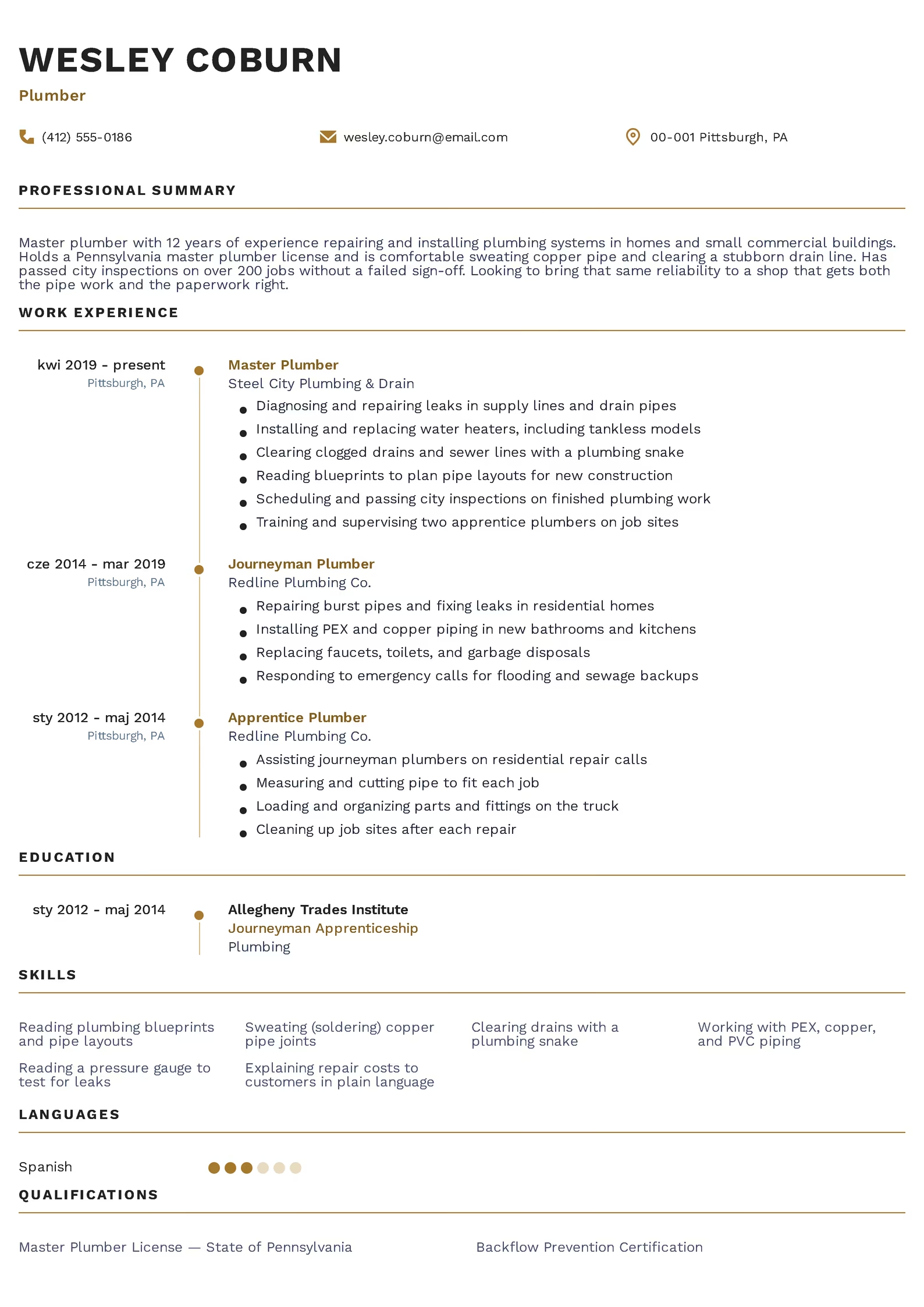
Below is a full example built around Wesley, a master plumber with 12 years of experience. Use it as a starting point, or build your own with our resume builder.
Resume Example — Plumber
Wesley Coburn
Pittsburgh, PA
Master plumber with 12 years of experience repairing and installing plumbing systems in homes and small commercial buildings. Holds a Pennsylvania master plumber license and is comfortable sweating copper pipe and clearing a stubborn drain line.
Has passed city inspections on over 200 jobs without a failed sign-off. Looking to bring that same reliability to a shop that gets both the pipe work and the paperwork right.
Master Plumber
Steel City Plumbing & Drain, Pittsburgh, PA
04.2019 – Present
Journeyman Plumber
Redline Plumbing Co., Pittsburgh, PA
06.2014 – 03.2019
Apprentice Plumber
Redline Plumbing Co., Pittsburgh, PA
01.2012 – 05.2014
Journeyman Apprenticeship, Plumbing
Allegheny Trades Institute
2012 – 2014
From Clogged Drains to Water Heaters: Naming the Actual Job
Aim for 4 to 6 duties per position, each one starting with a verb — repairing, installing, clearing, replacing. If you've had more than two or three jobs, give your last two or three the detail and summarize anything older in a single line, the way Wesley's apprentice years are handled below.
Permits, Inspections, and the Paperwork That Comes With the Pipe Work
If you've scheduled permits or passed inspections yourself, say so on your resume — it tells a contractor you can be trusted to handle a job from start to finish, not just the pipe work in the middle. A line like "scheduling and passing city inspections on finished plumbing work" does more than just "familiar with codes."
From Drain Snakes to Water Heaters: What Goes in the Duties Table
Typical Plumber Duties
| Area | Example Plumber Duties |
|---|---|
| Leak repair | Finding and fixing leaks in supply lines, drain pipes, and fittings |
| Drain cleaning | Clearing clogged drains and sewer lines with a plumbing snake |
| Water heaters | Installing and replacing water heaters, including tankless models |
| Fixture installation | Installing or replacing faucets, toilets, sinks, and garbage disposals |
| Pipe installation | Running and connecting PEX, copper, or PVC pipe for new construction |
| Emergency calls | Responding to burst pipes, flooding, or sewage backups outside normal hours |
| Inspections | Scheduling and passing city plumbing inspections on finished work |
| Blueprints | Reading plumbing blueprints to plan pipe layouts before work starts |
| Customer communication | Explaining a plumbing problem and the repair cost to a homeowner |
| Code compliance | Making sure finished plumbing meets local and state plumbing codes |
Ready to put your pipe work experience into a resume? Try our resume builder.
Build Your Resume
Pipe Wrenches, Snakes, and Torches Worth Naming on Your Resume
List the tools and pipe materials you're actually comfortable with, not everything a shop might use. PEX, copper, and PVC cover most residential work — add anything specialized, like cast iron or gas line work, only if you've genuinely done it. If you browse more trade resume examples, you'll notice the strongest ones always name specific tools instead of saying "own tools."
Sweating Copper and Reading a Pressure Gauge: Skills a Foreman Checks
Split your skills into two groups: hands-on trade skills, and the habits that make you someone a customer or crew can rely on. Both matter — plumbing work often means being alone in someone's home, not just working on a truck with a crew.
Skills for a Plumber Resume
| Job-Specific Skills | Personal Strengths |
|---|---|
| Reading plumbing blueprints and pipe layouts | Staying calm during an emergency call |
| Sweating (soldering) copper pipe joints | Explaining a repair in plain language to a worried homeowner |
| Clearing drains with a plumbing snake | Working cleanly in someone's home or business |
| Working with PEX, copper, and PVC piping | Staying steady on early morning or after-hours calls |
| Reading a pressure gauge to test for leaks | Double-checking a fix before leaving the job |
| Installing and replacing water heaters | Being upfront about what a repair will cost |
| Cutting and threading pipe to the right length | Staying organized with parts and fittings on the truck |
| Following local plumbing codes | Working well with electricians and other trades on a job site |
| Scheduling and passing city inspections | Taking ownership of a callback and fixing it fast |
| Diagnosing the source of a hidden leak | Showing up on time for every appointment |
One Page, Clear Sections — What a Plumbing Contractor Skims For
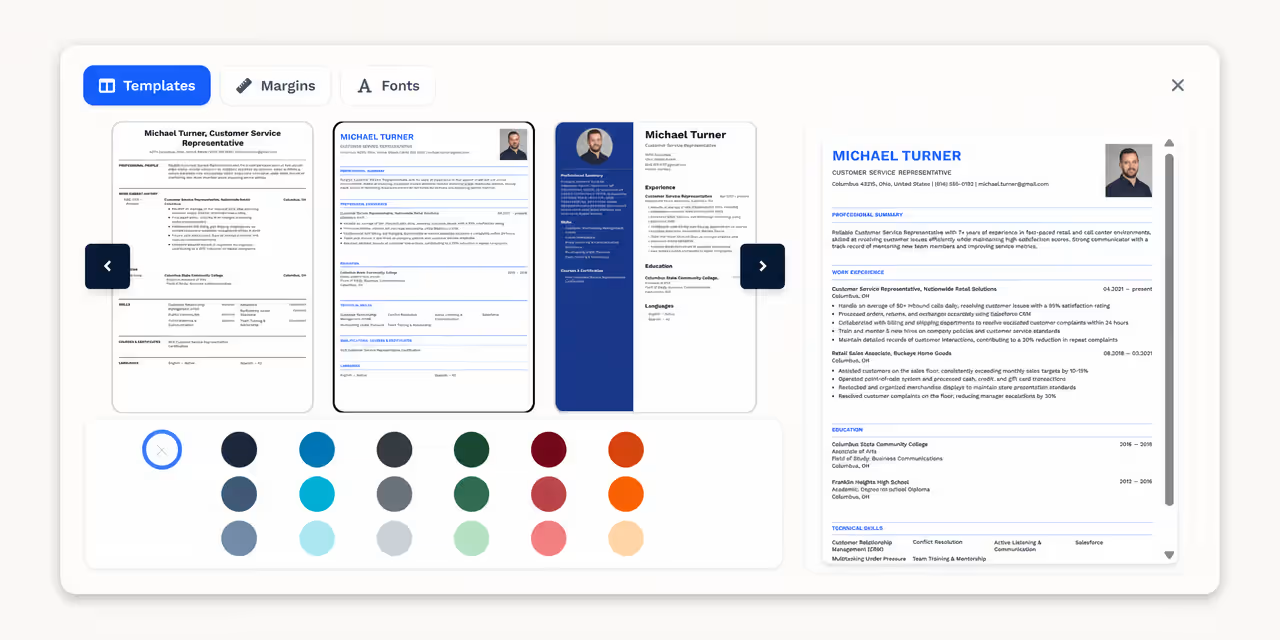
Skip heavy colors or graphics. A simple resume with your license front and center does more for you than a design that makes someone hunt for the details.
Not sure which layout fits a trade background? Try our template library.
Build Your Resume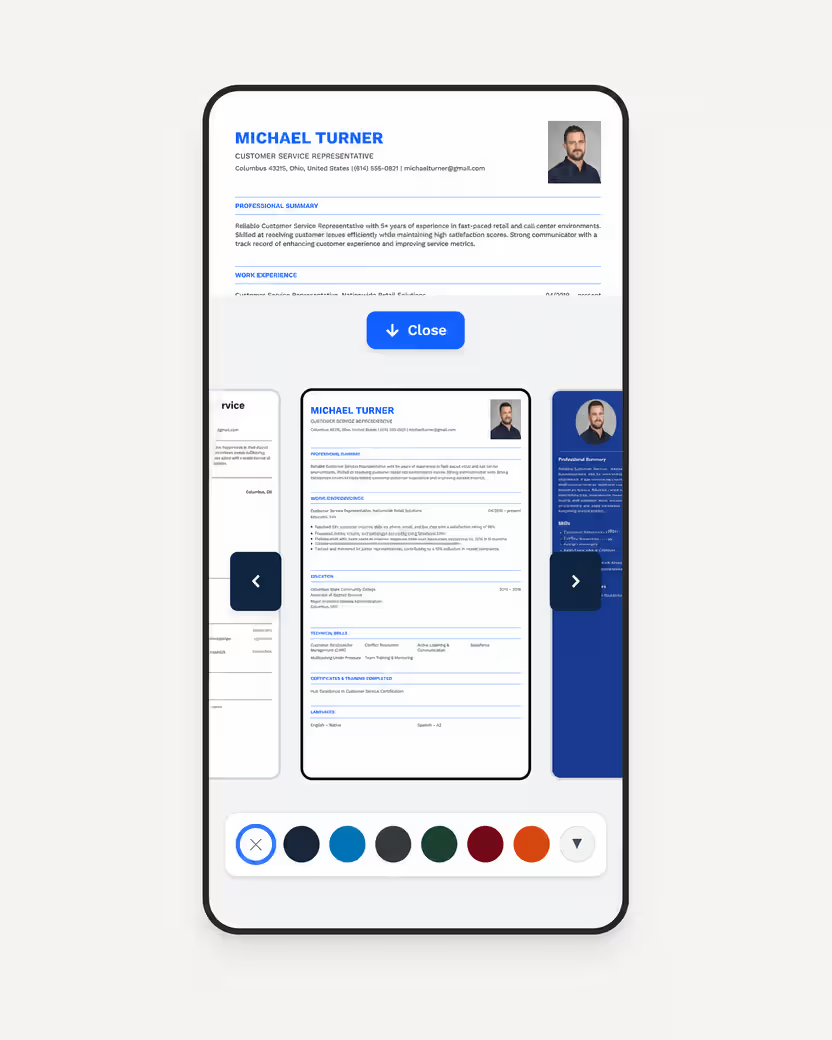
The Missing License Number and Other Slip-Ups on a Plumber's Resume
Leaving off the license number or type. Writing "licensed plumber" without saying apprentice, journeyman, or master leaves a contractor guessing what you're qualified to do on your own.
Writing "fixed pipes" instead of naming the task. "Repaired plumbing issues" could mean anything. "Replaced a burst supply line" tells a contractor exactly what you've done.
Not mentioning permit or inspection experience. If you've scheduled permits or passed city inspections, say so — it shows you can manage a job, not just the pipe work.
Leaving off pipe materials. PEX, copper, and PVC each require different skills — naming which ones you've worked with helps a contractor know what to expect.
Skipping emergency or on-call experience. Many plumbing jobs involve after-hours calls — if you've handled them, it's worth mentioning.
Listing duties with no scale. "Worked on many jobs" is vague. "Passed inspections on over 200 jobs" gives a contractor something concrete to picture.
Forgetting a backflow or other relevant certification. If you hold one, list it clearly — it's a fast way to stand out. A cover letter is a good place to mention specialty certifications too, if you're pairing one with your resume.
Key Takeaways for Your Plumber Resume
If you're still an apprentice, lean on your training hours and what you've assisted with — you don't need a master license to write a solid resume, just clear detail about what you've already learned. Whether you're a first-year apprentice or a licensed master plumber, the goal is the same: give a contractor enough to picture you already on the job.
Frequently Asked Questions
In most states, yes — at least an apprentice registration to start, working toward a journeyman or master license over several years. Requirements vary by state, so check your state's licensing board for the exact steps. If you already hold a license, list the type and state clearly on your resume.
That's normal — most plumbers spend several years as an apprentice before testing for a journeyman license. List your apprentice status, your training program, and what you've assisted with. Contractors hiring apprentices expect less experience and more focus on your training and willingness to learn.
Yes. PEX, copper, and PVC each require different skills, and naming them helps a contractor know exactly what you can do without asking. If you've only worked with one, that's fine to say too.
It helps, but it's not required for every plumbing job. If you have handled permits or passed city inspections, mention it — it shows you can manage a job from start to finish, not just do the repair work in the middle.
One page is enough for almost everyone. Focus on your last two or three jobs with real detail, and summarize anything older in a single line. A contractor reading resumes between service calls won't get through a second page.
Mention what you do have, and be clear that your experience is residential. Many plumbing jobs are residential-only, so this isn't a dealbreaker — just be upfront about it rather than implying experience you don't have.
Yes, if you've done it. Many plumbing jobs involve responding to burst pipes or flooding outside normal hours, and mentioning that experience shows you can handle pressure and work independently.
No. A photo isn't expected on a resume in the US or UK and isn't relevant for a trade job. Use that space for another certification or skill instead — it does more to get you an interview.
Read Also

Ready for your own resume?
Go to the builder and start with the first step in seconds.
Create Resume