
Framing, Trim Work, or Both? A Carpenter Resume Needs to Say Which
This article walks through a full carpenter resume example, built around real framing and finish work, plus the details that get a callback. For general resume formatting, this guide covers layout basics — here, we'll focus on what's specific to the trade.
Building a Carpenter Resume Around Real Framing and Finish Work
From there, list your most recent job with real duties, followed by skills and any certifications. Since most carpenter jobs don't require a license, your work history and the specific projects you've handled do more of the talking than they would on an electrician or plumber resume.
Below is a full example built around Corey, a carpenter with 5 years of experience in both framing and finish work. Use it as a starting point, or build your own with our resume builder.
Resume Example — Carpenter
Corey Danforth
Columbus, OH
Carpenter with 5 years of experience framing new homes and finishing interior trim work. Comfortable reading blueprints, running a nail gun, and hanging a door so it closes without a gap.
Has worked on more than 30 new-build homes from framing through final trim. Looking to bring that same attention to detail to a crew that takes pride in a clean finish.
Carpenter
Redwood Ridge Carpentry, Columbus, OH
03.2023 – Present
Carpenter's Helper
Bluestone Builders Co., Columbus, OH
05.2020 – 02.2023
Apprenticeship, Carpentry
Ohio Valley Carpentry Training Center
2020 – 2023
No License? Photos of Your Framing and Trim Work Do the Talking
If you have photos of framing you've done or trim you've installed, bring a few to an interview or mention that a portfolio is available. On the resume itself, naming numbers helps too — "worked on more than 30 new-build homes" tells a foreman more than "extensive carpentry experience" ever could.
Naming Your Specialty Before a Foreman Reads Another Word
Skip generic lines like "skilled and hard-working carpenter." Name what you actually build, and roughly how much of it. Below are three versions depending on where you are in your career.
From "Built Stuff" to Framing, Trim, and Custom Cabinets
Aim for 4 to 6 duties per position, each starting with a verb — framing, installing, hanging, building. If you've had more than two or three jobs, give your last two the detail and summarize anything older in a single line.
Work Experience — Carpenter
Carpenter
Redwood Ridge Carpentry, Columbus, OH
03.2023 – Present
From Framing Walls to Hanging Doors: What Goes in the Duties Table
Typical Carpenter Duties
| Area | Example Carpenter Duties |
|---|---|
| Framing | Framing walls, floors, and roof trusses on new construction |
| Finish carpentry | Installing interior trim, baseboards, and crown molding |
| Doors and windows | Hanging doors and windows so they open, close, and latch properly |
| Custom builds | Building custom shelving, built-in cabinets, or staircases |
| Blueprints | Reading blueprints to lay out walls and rooflines before cutting starts |
| Measuring and cutting | Measuring and cutting lumber accurately with a circular saw or miter saw |
| Repairs | Repairing rotted or damaged wood framing and trim |
| Site prep | Setting up and taking down scaffolding or temporary supports |
| Material handling | Loading, organizing, and protecting lumber and materials on site |
| Safety | Following job site safety rules around power tools and ladders |
Ready to put your framing and trim experience into a resume? Try our resume builder.
Build Your Resume
Why Carpentry Work Slows Down in Winter — and What to Say About It
If you picked up indoor work during the off-season, like shop projects or finish carpentry, mention it — it shows you stayed productive and can adapt when the weather or schedule changes. A foreman reading your resume has likely seen the same gaps on their own crew.
Nail Guns, Miter Saws, and the Skills a Foreman Actually Checks
Split your skills into two groups: hands-on trade skills, and the habits that make you someone a crew can count on. Both matter on a site where a bad measurement means wasted lumber and lost time.
Skills for a Carpenter Resume
| Job-Specific Skills | Personal Strengths |
|---|---|
| Reading blueprints and measuring accurately | Staying patient on a job that requires precise cuts |
| Framing walls and roof trusses | Working well as part of a crew |
| Installing trim, baseboards, and molding | Taking pride in a clean, finished look |
| Using a circular saw, miter saw, and nail gun safely | Following safety rules around power tools every time |
| Hanging doors so they close and latch properly | Staying steady on a ladder or scaffolding |
| Building custom shelving and cabinets | Double-checking measurements before making a cut |
| Cutting lumber to the fraction of an inch | Adjusting when weather or a schedule changes |
| Reading a tape measure and framing square | Showing up on time, every job site |
| Repairing damaged wood framing or trim | Explaining a repair or timeline to a homeowner |
| Working from a set of blueprints | Taking direction from a foreman without needing repeats |
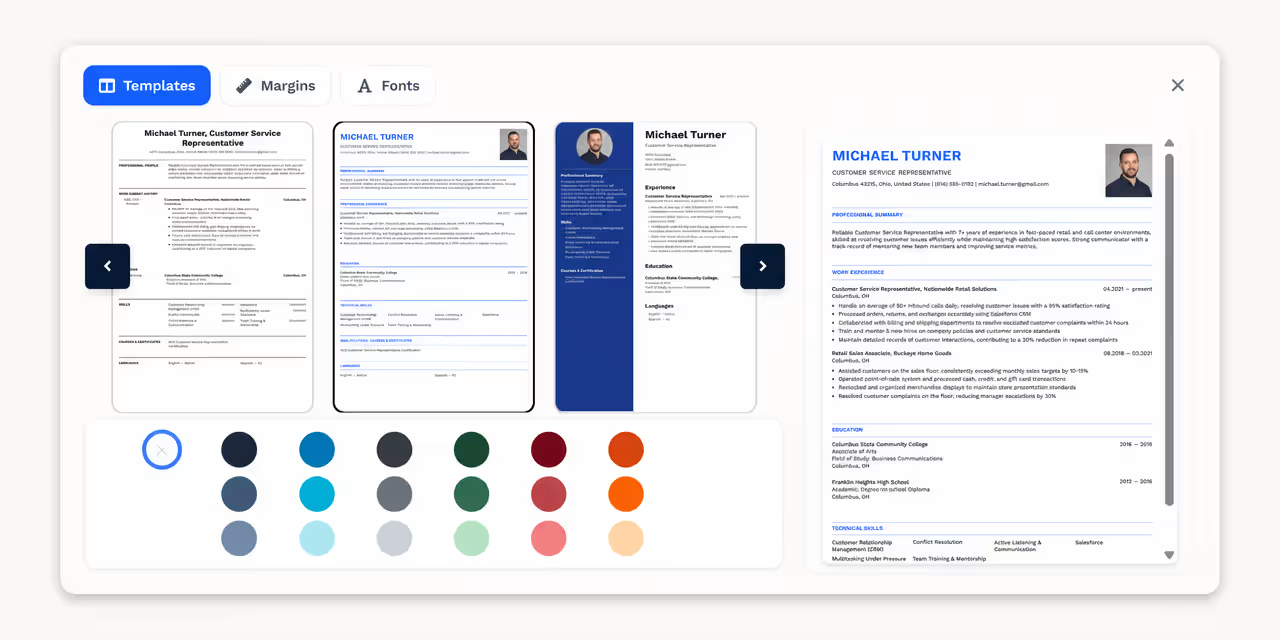
One Page, Clean Layout — What a Foreman Skims For Between Job Sites
Skip heavy colors or graphics. A simple resume that leads with what you actually build does more for you than a design that makes someone hunt for the details.
Not sure which layout fits a trade background? Try our template library.
Build Your Resume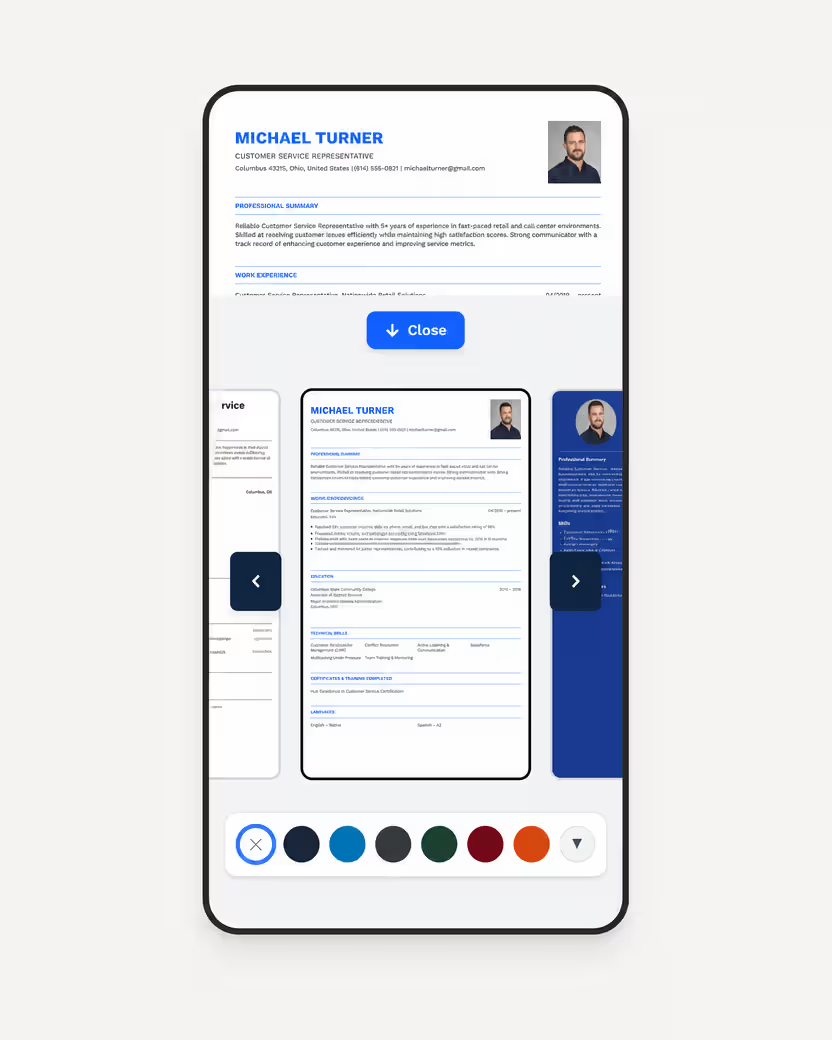
The Missing Specialty and Other Slip-Ups on a Carpenter's Resume
Writing "built stuff" instead of naming the task. "Did construction work" could mean anything. "Framed exterior walls and roof trusses" tells a foreman exactly what you've done.
Not saying whether you do framing, finish work, or both. The two require different skills — being clear about which one (or both) you specialize in helps a foreman know what to expect.
Leaving out a portfolio or photos. Since most carpenter jobs don't require a license, a foreman has fewer ways to verify your skill besides your work history — mentioning photos or a portfolio fills that gap.
Not mentioning specific tools. Naming a circular saw, miter saw, or nail gun by name is more convincing than a vague "power tools" mention.
Hiding a seasonal gap. A pause tied to winter weather is normal in the trade — it's better explained briefly than left as a confusing blank spot.
Forgetting blueprint reading. Many carpenter jobs assume you can read a blueprint — if you can, say so directly.
Listing duties with no scale. "Worked on several projects" is vague. "Worked on more than 30 new-build homes" gives a foreman something concrete. A cover letter is a good place to mention specific past projects too, if you're pairing one with your resume.
Key Takeaways for Your Carpenter Resume
If you're just starting out, lean on what you assisted with and the tools you're already comfortable using — you don't need years of lead-carpenter experience to write a solid resume, just clear detail about what you've done. Whether you're a helper or a lead carpenter, the goal is the same: give a foreman enough to picture you already on the crew.
Frequently Asked Questions
Usually not for a standard carpenter position — most states don't require a specific carpenter license, unlike electricians or plumbers. Some states do require a contractor license if you're self-employed or leading your own jobs, so check your state's requirements if that applies to you.
You don't need to paste photos directly into the resume, but it's worth mentioning that a portfolio is available, or bringing a few photos to an interview. Since carpentry usually doesn't require a license, photos of finished framing or trim work are one of the best ways to prove your skill.
Framing is the structural work — walls, floors, and roof trusses — usually done before drywall goes up. Finish carpentry is the detail work after, like trim, molding, and cabinets. If you have experience in both, say so directly, since it makes you a more flexible hire.
That's common in carpentry, especially for outdoor framing work. Briefly mention it rather than leaving an unexplained gap, and note any indoor or off-season work you picked up during that time, like shop projects.
Yes, if you have them. An OSHA 10-Hour Safety Certification and an NCCER Carpentry certification aren't always required, but listing them shows you've had formal training beyond on-the-job experience.
One page is enough for almost everyone. Focus on your last two jobs with real detail, and summarize anything older in a single line. A foreman skimming resumes between job sites won't get through a second page.
Lead with what you've assisted with and the tools you're comfortable using, even if it's from a helper role or a training program. Being specific about what you've already done matters more than years of experience.
No. A photo of yourself isn't expected on a resume in the US or UK and isn't relevant for a trade job. Use that space for another skill or a mention of your portfolio instead — it does more to get you an interview.
Read Also
Ready for your own resume?
Go to the builder and start with the first step in seconds.
Create Resume