Why Employers Want to See Exactly Which Machines You Can Run
This guide walks through a full heavy equipment operator resume example you can copy, plus plain-language tips for your summary, work history, skills, and the documents employers ask about. You'll also see the mistakes that make a resume get passed over.
What Goes Into a Heavy Equipment Operator Resume, With a Full Example
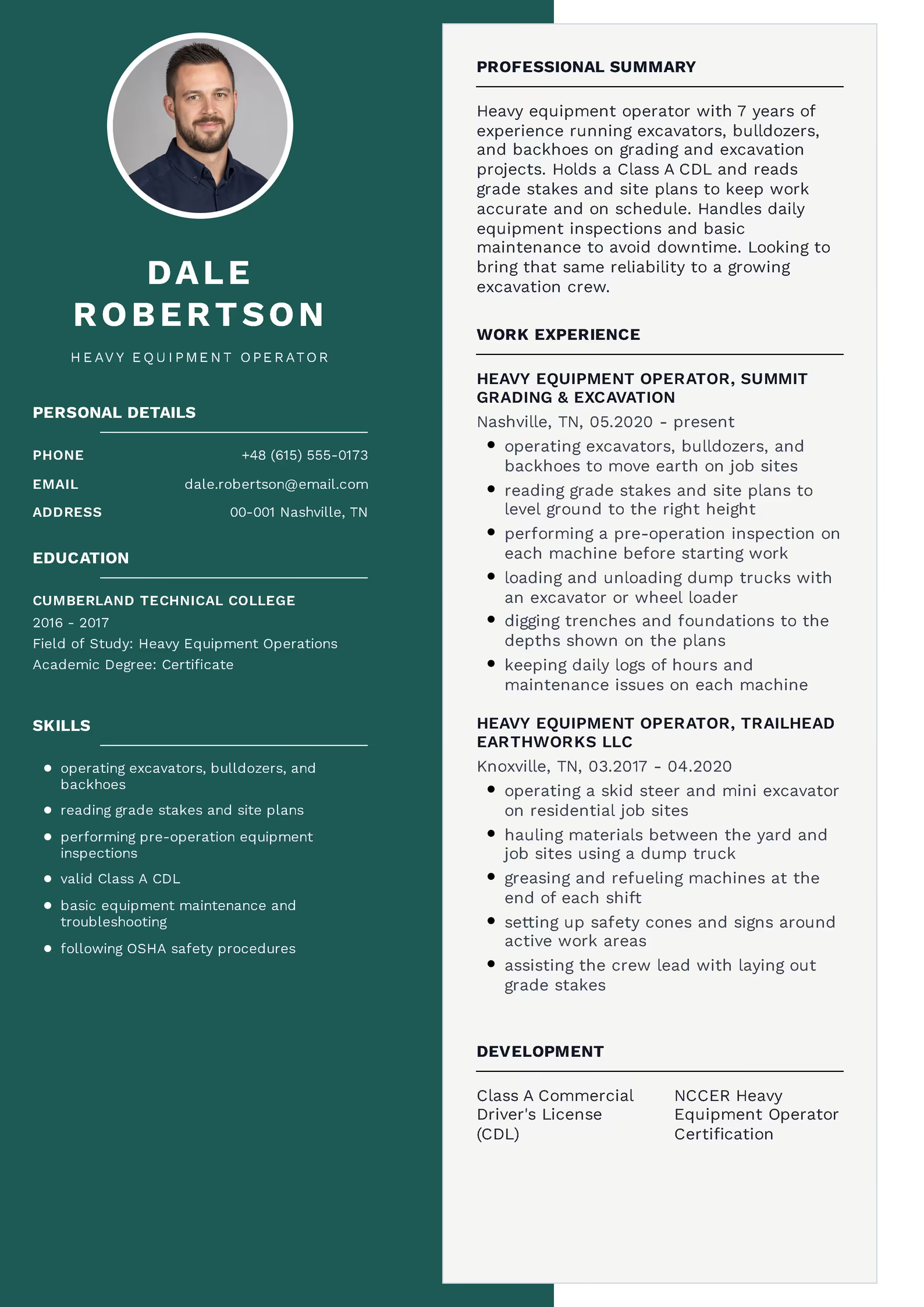
Below is a full example resume for an operator with a few years of experience running different types of machines. Use it as a starting point and swap in your own equipment, employers, and dates.
The work experience section carries the most weight — employers want to see which machines you've actually run and on what kind of sites. Your summary at the top should be short and specific, naming your main equipment and your license status right away.
Resume Example — Heavy Equipment Operator
Dale Robertson
Nashville, TN
Heavy equipment operator with 7 years of experience running excavators, bulldozers, and backhoes on grading and excavation projects.
Holds a Class A CDL and reads grade stakes and site plans to keep work accurate and on schedule.
Handles daily equipment inspections and basic maintenance to avoid downtime.
Looking to bring that same reliability to a growing excavation crew.
Heavy Equipment Operator
Summit Grading & Excavation, Nashville, TN
05.2020 – Present
Heavy Equipment Operator
Trailhead Earthworks LLC, Knoxville, TN
03.2017 – 04.2020
Certificate, Heavy Equipment Operations
Cumberland Technical College
2016 – 2017
How to Summarize Your Machine Experience in a Few Sentences
A strong summary names your main equipment, your years of experience, and your license status if you have one. Here's how that looks for three different situations:
Naming the Machines You've Run Instead of Just 'Heavy Equipment'
Be specific about the equipment, the task, and — when you can — the result, like keeping a site on schedule or grading to an exact height.
Work Experience — Heavy Equipment Operator Resume Example
Heavy Equipment Operator
Summit Grading & Excavation, Nashville, TN
05.2020 – Present
Heavy Equipment Operator
Trailhead Earthworks LLC, Knoxville, TN
03.2017 – 04.2020
Machine Skills and Site Skills That Belong on Your Resume
Ten items is plenty. Skip generic words like "hardworking" — they don't tell an employer anything they can use when comparing candidates.
Skills for a Heavy Equipment Operator Resume
| Job-Specific Skills | Personal Strengths |
|---|---|
| Operating excavators, bulldozers, and backhoes | Staying focused during repetitive tasks |
| Reading grade stakes and site plans | Paying close attention to detail |
| Performing pre-operation equipment inspections | Taking safety seriously |
| Holding a valid Class A CDL | Being reliable and on time |
| Basic equipment maintenance and troubleshooting | Staying calm when something breaks down |
| Following OSHA safety procedures | Speaking up about hazards |
| Operating a skid steer or wheel loader | Working well with a signal person or spotter |
| Digging trenches to an exact depth | Working steadily in hot or cold weather |
| Backing up and maneuvering in tight spaces | Staying alert during long shifts |
| Basic radio communication with the crew | Taking direction well from a foreman |
What a Heavy Equipment Operator Actually Does on a Job Site, Task by Task
Use these descriptions as a starting point for your own work experience section — just swap in the machines and project types you've actually worked with.
Typical Heavy Equipment Operator Duties
| Area | Example Heavy Equipment Operator Duties |
|---|---|
| Earthmoving | Operating excavators, bulldozers, or backhoes to dig, move, and shape earth on a job site |
| Grading and Leveling | Reading grade stakes and site plans to bring the ground to the correct height and slope |
| Material Loading | Loading dump trucks with an excavator, wheel loader, or skid steer |
| Equipment Inspection | Checking fluid levels, hydraulics, and safety features before starting a machine each day |
| Trenching | Digging trenches and foundations to the exact depth shown on the plans |
| Site Prep | Clearing brush, debris, and old material before a crew starts building |
| Machine Maintenance | Greasing, fueling, and reporting mechanical issues on assigned equipment |
| Safety Compliance | Following OSHA guidelines and using seat belts, mirrors, and backup alarms correctly |
| Site Communication | Working with a signal person or spotter when visibility is limited |
| Hauling | Driving equipment or trucks between the yard and different job sites |
Ready to put your own duties into a resume? Try our resume builder and fill in a template built for equipment operators.
Build Your Resume
Your CDL and Medical Card — What to List and When They Expire
If your job involves a CDL, you may also need a DOT medical card — a short physical exam that confirms you're healthy enough to safely operate heavy machinery. These cards are usually valid for up to two years, so it's worth noting when yours was last renewed if it's coming up soon.
If you don't hold a CDL, that's fine for many operator jobs — just be clear about which machines you can run without one, like a skid steer or mini excavator.
Listing Machine Hours and Which Equipment You're Certified to Run
Name the brands you've run if you remember them, such as Caterpillar, John Deere, or Komatsu — machines can handle differently between brands, and some employers have a preference. If you completed a certificate program or an employer-run training course on a specific machine, list that too.
What to Expect When an Employer Tests You on Equipment Before Hiring
If you've been through one of these before, it's worth mentioning in an interview, even if it doesn't fit neatly on the resume itself. Knowing this step exists ahead of time also means you can ask about it directly when you apply, instead of being caught off guard.
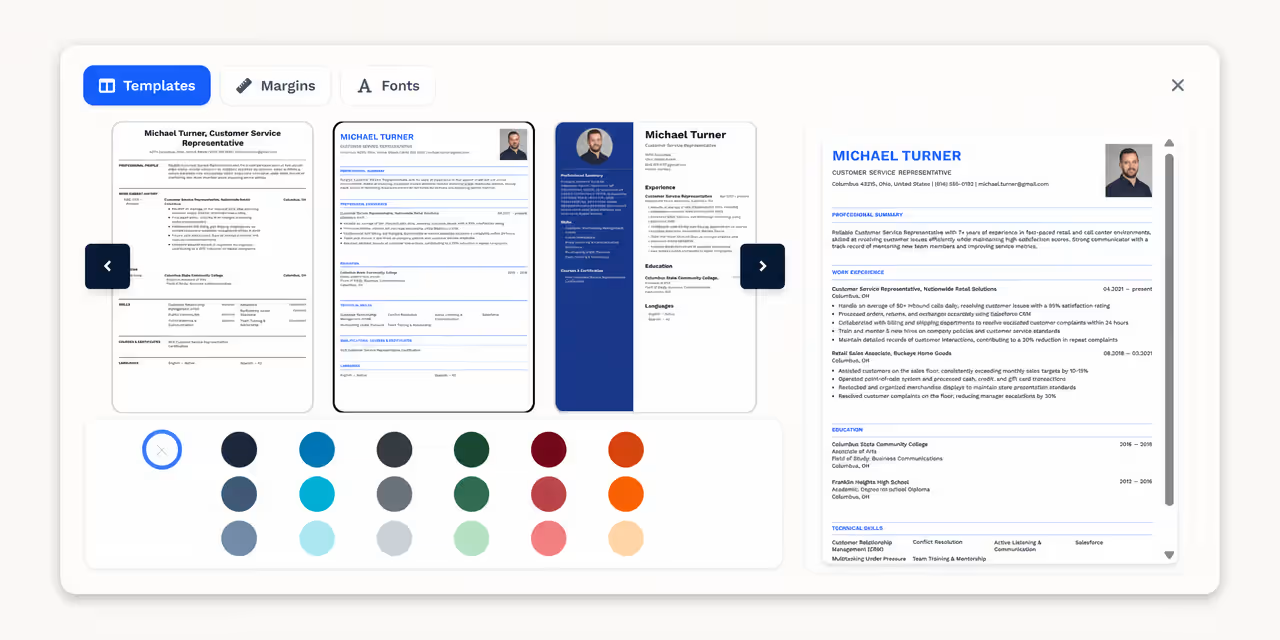
Picking a Layout That Puts Your Machine Experience Front and Center
If you're not sure where to start, a ready-made layout can save time and make sure nothing important gets left out.
Not sure which layout fits best? Try our template library and pick one built for equipment operators.
Build Your Resume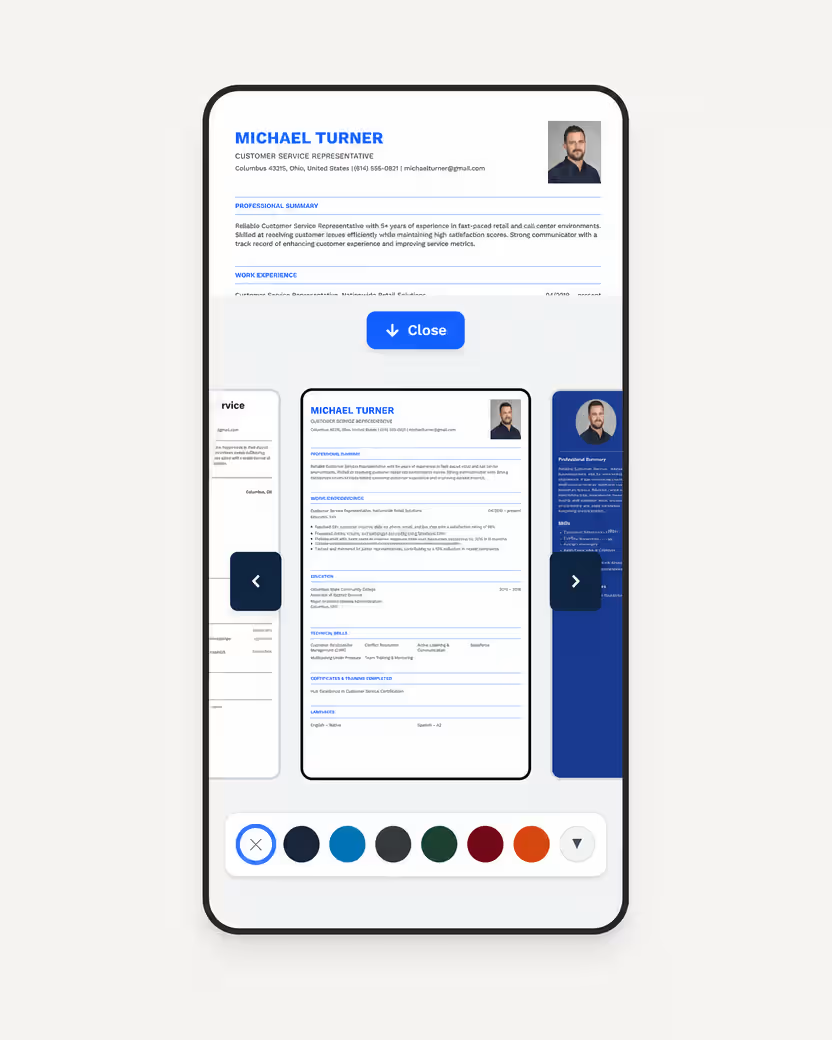
Resume Mistakes That Make Heavy Equipment Operators Get Passed Over
Leaving out your CDL class. If the job needs a CDL, say clearly whether you hold a Class A or Class B, and if it's current.
Skipping hours logged. A rough number of hours on a specific machine gives employers something concrete to judge.
Not mentioning your medical card status. If your job requires a DOT physical, note that you're current — it can speed up hiring.
Leaving out equipment inspections. Mentioning daily pre-operation checks shows you take safety seriously, which matters a lot in this field.
Not explaining a seasonal gap. Slow winters or between-project gaps are normal in this industry — a short, honest note is enough.
Forgetting grading or plan-reading skills. If you can read grade stakes or site plans, say so — not every operator can.
Using a long, office-style format. Keep it to one page with short, clear lines so a hiring manager can scan it fast.
Key Takeaways for Your Heavy Equipment Operator Resume
Name the exact machines you can run — excavator, bulldozer, skid steer — instead of just "heavy equipment." List your CDL class and medical card status clearly if the job requires them. Include rough hours logged on your main machines when you can. Mention daily equipment inspections to show you take safety seriously. Keep your work history to your most recent two or three jobs. Be upfront about any seasonal gaps instead of leaving them unexplained.
Once your resume is ready, pairing it with a short, honest cover letter can help you stand out for jobs that ask for one. For more general formatting tips, see our full guide to writing a resume.
Frequently Asked Questions
Focus on any training you've completed, like a heavy equipment operations certificate program, and any hands-on time you've had on a machine, even informally. Mention a valid driver's license and your willingness to learn. In your summary, say clearly what kind of equipment role you're looking for.
It depends on the job. Some employers require a Class A or Class B CDL if you'll also be driving trucks between sites, while other roles, like running a skid steer or mini excavator, don't need one. Check the job posting and list your license status clearly either way.
No, just the ones you're actually comfortable operating and would be confident running on day one. Listing a machine you've only sat in once can backfire if an employer tests you on it.
It's fine to list it, but be upfront in an interview if it's close to expiring, since some employers may want to see a current one before you start. Renewing it before you apply, if possible, removes the question entirely.
Seasonal slowdowns are common in this field, so you don't need to over-explain. A short note, like combining two seasons at the same company into one entry, is usually enough.
Yes, if you have a rough estimate. Employers often use hours on a machine as a quick way to judge experience, so even an approximate number, like over 2,000 hours on an excavator, is worth including.
Both paths are common. A certificate program can help you get your first job faster and may teach you machines you wouldn't otherwise access, but many operators learn entirely on the job under an experienced coworker.
You'll usually run a machine for a few minutes so the employer can see how you handle it, similar to a road test for a truck driver. Stay calm, go slow, and focus on smooth, careful movements rather than speed.
Read Also

Ready for your own resume?
Go to the builder and start with the first step in seconds.
Create Resume